
Hello again people and pooches. Joe the Cocker here, reporting on a short local village walk. Bangor on Dee is a short drive from home. You have possibly heard of the racecourse here. Horseracing ‘over the sticks’ has taken place here for over 150 years. We picked a grey, miserable, and rainy day to visit. No, wait a minute, my human chose the day. I simply went along with him.
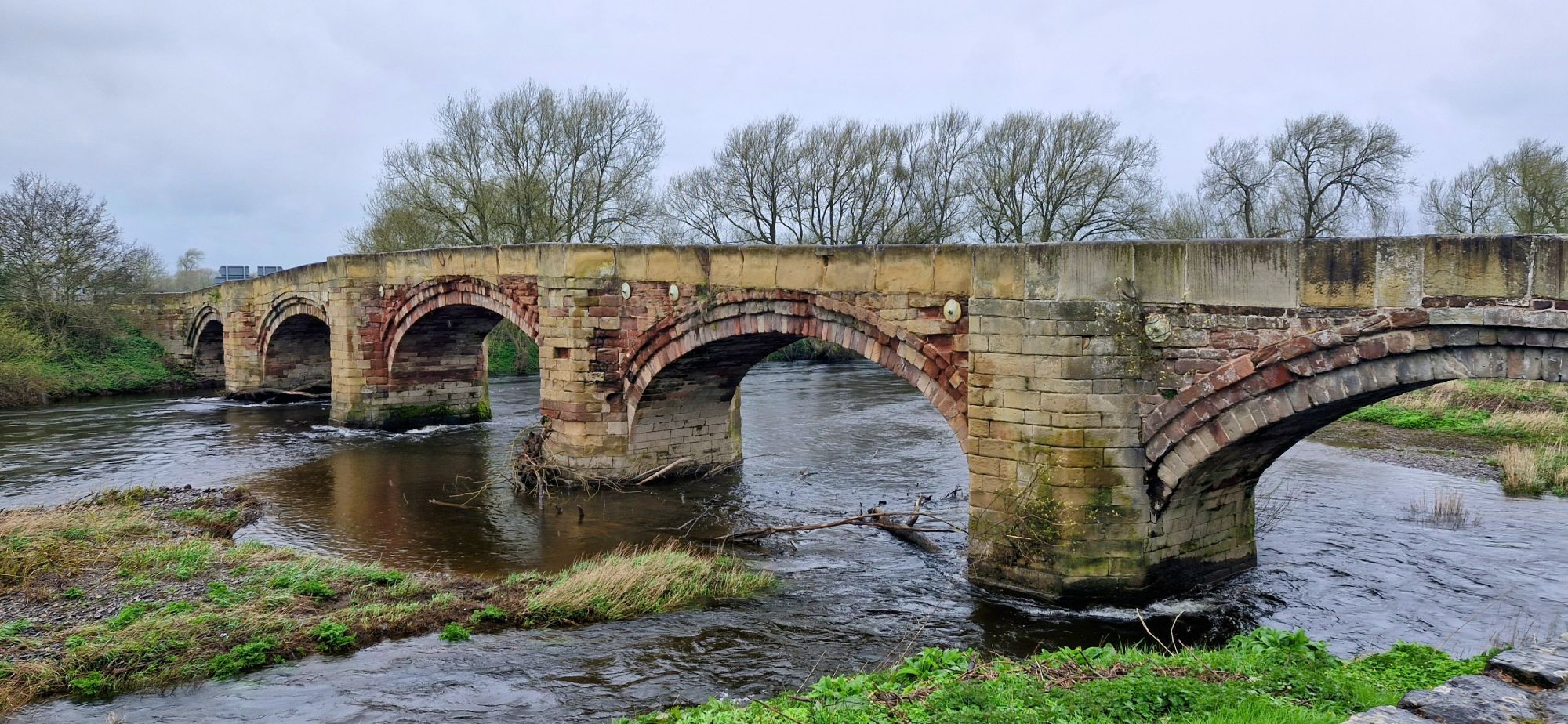
We entered the village by driving over the famous road bridge that spans the River Dee or Afon Dyfrdwy.
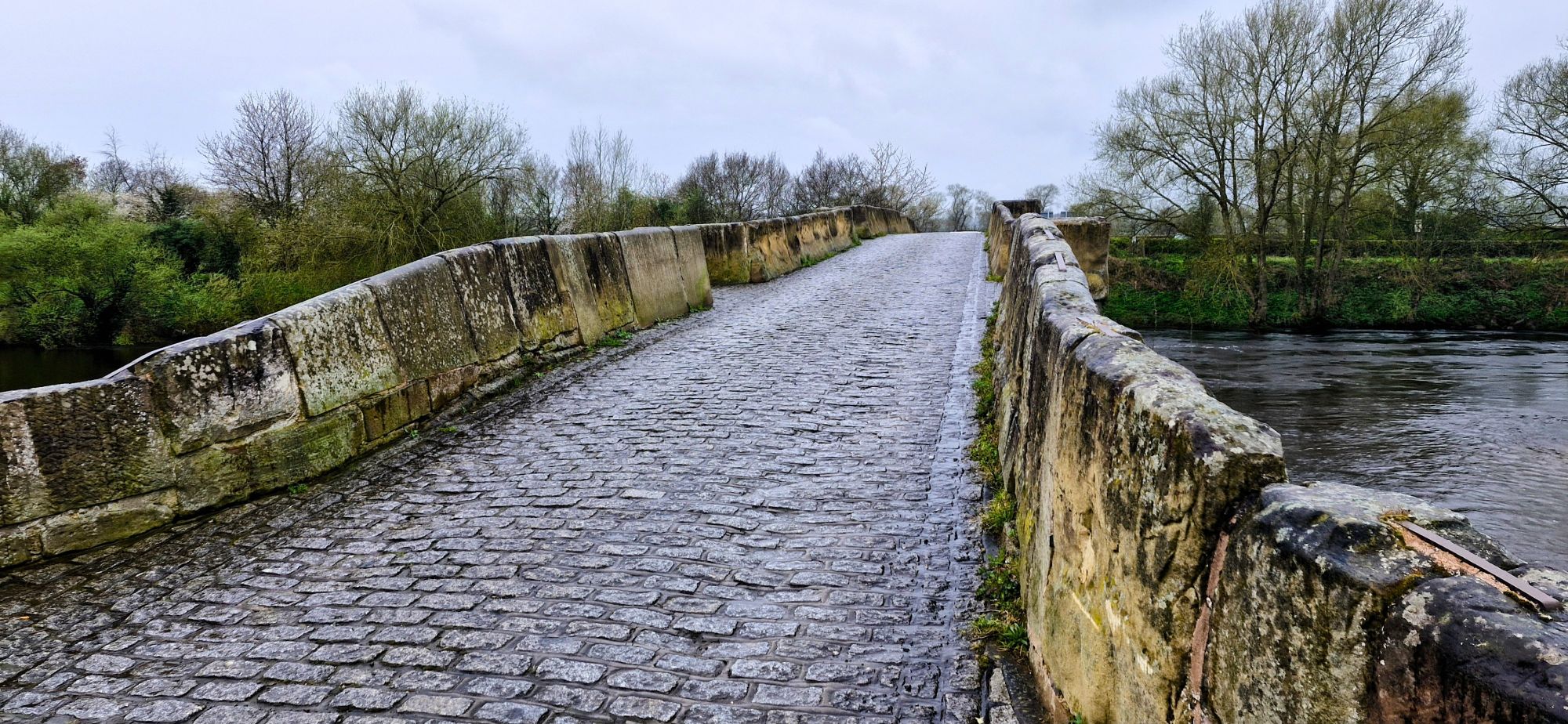
The road surface is of cobblestones, and the walls have standing places for pedestrians to wait while traffic passes over the bridge.
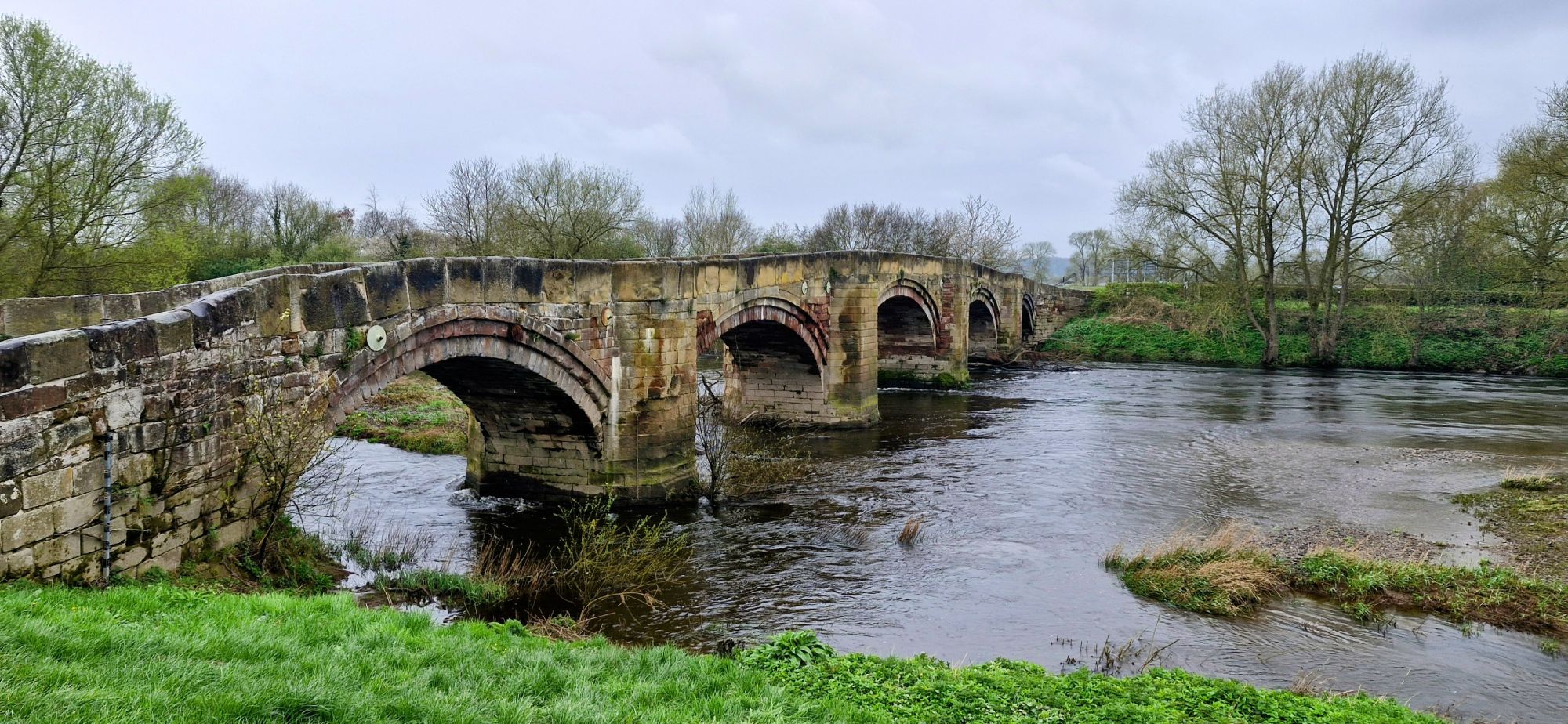
The five arched sandstone bridge was built in 1658 and is Grade l listed. It replaced an earlier medieval bridge and is thought to have been designed by Inigo Jones. It is currently a one-way bridge leading into the village only.
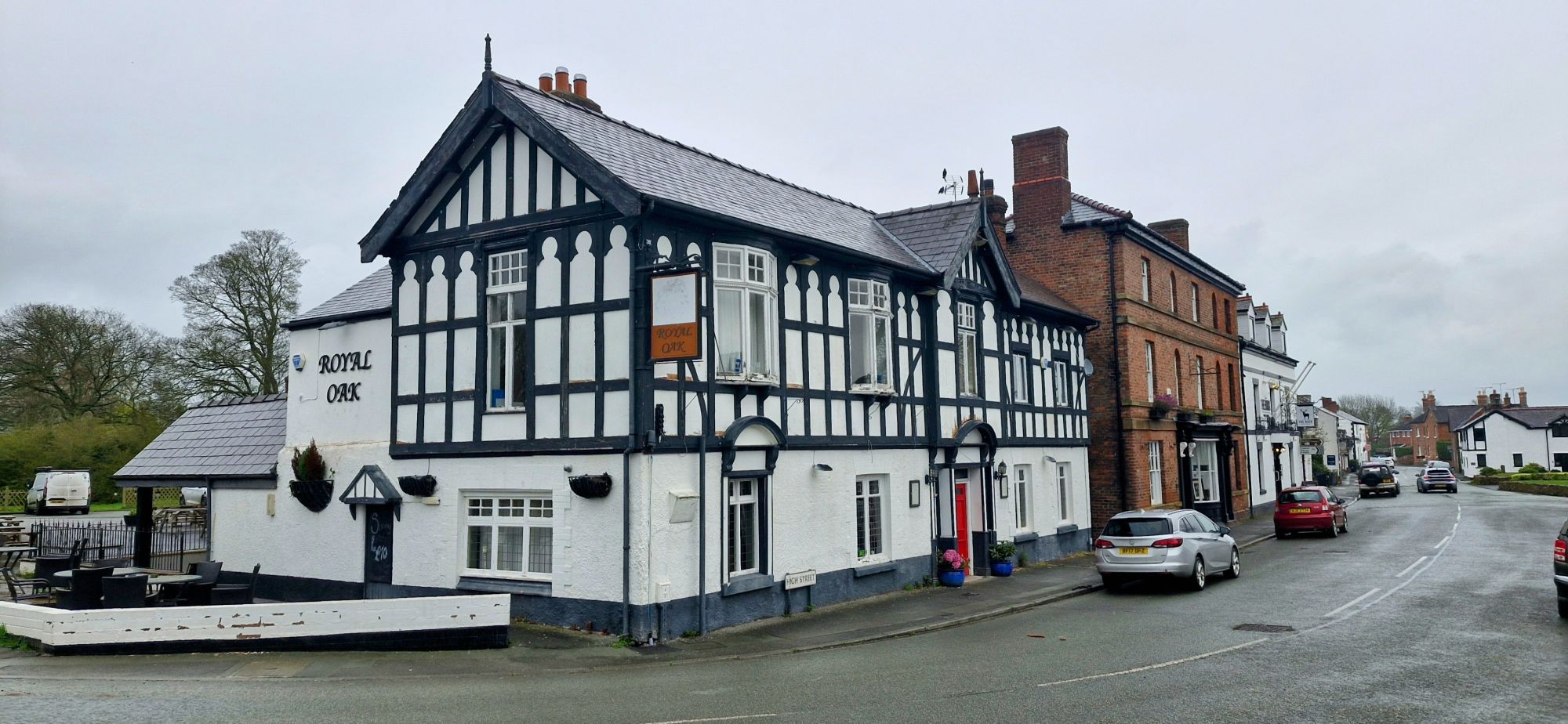
We parked on the roadside outside of the Royal Oak. The pub has been serving beer since 1851 and has been known as The Royal Hotel and The Oak, hence its current name. The black and white mock tudor building is a popular spot for food and drinks, especially in the summer months, with its beer garden overlooking the river.
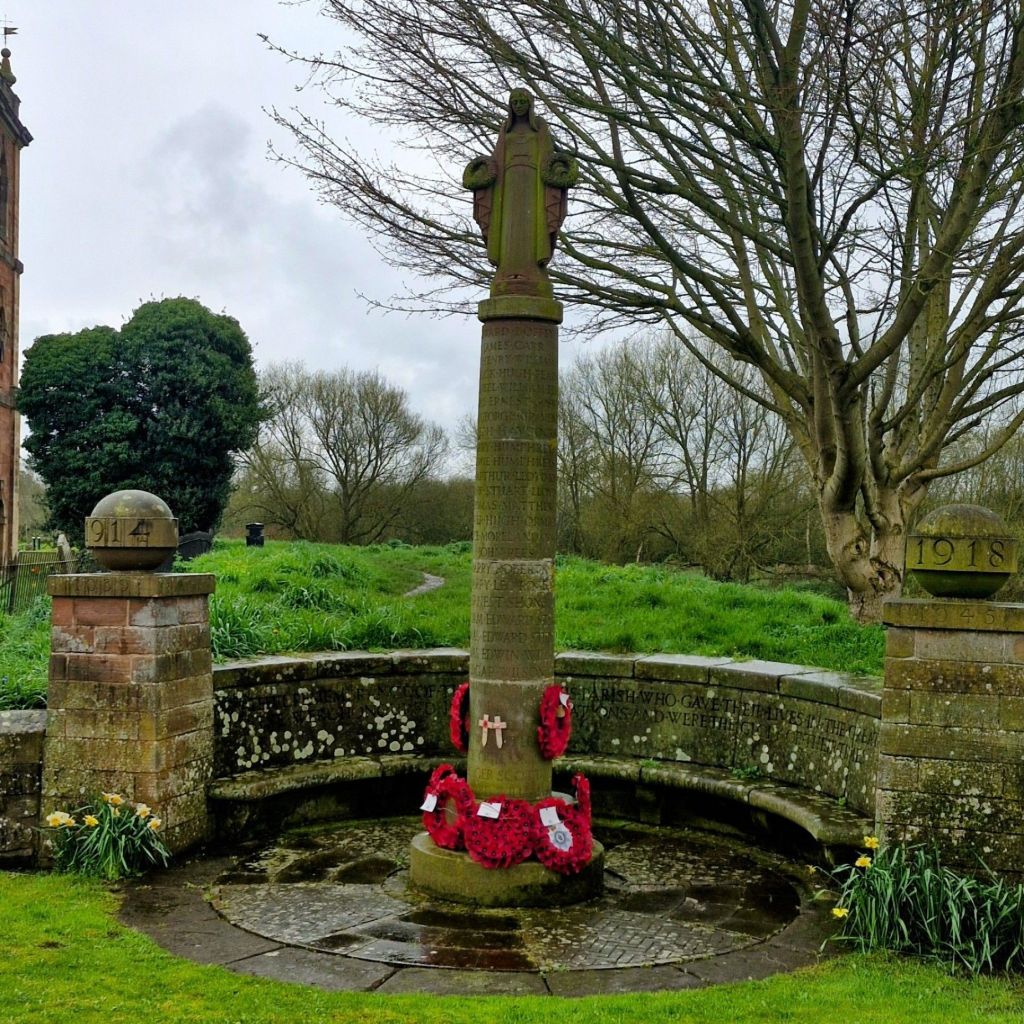
The village war memorial stands outside of St. Dunawd’s Parish Church, opposite the Royal Oak. It is made of Woolton red standstone and was sculpted by Herbert Tyson Smith in 1925. It is inscribed with the names of 23 local men who fell in the two world wars.
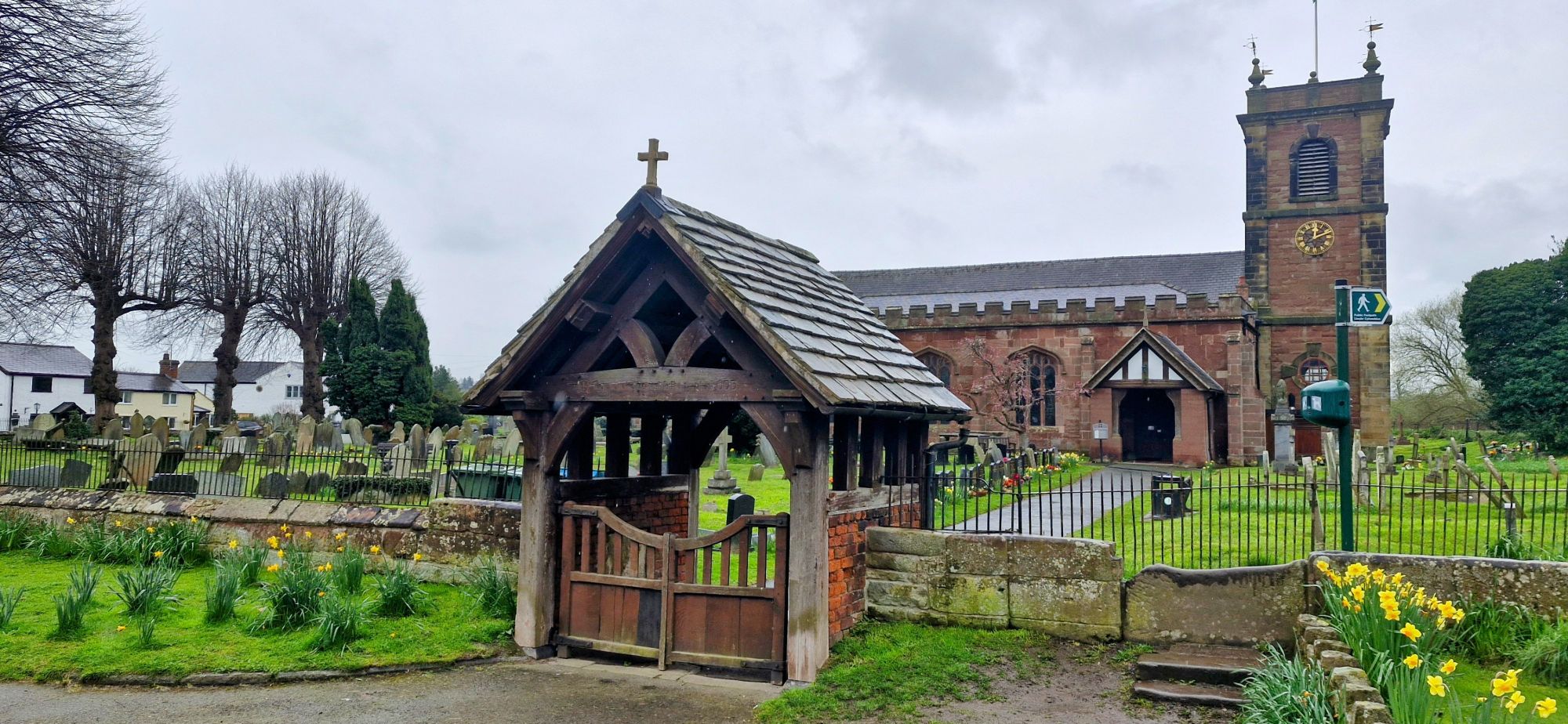
St. Dunawd’s Church is built on the site of a monastery that was built in 560 by St. Dunawd. The monastery only lasted until 616 when it was destroyed by Aethelfrith, and 1200 monks were slaughtered. A sandstone church was built around 1300, of which some parts remain today. The Grade ll* listed building is steeped in history, and my human recommends a visit to view the interior. Sadly. pooches aren’t allowed inside!
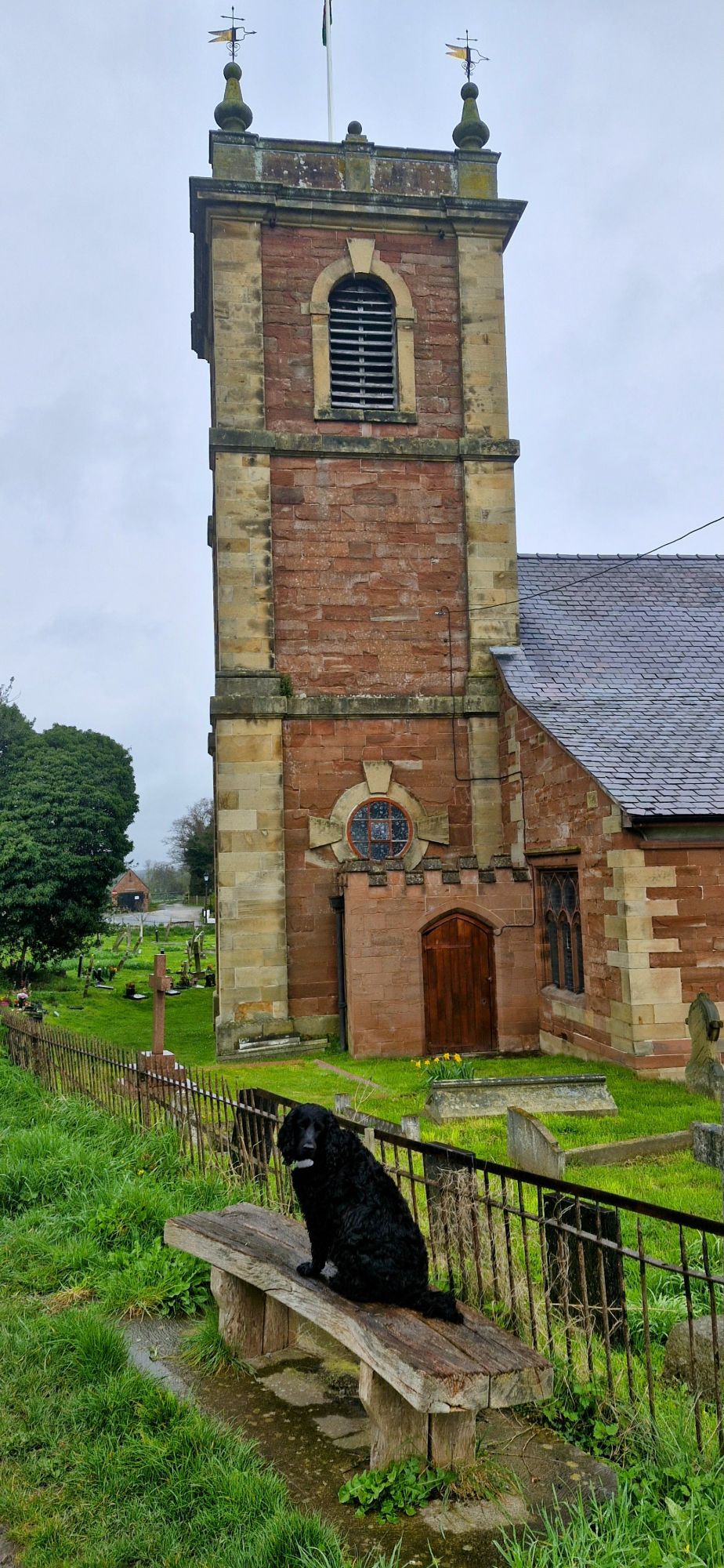
Restoration took place in the 1720s, including the bell tower. I was forced against my will to pose on a bench in front of the bell tower. I don’t understand why my human insists on ruining perfectly good photographs of yours truly by adding old buildings to the shot. Anyway, further restoration and additions to the church have taken place with the vestry being built in 1913.
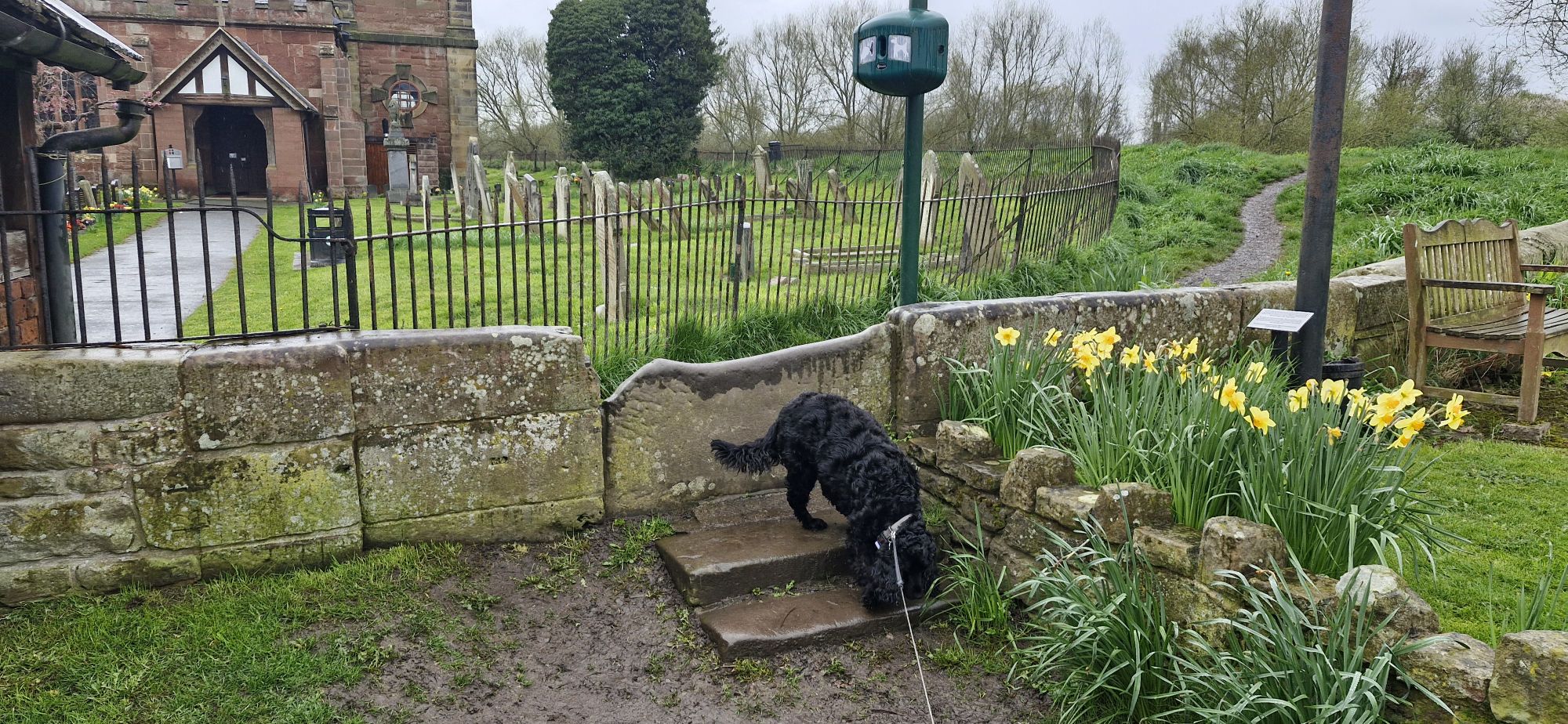
I found a footpath to the right of the lyche gate, which involved me having to hurdle a stone placed at the entrance. I think that I would give the horses at the racecourse a run for their money over the hurdles!

As we walked along the footpath that runs alongside the river, we looked back at the graveyard. There are five Commonwealth War Graves within the church grounds.

Whilst some of the graves were being dug in the church grounds, the remains of Roman roads have been discovered.
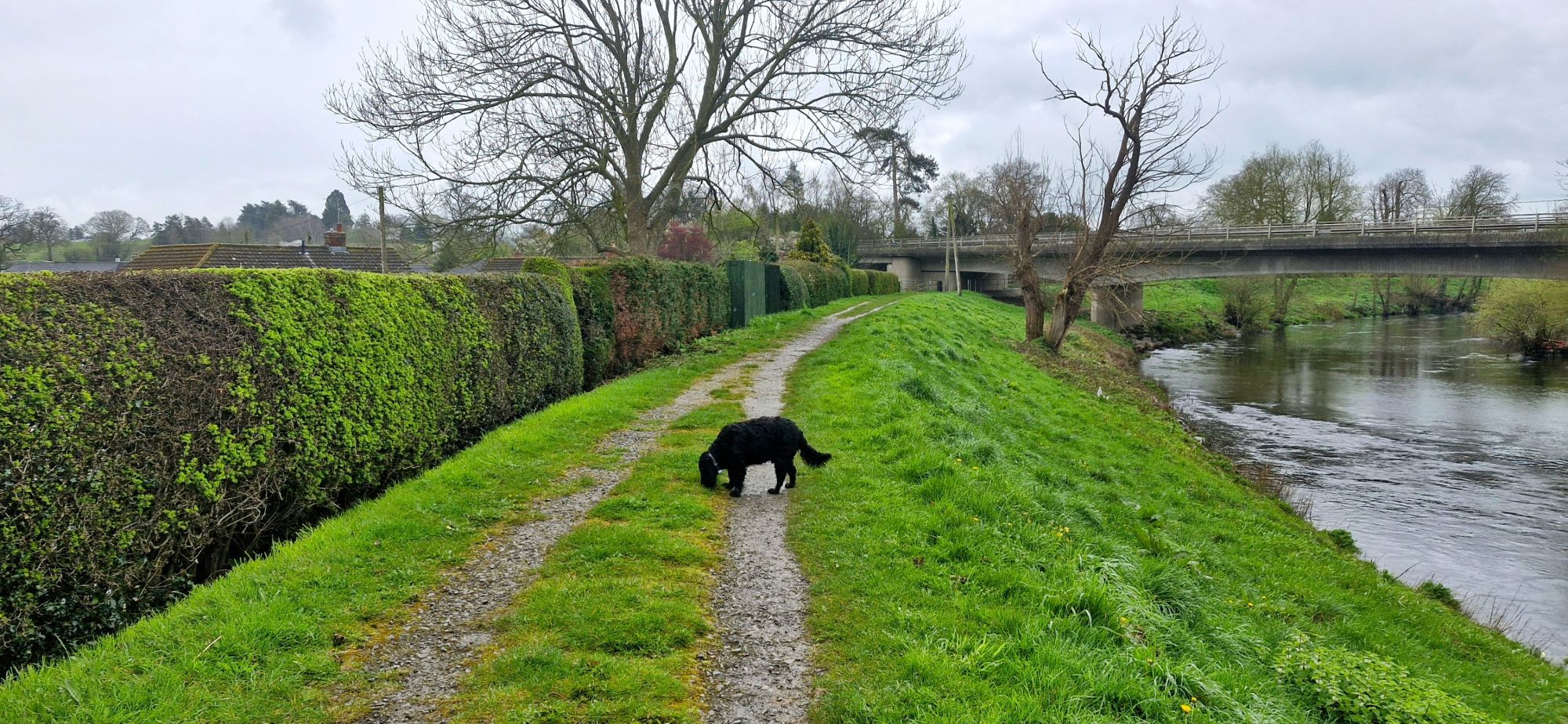
Even though the banks of the river have been raised in the area, the village is susceptible to flooding. In January 2021, parts of the village were told to evacuate their houses due to the record-breaking high water caused by a drainage system overload.
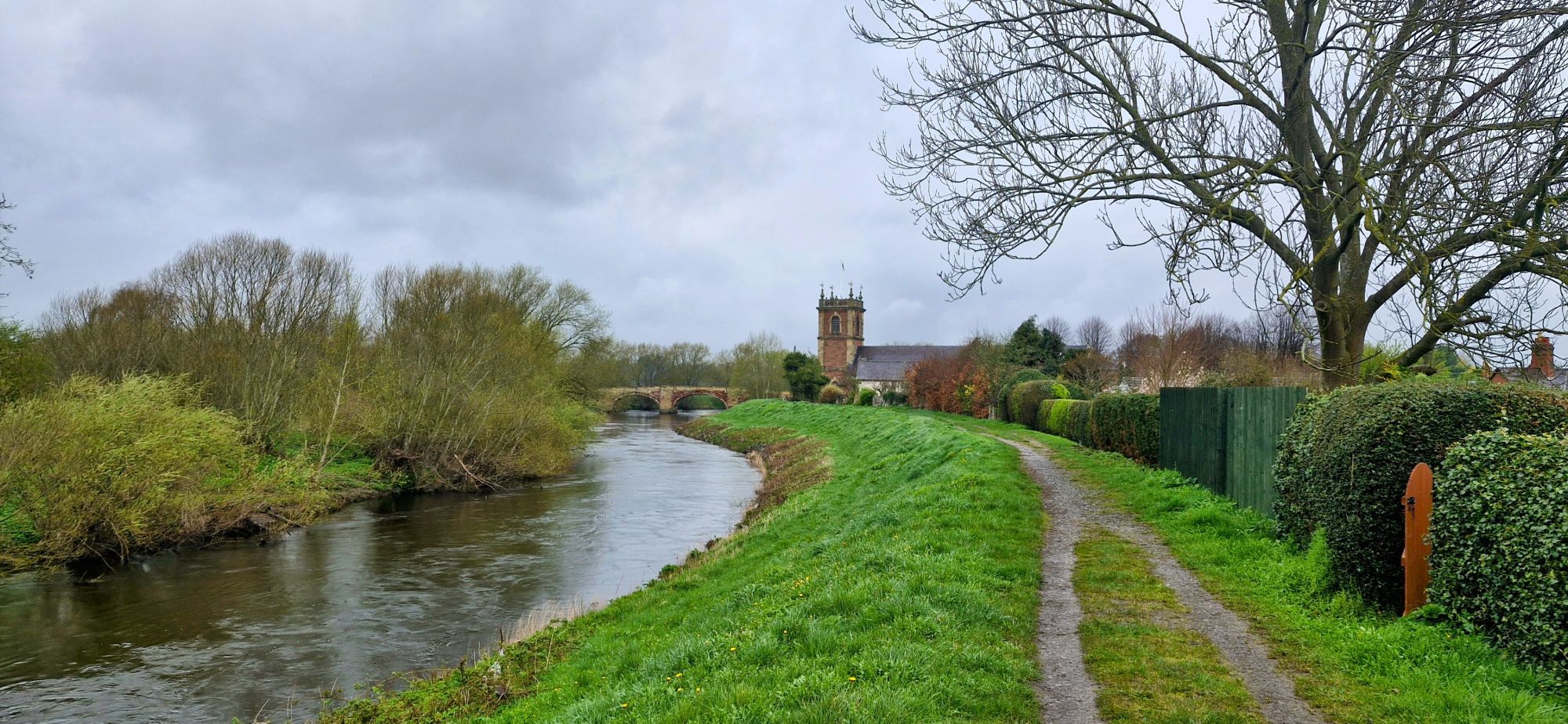
We continued our walk along the banks of the River Dee, which, although it was fast flowing, didn’t look as menacing as it can be when it rises during storms.
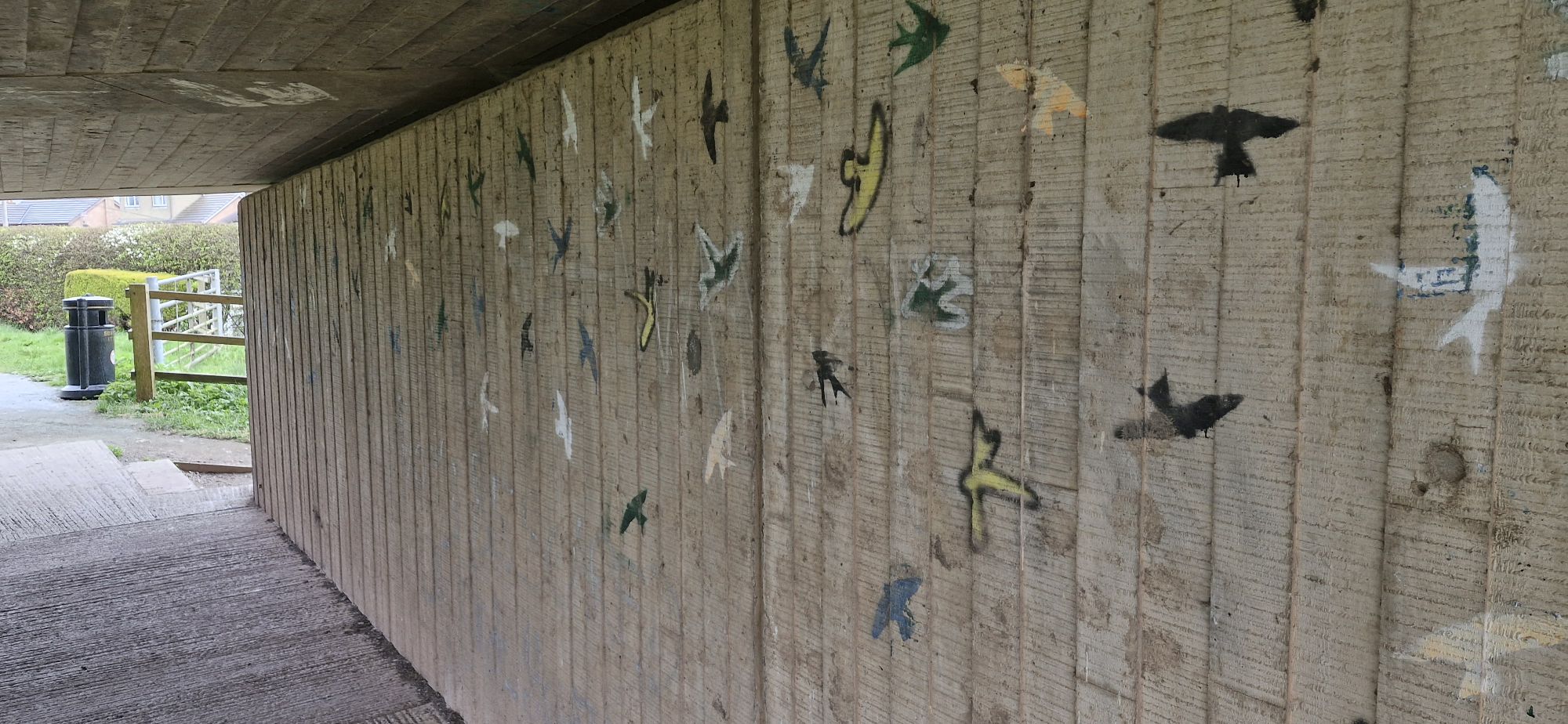
We turned off the riverbank walk as it reached the village by-pass bridge. Rather than the usual ugly grafitti, the walls under the bridge have been decorated by images of birds in flight.
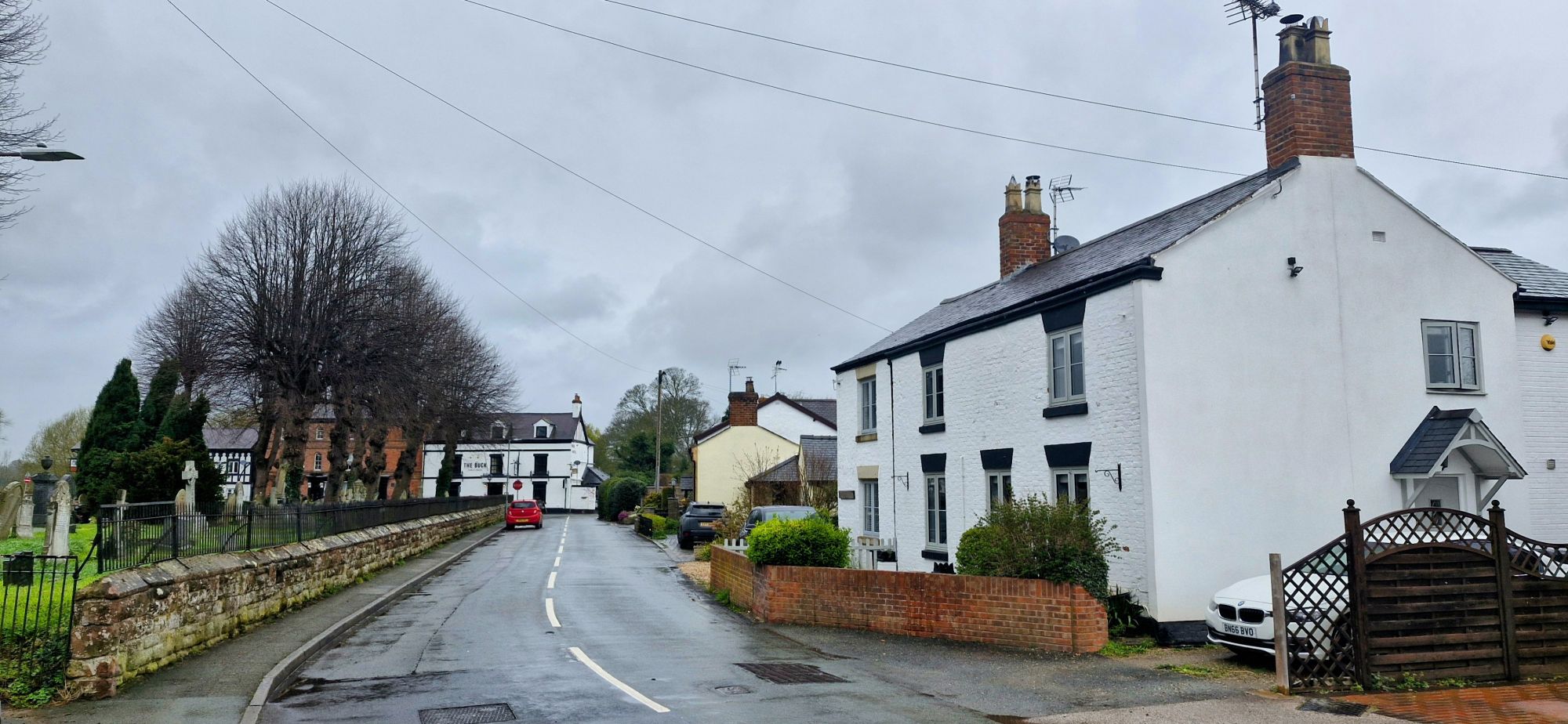
We turned left and headed back towards the village along Overton Road. Greenacres and Greylands both date from the late 19th century.
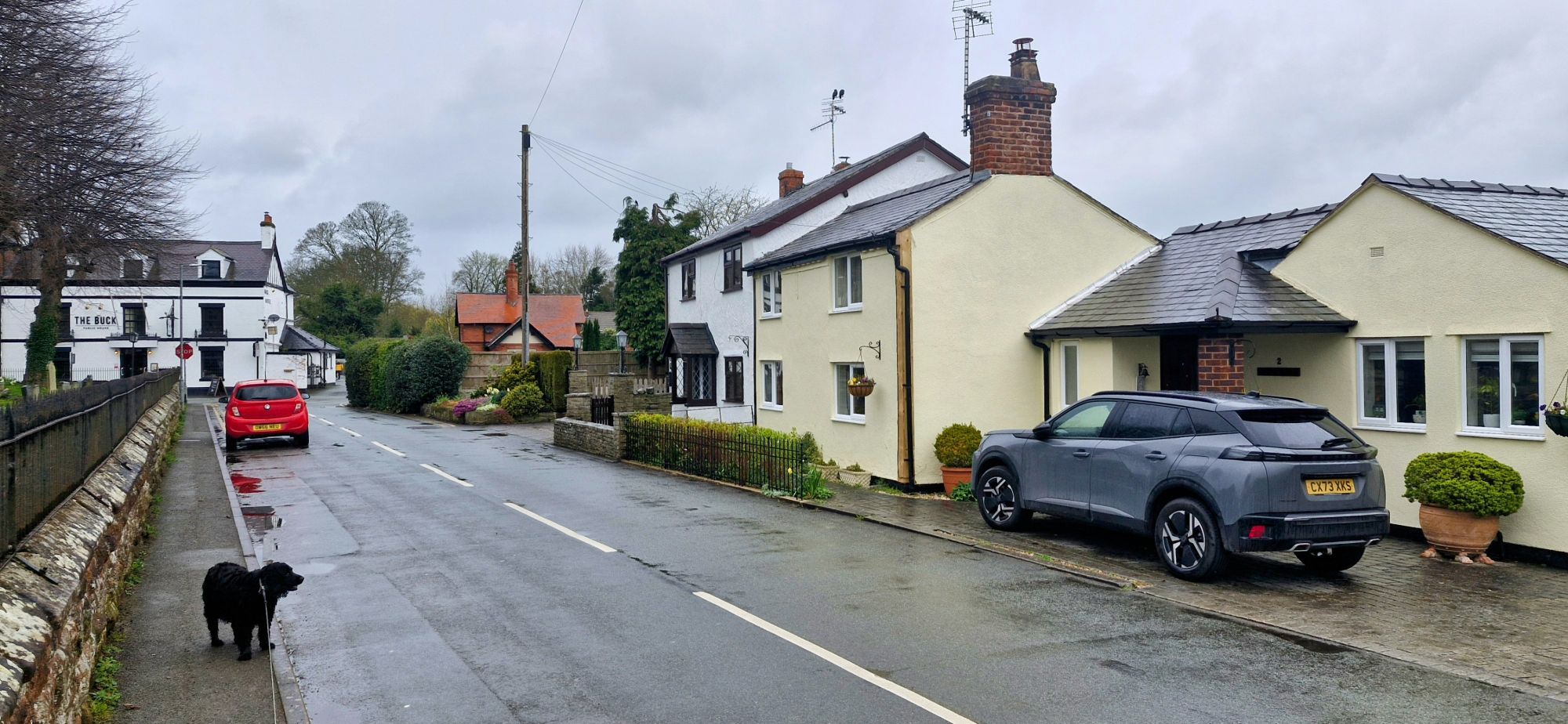
We continued along Overton Road until we turned right at High Street just after Charcoal Cottage and Rosecroft. Both cottages date from the 19th century and have been greatly modernised.
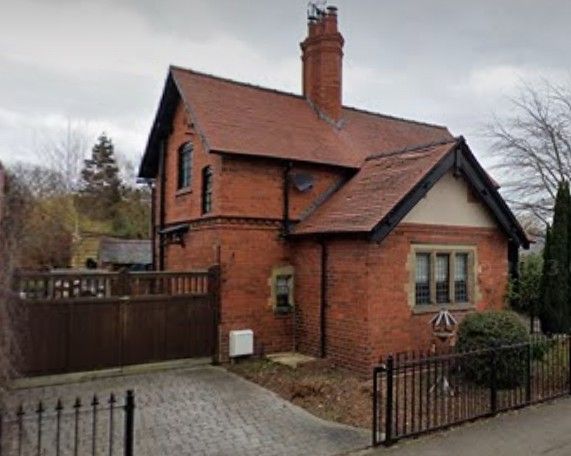
The lodge to the former rectory, now Bridgeman House, was on our left as we headed along High Street. I was getting a good soaking as the rain had picked up. My objections were overruled!
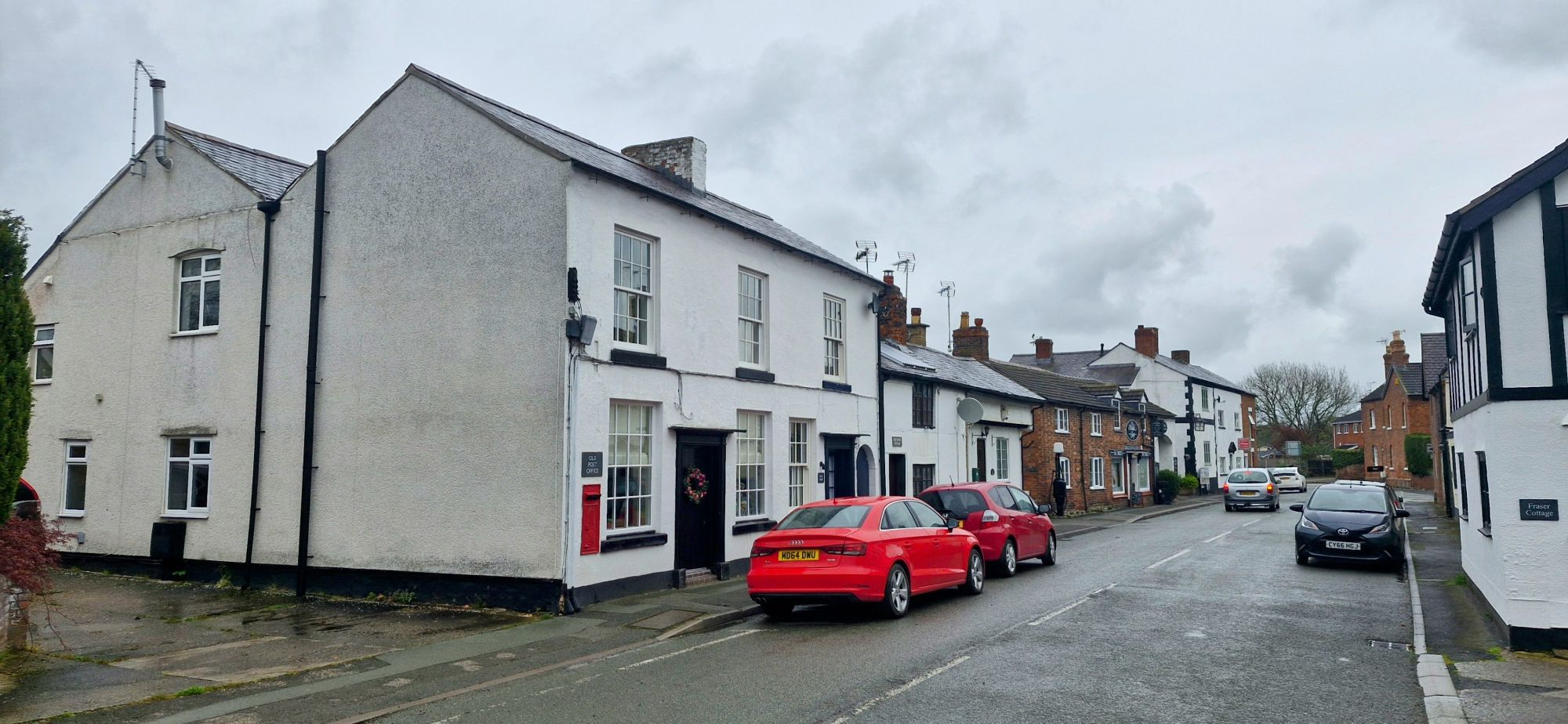
The Old Post Office is on the left with Orme Cottage next door, both early 19th century strucrures.

Directly opposite stands Fraser Cottage, which also dates from the early 19th century.
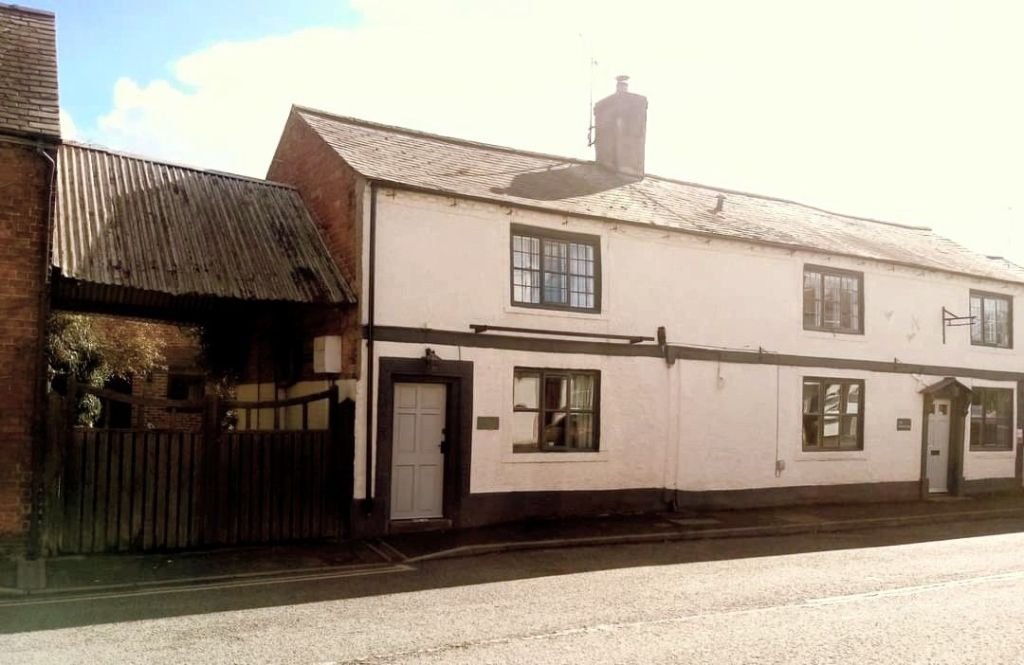
Attached to Fraser Cottage is the oldest remaining building in the village. Once a coaching inn, The Stableyard is Grade ll listed and currently divided into self-catering cottages. Built in the 1630s and still having its original oak beams and wattle and daub walls.

Outbuildings from the 19th century have also been converted into self-catering cottages.
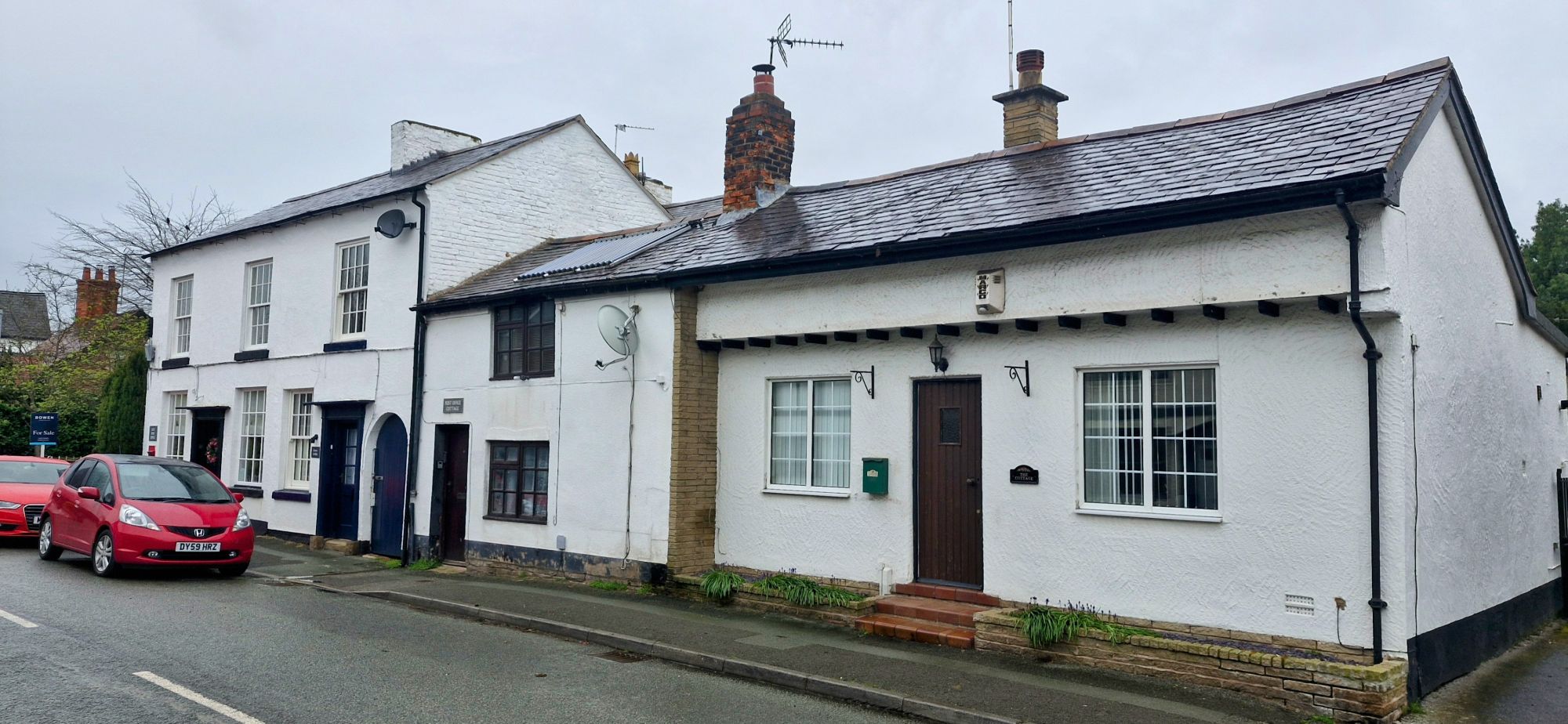
The Cottage is the last of three white painted houses in this part of High Street.
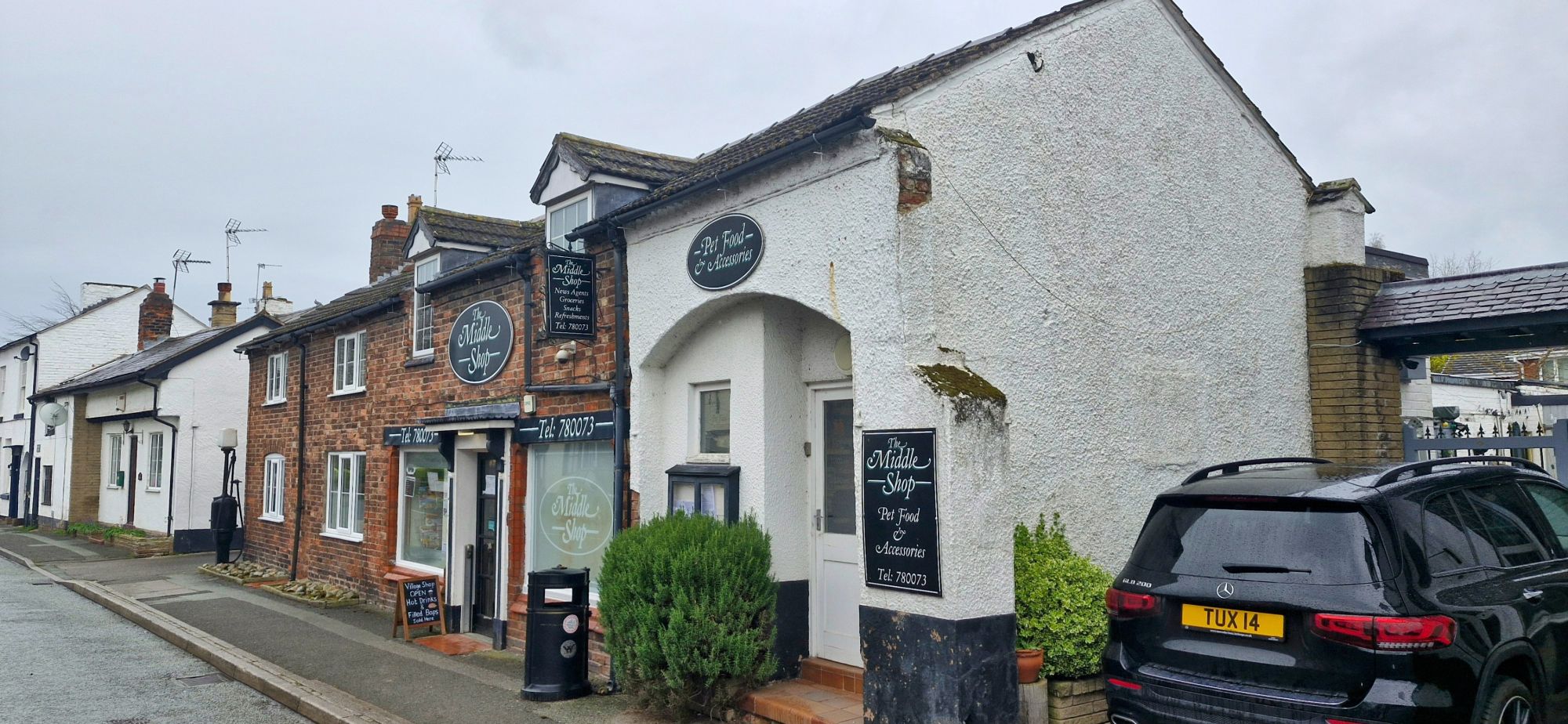
The three joined cottages in the row adjacent to the Post Office block are currently residential, a newsagent/grocery shop, and a pet shop.
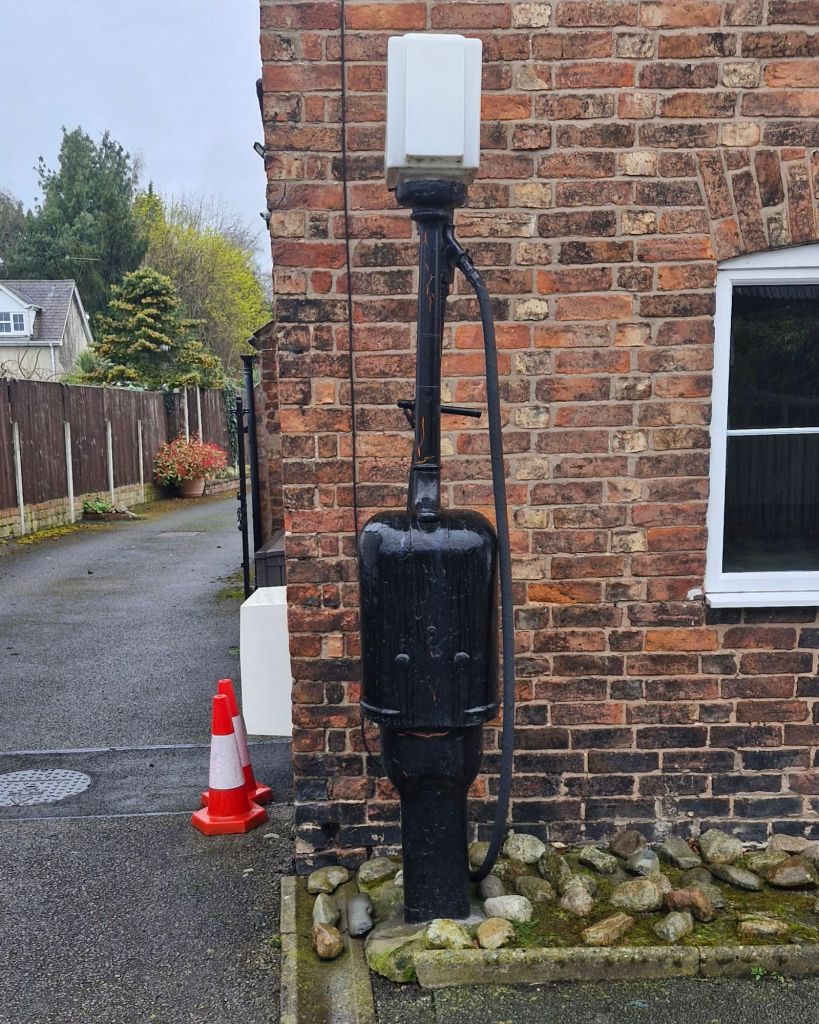
An old petrol pump stands on the roadside, long since out of use but still externally maintained. ‘It was probably last in use before you needed to take out a mortgage to fill your car with petrol’. That’s what The Grumpy Old Man said!
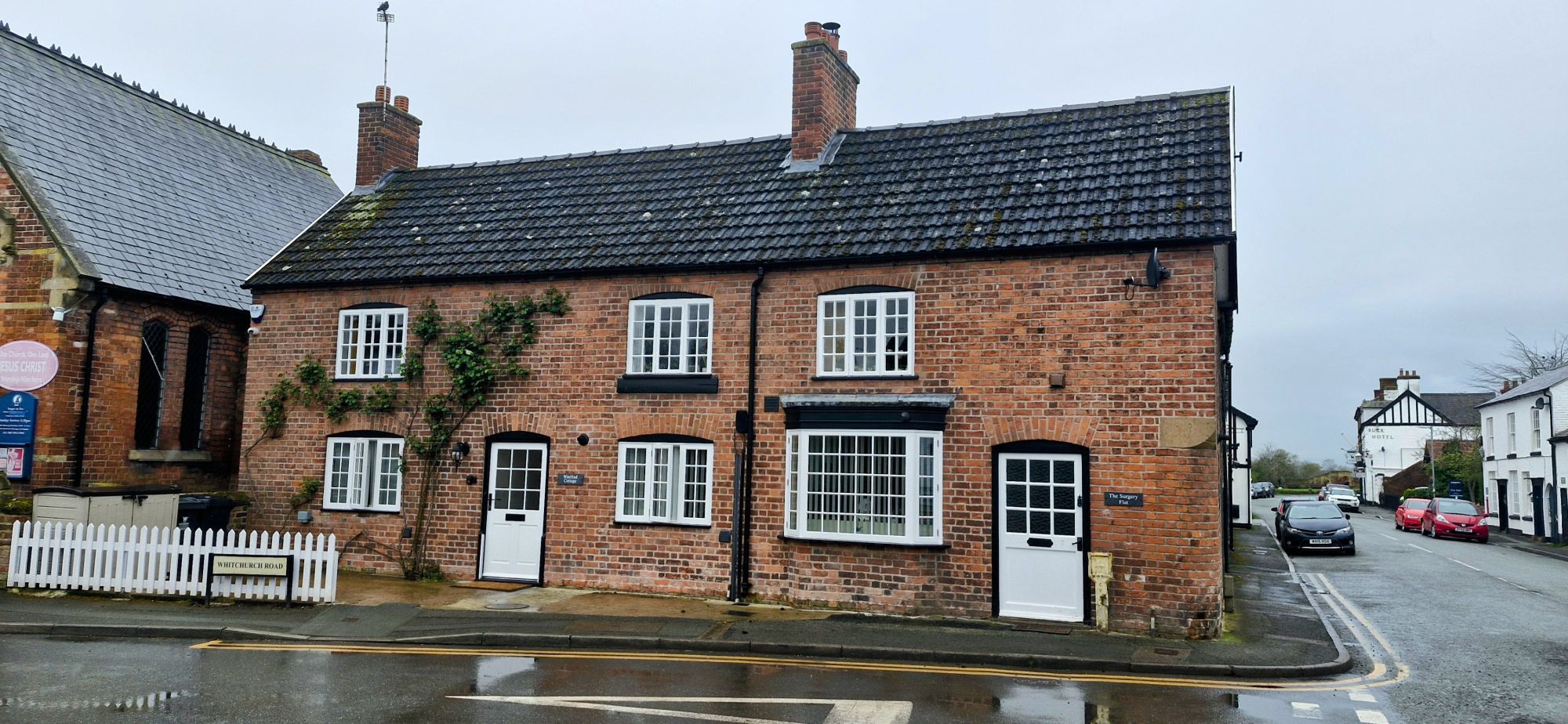
At this point, we turned into Whitchurch Road with the Old Surgery and Winifred Cottage on our right.
My human started to sing at this point. I looked around in all direcŕtions in case anybody was within ear shot. It’s so embarrassing. ‘Day Trip to Bangor’ by Fiddler’s Dram from way back in the day, he started to mumble. All that I could think was it is a different Bangor, Numpty! Thankfully, he only knew a few words, but even a few is too many!
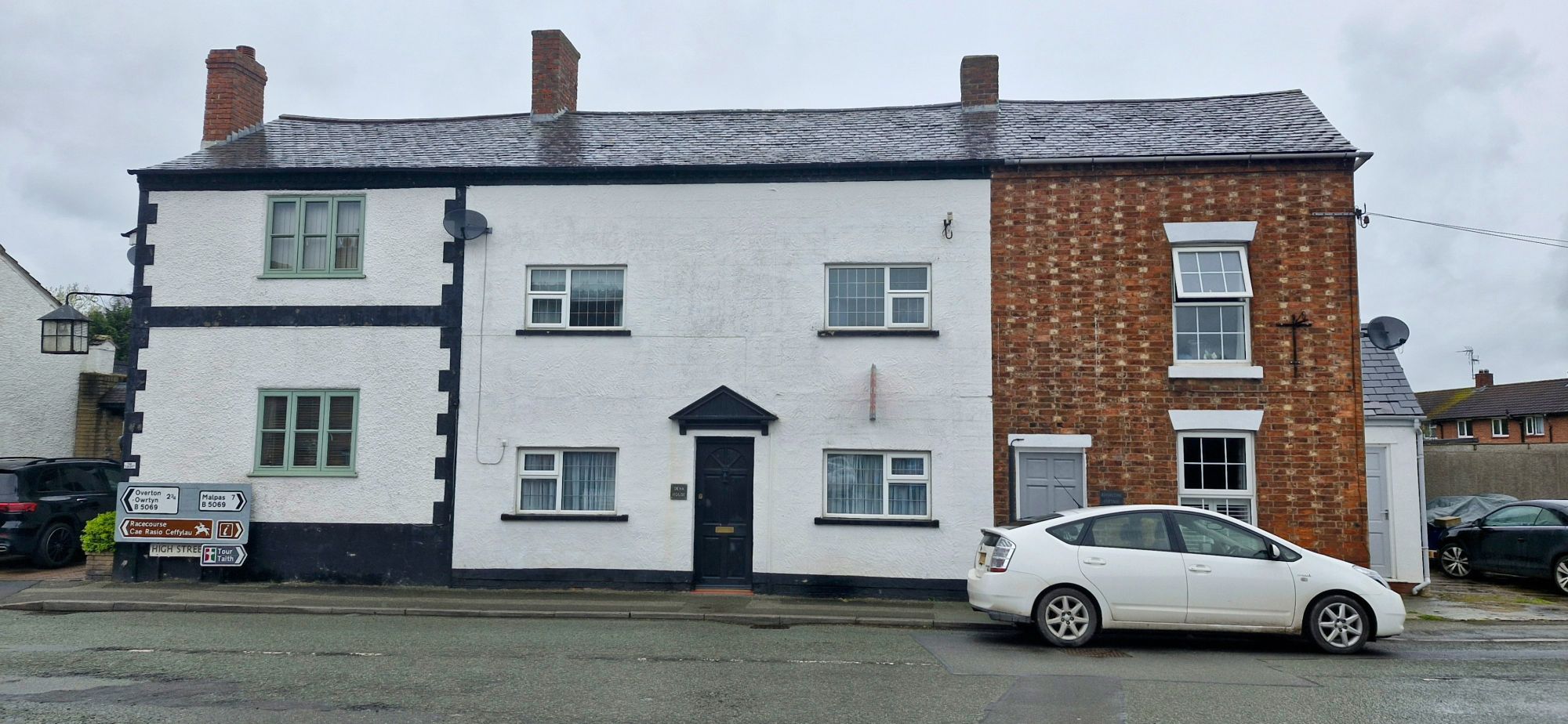
So, onwards and south-eastwards. Deva House stands at the junction of High Street and Whitchurch Road. Please don’t think that he is clever because he said ‘south-eastwards, because he had to check it on Google maps.
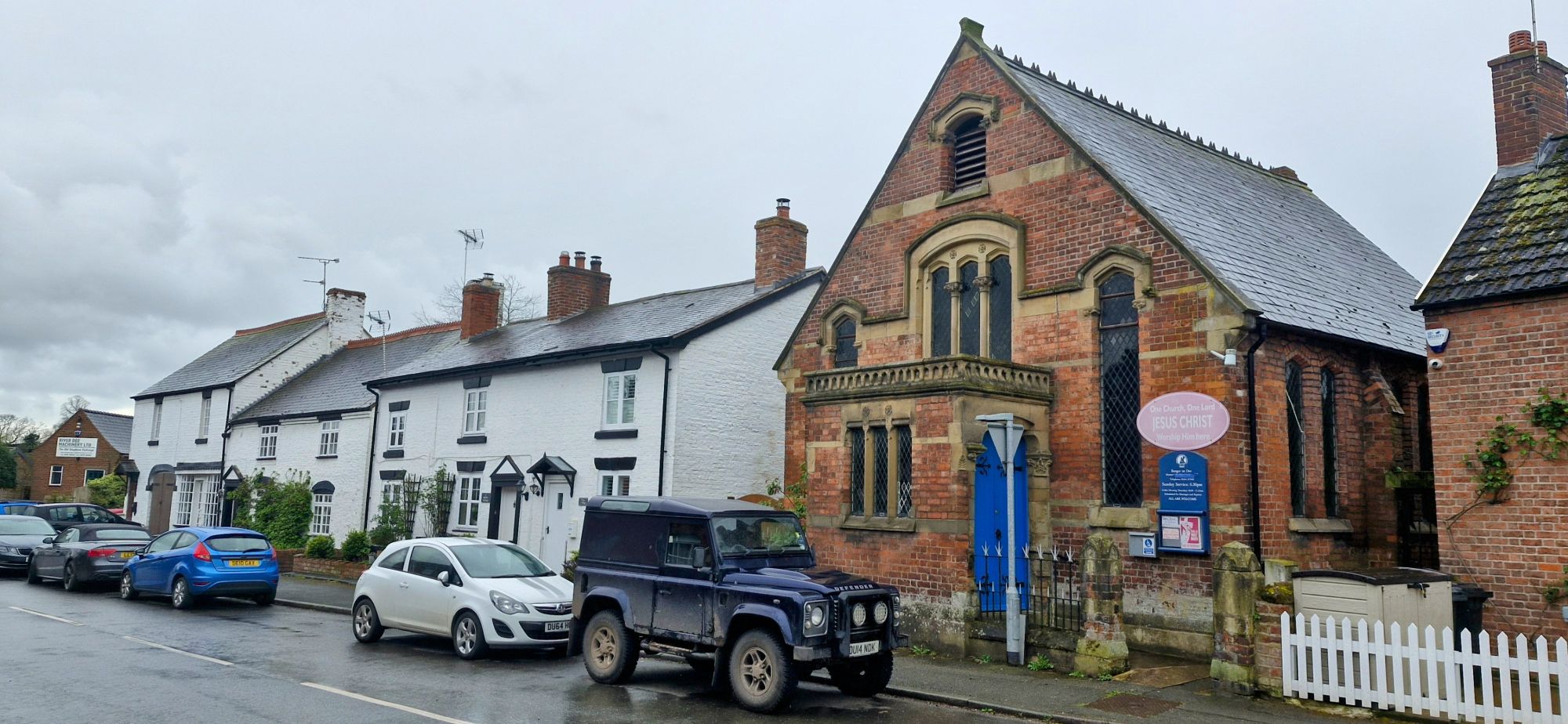
The Presbyterian Church of Wales was built in 1870 to replace the meeting room above William Davies’ shop.
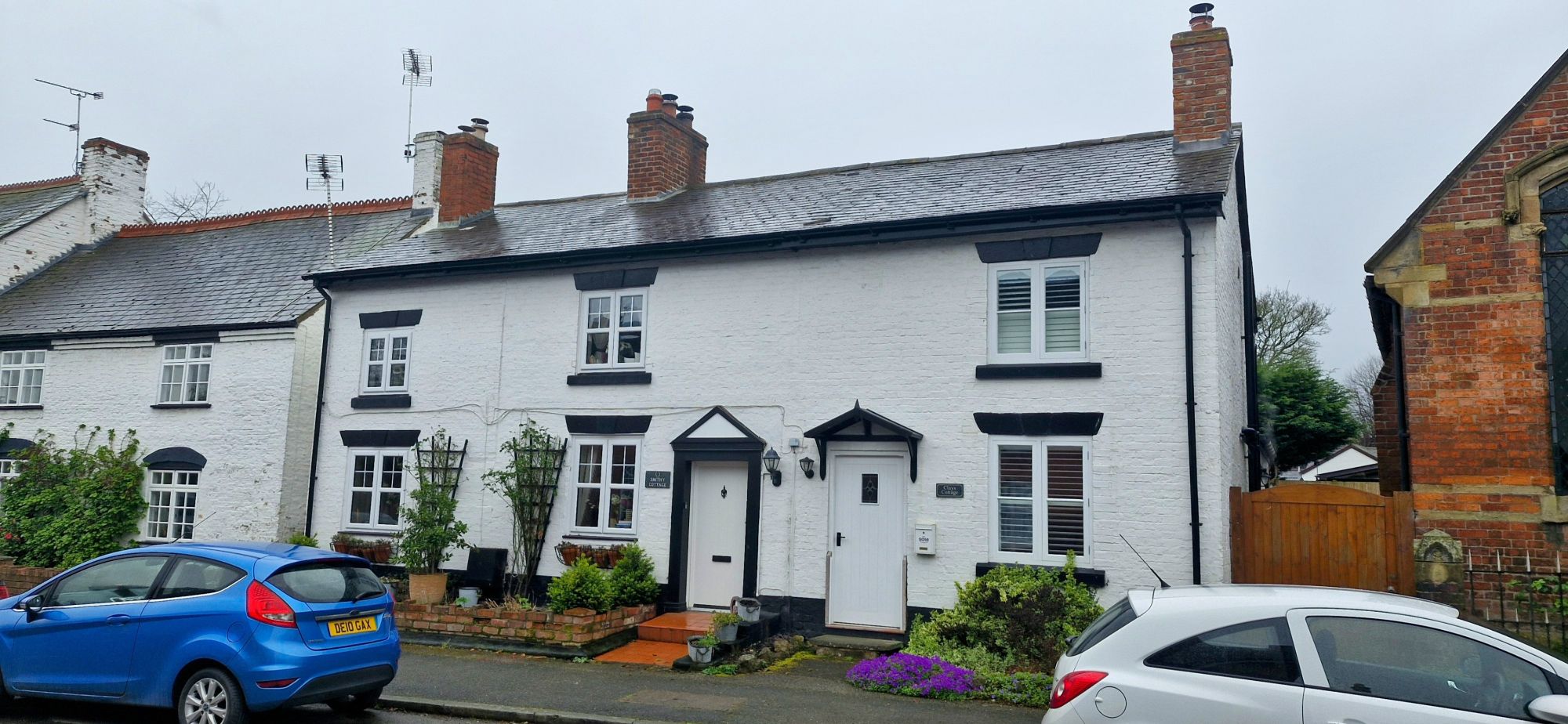
Clays Cottage and the Smithy Cottage are next to the church. We continued along Whitchurch Road.
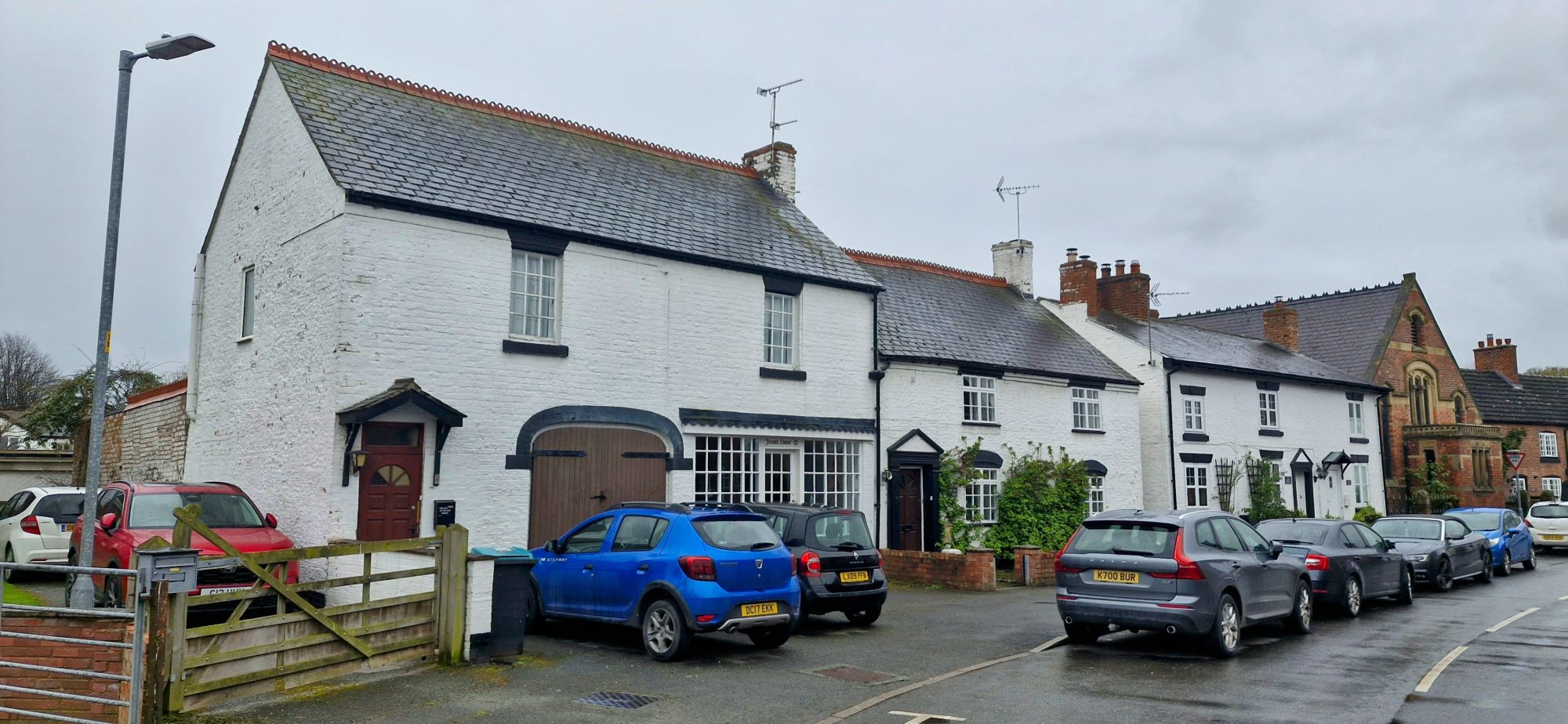
The Old Smithy, with its large cart door, completes a row of white rendered buildings.
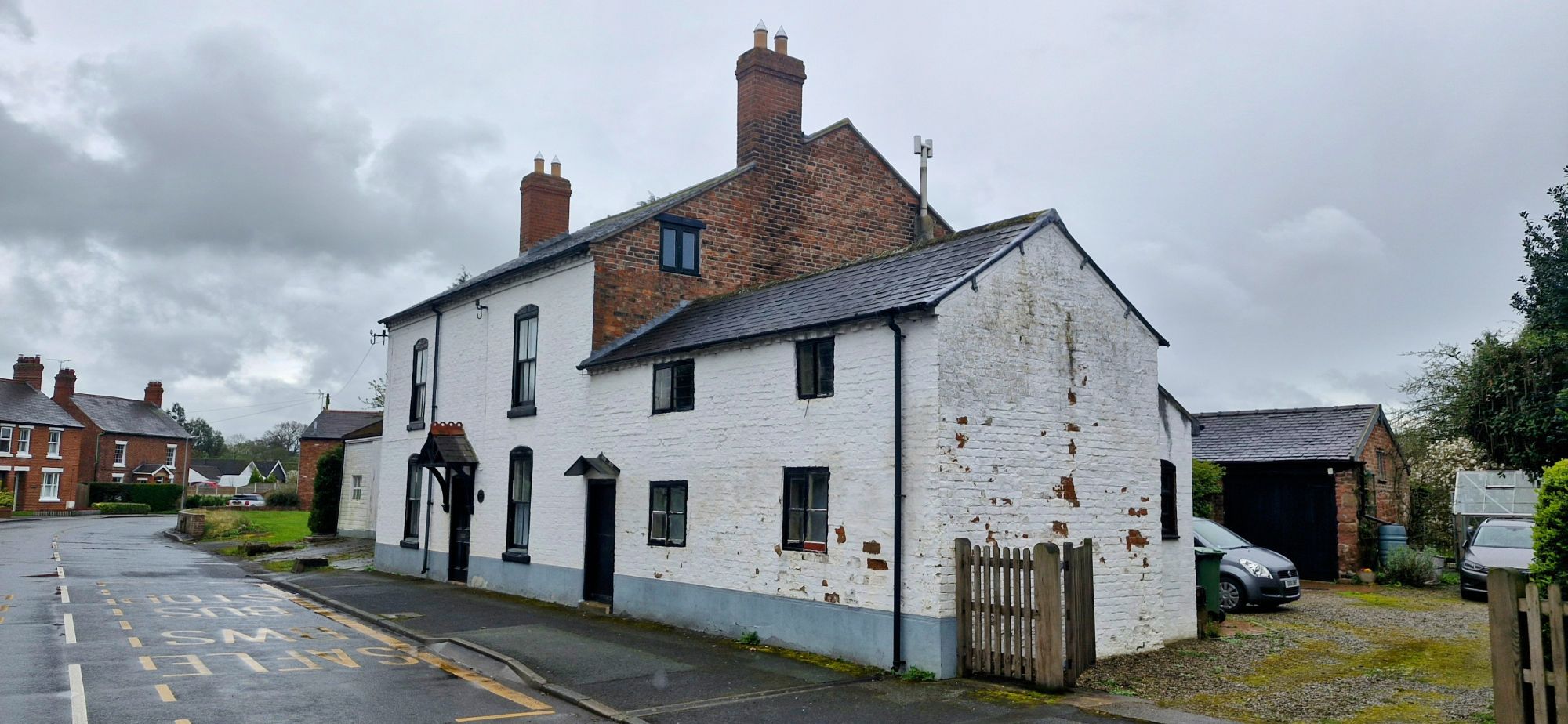
We continued along Whitchurch Road until we turned right into Abbeygate Walk. This took us to Overton Road after we had passed through a relatively modern estate.

Orchard House stands back from the road as we re-entered the older part of the village.
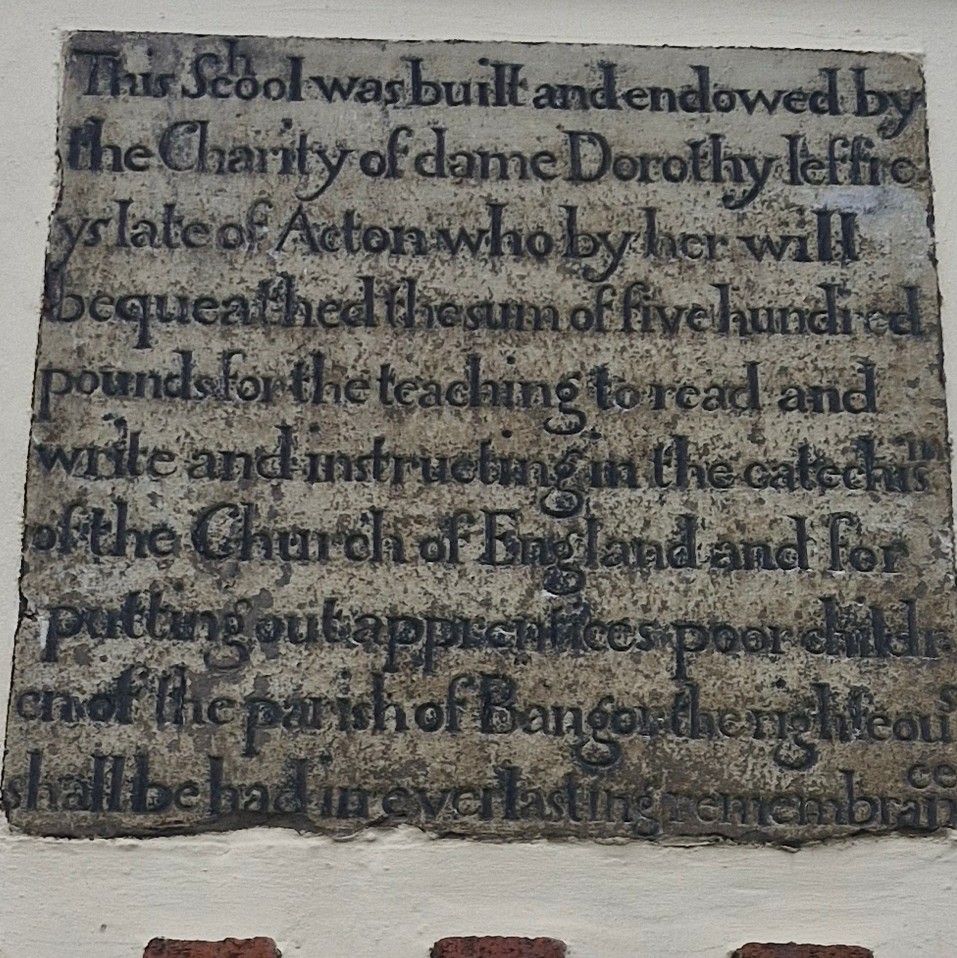
As we approached St. Dunawd’s church yard, my human spotted a plaque on the modern village hall. I asked him if it dated back to when he was in school. Ha!
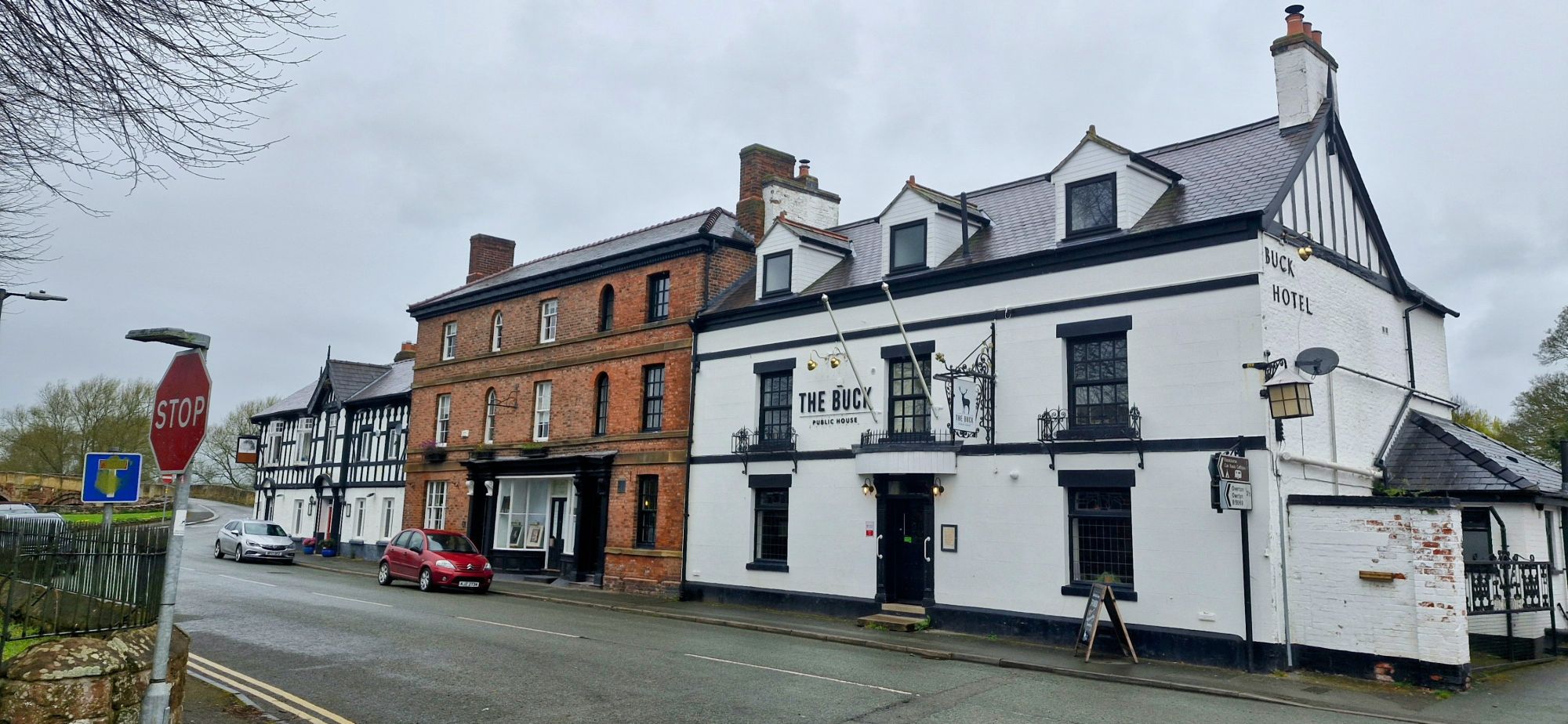
The Buck public house, formerly a hotel, is an early 18th century adjoins the Old Bridge House that was built later in that century. This was the end of our little stroll around the pretty little village of Bangor on Dee. Til next time!
Why is it that when we get back from a walk that before I can have a tiny treat, I have to be washed and dried? Then I have to sit in my bed. Then I have to sit, lay down, give a paw, and be told I’m a good boy (which we all know, already). Then I get the tiniest treat imaginable, the size of a scrap of food that would get stuck in your teeth. My human, on the other paw, gets a 12-inch hot and spicy pizza to himself, and he doesn’t have to earn it by doing a series of annoying tricks. ‘Not every animal is equal, some are more equal than others’. I seem to remember a human once saying that.
 Joe the Cocker's Hikes
Love Joes last comments…..he has a real sense of humour!
LikeLike
My human thinks that I am too cheeky. I’ve got him wrapped around my little finger. Well, my little nail 👍👍
LikeLike
Thanks for another interesting village report Joe. Very interesting facts, great photos especially the ones of you
LikeLike
It’s a pleasure. More to come 👍👍
LikeLike
Looks like a nice interesting walk. The photos are really good.
LikeLike
Looks like a nice interesting walk. The photos are amazing.
LikeLike
Thanks Jean. It’s a pretty little place ✨️
LikeLike