
Hello again people and pooches. Joe the Cocker here. I’m going to hand this blog over to my human because it was a totally self-indulgent trip that he has wanted to do for many years and means a lot to him.

Hello everyone. Joe the Cocker’s human here. Music has been at the centre of my life since I was a sprog in the sixties. I’ve loved and lived through many genres of popular music from pop to prog rock, punk, post punk, indie, rock, metal etc etc. I loved the Stones, Jimi Hendrix, Genesis, Dylan, Pistols, Clash, Metallica, Slipknot, Rammstein etc etc. I have seen hundreds of bands live and have been to many festivals. But, by far, the band who had the most influence on me over my life is Joy Division. Ok, not everyone’s cuppa tea! I understand that.
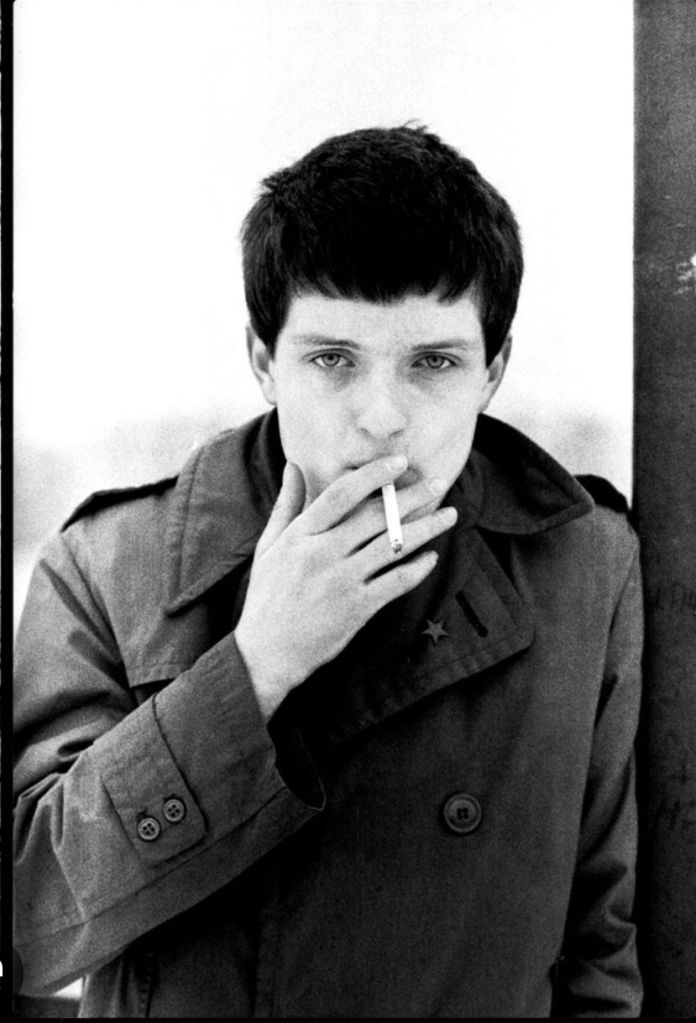
For those who are unfamiliar with Joy Division, they were formed in the late 70’s in the Manchester area. They only produced two studio albums before the tragic suicide of their legendary front man, Ian Curtis, at the tender age of 23. Ian led a tortured life with mental health issues. He was an amazing singer-songwriter and a unique performer. Their music is far from being the depressing sound that many accuse them of making. Well, in my humble opinion.
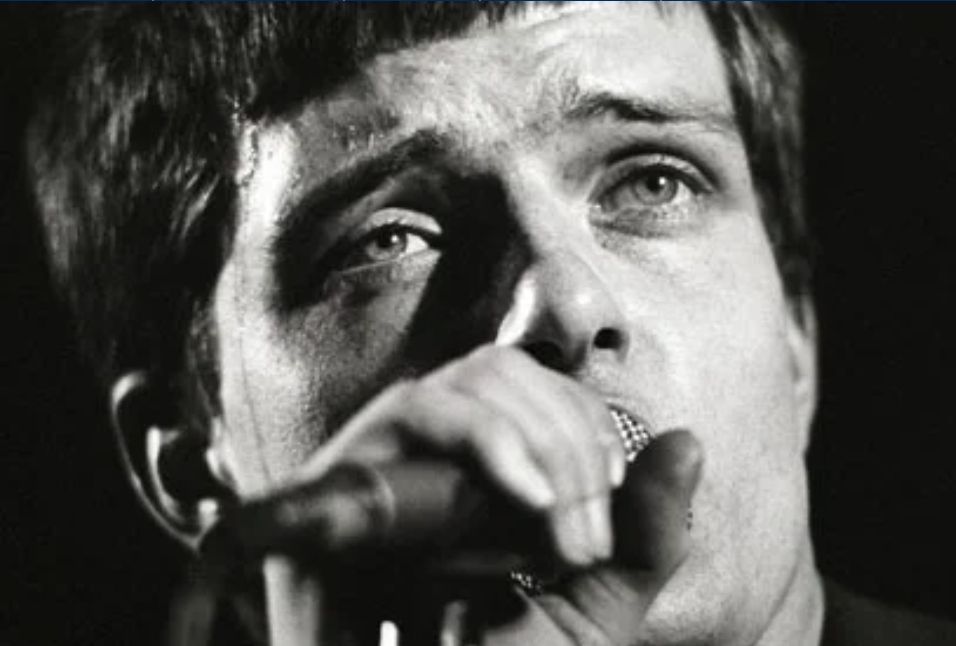
The reason for my visit to Macclesfield was primarily to visit Ian’s cremation plaque or grave as it’s known. I simply wanted to say ‘thank you’ for providing me with many, many hours of musical pleasure.
I saw Joy Division only once, and that was in the legendary Eric’s in Mathew Street, Liverpool. They headlined two gigs that day, a matinee for under 18’s and an 8:30pm performance for over 18’s. The support band was Swell Maps, who were a punk band. So, on the 11th August 1979 at around 10pm I witnessed a stunning performance by the best band I have ever seen. Not bad for £1.60.
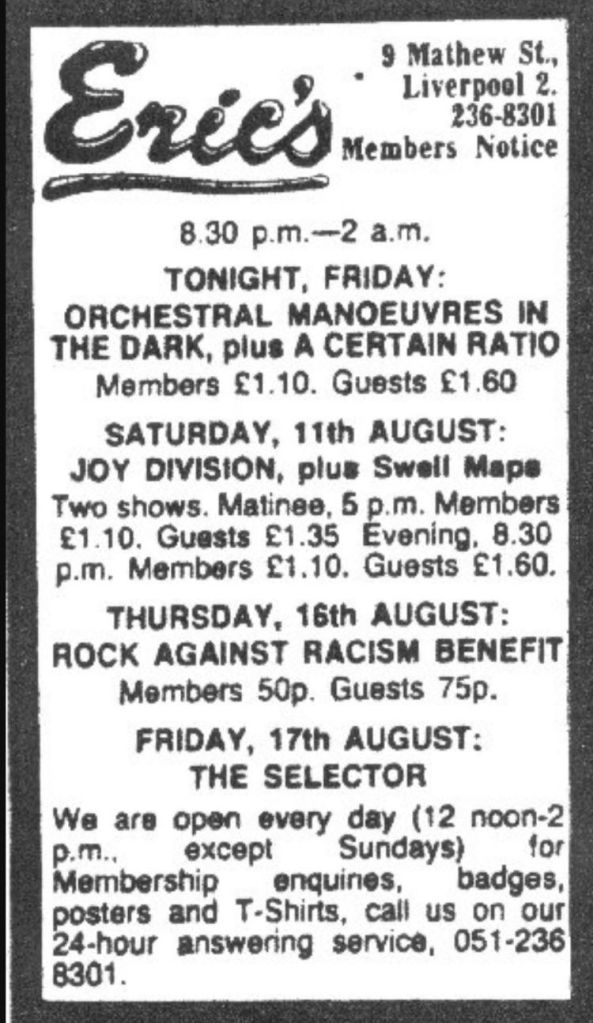
Swell Maps produced a typical punk sound and atmosphere with plenty of crazed arm thrashing and bouncing around. Something akin to pogo dancing that developed during the punk rock scene. But, when Joy Division appeared, the mood changed. The audience stood and stared in amazement. Ian led the set with ‘Insight’ and soon threw himself into his enigmatic dance style. The style developed from his seizures caused by his rapidly deteriorating epilepsy.

I bought Joy Division’s EP, An Ideal for Living, in the summer of 78 and had eagerly been waiting for more releases. On 15th June 1979, Unknown Pleasures was released, their debut album. I recall buying my copy from our local record shop at 9 am. that day. I rushed home to play it. WOW! It was everything that I had hoped for, if not more!

It wasn’t until 18th July 1980 that their second album, Closer, hit the shops. Sadly, Ian Curtis died on 18th May. Ian took his own life after his life was spiralling downhill. His wife, Deborah, had recently filed for divorce after discovering his affair with Annik Honorè, a Belgian journalist. The band was on the eve of an American tour, which Ian was dreading. His physical state, along with his mental state, was rapidly deteriorating due to increasingly severe epileptic siezures.
Obviously, this is a simplified version of events, and I could probably write a book about Ian Curtis and Joy Division. Needless to say, his life was a mess by the time he ended it.
His lyrics gave plenty of warnings to his struggles and, sadly, were unheeded by those closest to him. The other band members admitted this after his death. The second album contains so many references to his state of mind and was completed before his death but not released until afterwards. Ironically, the cover design is a photograph of a mausoleum, which had been designed before his death.
That was my early experiences of Ian Curtis and Joy Division. Now, on to my visit to Macclesfield. On a very grey November morning, I drove to Macclesfield Cemetary on my whistlestop tour of some of the significant locations linked to Ian Curtis.
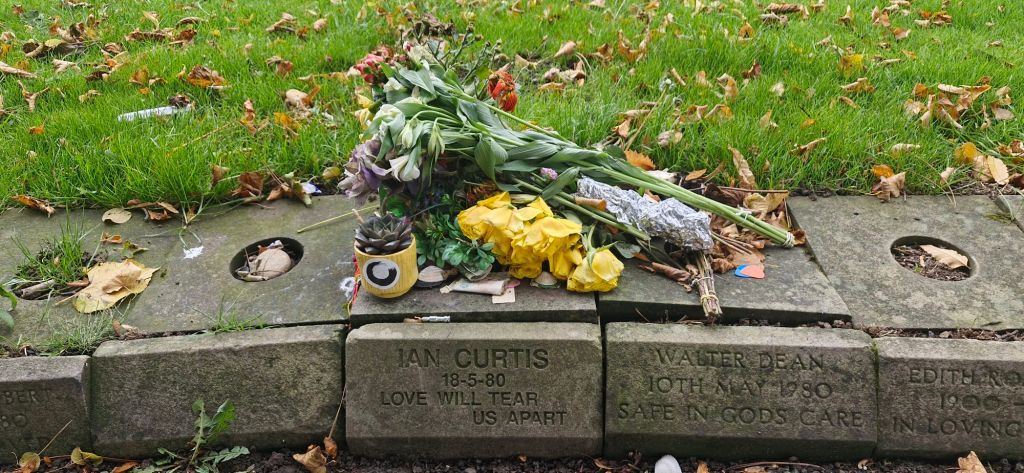
I found his memorial stone quite easily despite the tales that I have read about how difficult it is to find. It lies on the side of one of the graveyard internal roads. I was looking for the highly decorated stone that I had seen in photographs. Sadly, it was adorned with only a few bunches of flowers in a sorry state of decay plus a small potted succulent plant. A few small trinkets lay on it, including a few plectrums, a small amount of coins, and folded money from various countries.
The inscription ‘Love Will Tear Us Apart’ is the title of the postumously released single by Joy Division. The song refers to the relationship between Ian, Deborah, and Annik.

I stood and gazed for a few minutes while I listened to ‘Twenty Four Hours’ on my earpods. It’s a particularly poignant and revealing song from the ‘Closer’ album. I won’t deny it, I shed a tear or two. This was something that I had felt a need to do for over 40 years. There are a number of personal reasons for my wanting to do this, but here is not the place or time for me to discuss this. I am so glad that I finally visited to pay my respects and to share a private moment.
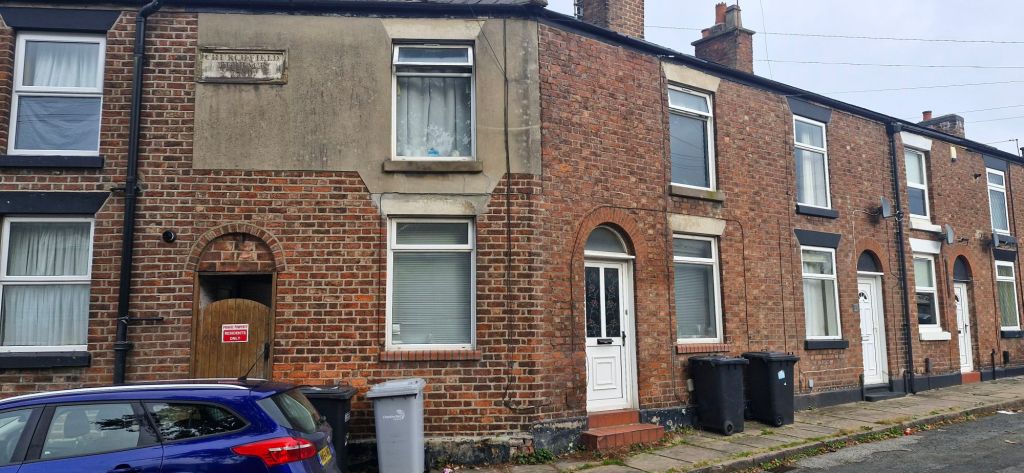
The second place that we visited was the house that he lived in with Deborah, his wife, and Natalie, his young daughter. Standing accros the road from this building really gave me the chills. 77 Barton Street was the place where Ian Curtis spent his final moments. After a particularly turbulent time, Deborah and Natalie were not at home on the night of 17th May 1980. She returned home at 10 am. the following morning to find her husband dead in the kitchen. He had laid in front of himself photographs of Deborah and Natalie and had listened to ‘The Idiot’ by Iggy Pop and then hanged himself with the washing line.
I did not linger at this spot as it is a privately owned house. The kitchen window blind is permanently in the closed position to prevent prying eyes. I felt really uncomfortable, so I moved on.

The house was reputedly planned to become a museum a few years ago, but the venture fell through.
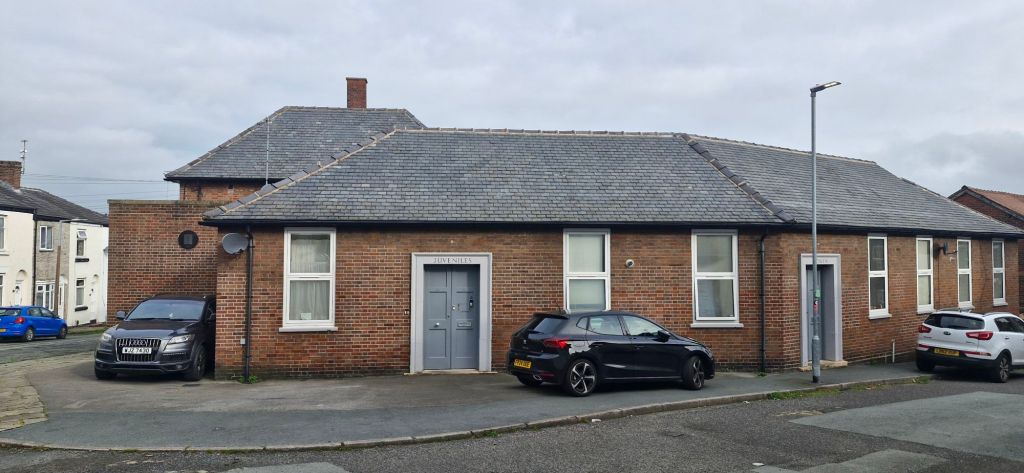
A few hundred yards away is the old Employment Exchange where Ian worked as an Assistant Disablement Resettlement Officer while he lived in Barton Street. The building, on the corner of South Park Lane and Armitt Street, has been converted into flats.

Stephen Morris officially opened the convertion, and a plaque was placed on the side of the building to commemorate Ian’s time working there. The plaque shows the bands iconic Unknown Pleasures album cover that depicts the radio waves emitted from a pulsar.
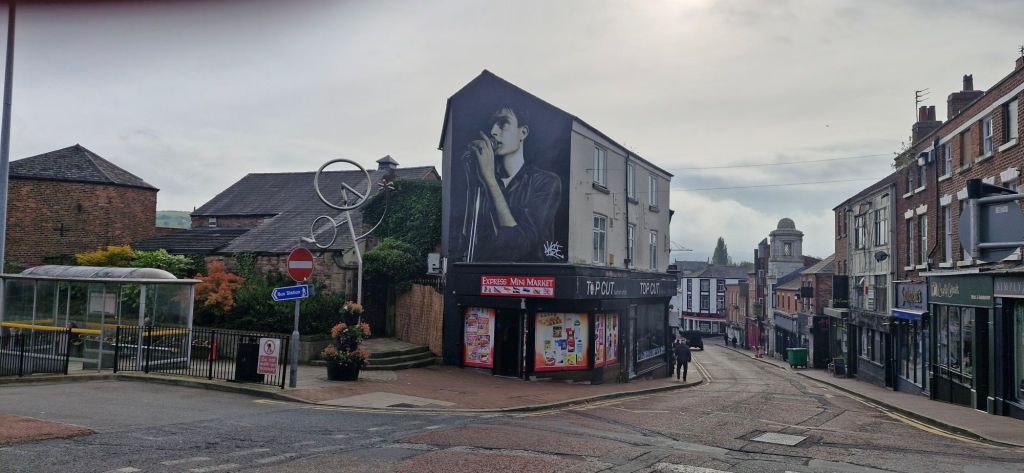
My next stop was in the centre of Macclesfied, in Mill Street, to be precise. The artwork, by Akse, adorns the gable end of a row of shops in the town centre.
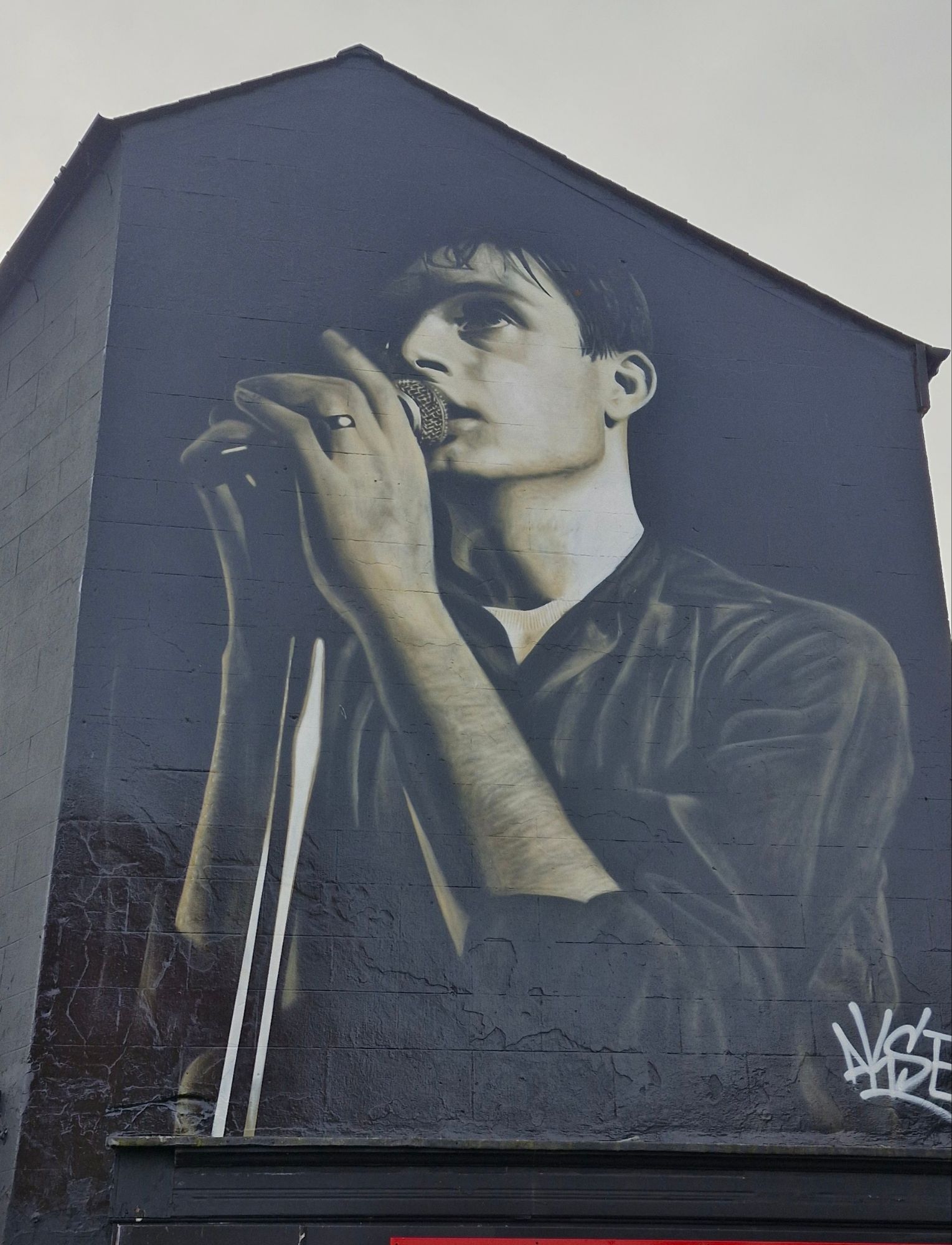
The mural is based on the iconic photograph taken in 1979 by Kevin Cummins.

A smaller mural depicting the Unknown Pleasures album art can also be seen in the Churchill Way car park. It’s not as grand as the Mill Street mural but is another nod of appreciation to the band.

A close up of the Churchill Way artwork.

Heading out of town is the site of Ian’s secondary school, Kings School, where Ian gained a scholarship. I remember the grounds of the school from my teen years, but the building has been radically modernised. I was in the same year as Ian, albeit in a different school. We played Rugby Union against Kings. I played against them in Macclesfield a few times during my time at Helsby.
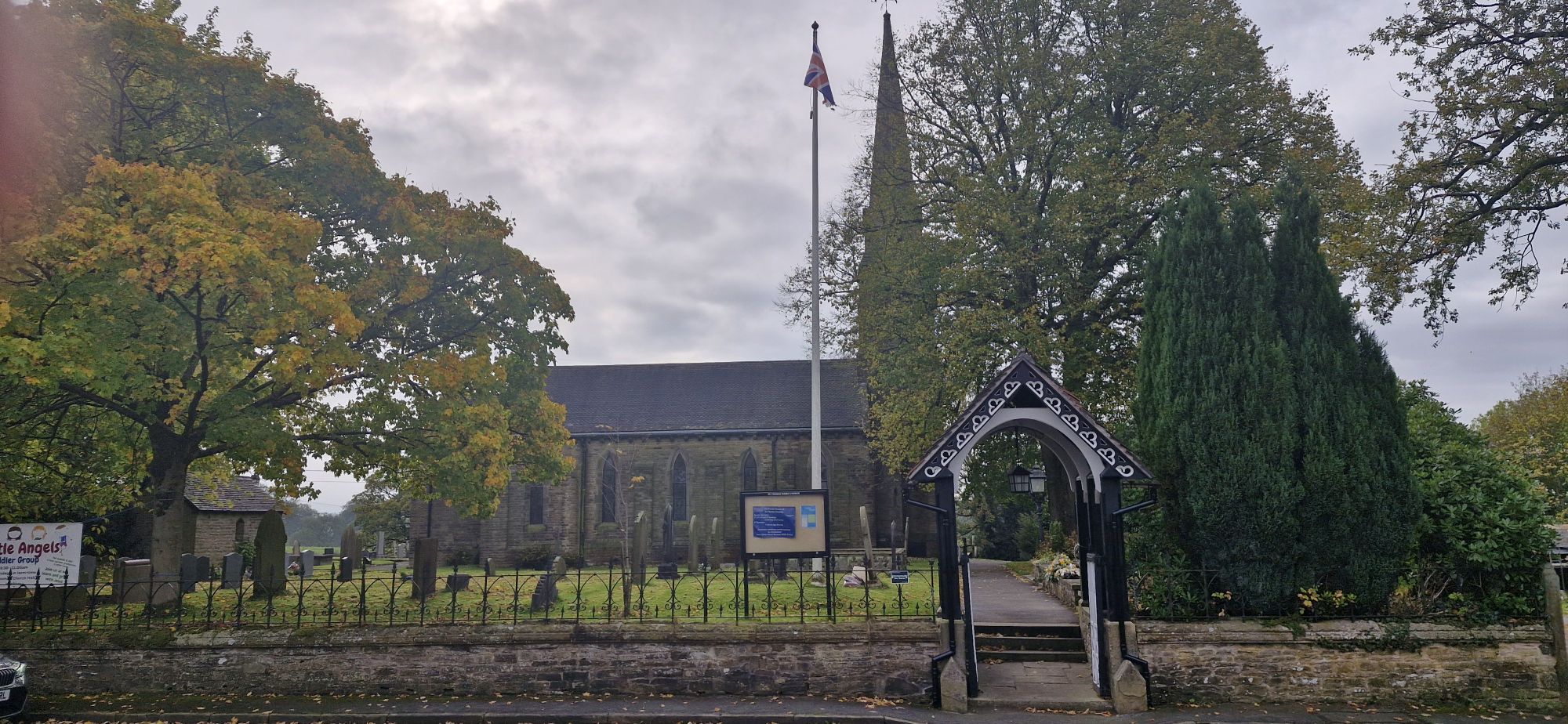
A few miles from Kings’ School is St. Thomas’ Church in Henbury where Ian and Deborah married. They married in 1975 at a young age, with Ian being 19 and Deborah 18 years old.
There are plenty of other significant locations linked to Ian Curtis and Joy Division, particularly in the Manchester area, but it was his final resting place that I wanted to visit on this occasion. Maybe I will do a follow-up at a later date.
 Joe the Cocker's Hikes
It must have been an emotional day for you Malcolm. I did something similar once â I went to Brighton specifically to see the house of Aubrey Beardsley, the Victorian artist whose work inspired me to start drawing seriously. He too died in his mid-twenties; from tuberculosis.
LikeLiked by 1 person
It must have been an emotional day for you Malcolm. I once went to Brighton specifically to see the home of Aubrey Beardsley, the Victorian artist. He also died in his mid-twenties, but from tuberculosis.
LikeLiked by 1 person
I love Beardsley’s work. I studied graphic design and loved his black and white art nouveau style
LikeLike
Funny enough, I read only yesterday that was rated one of the best album covers of all time!
LikeLiked by 1 person
It’s unlike any other. Thank you for reading and commenting 😍
LikeLiked by 1 person
wow! I was here in the States during that time. Listening to the “not-so-good “ American music of the late 70’s on my radio alarm clock from Sears and Roebuck. Glad you got to Macclesfield.
LikeLiked by 1 person
It was an amazing music scene in Manchester in the late 70’s 😍
LikeLike