
Hello again people and pooches. Joe the Cocker here after a sunny Sunday morning’s local walk. We walk around our local area on most days. Sometimes, we walk around Ruabon, but we love to venture further afield.
Before we start we need to decide what to call the village. Is it Penycae, Pen y Cau, Pen y cau, Pen-y-Cau, Pen-y-cau, Pen-Y-Cau, or Pen Y Cau? We’ve seen it spelt in all of the above ways. We’ll call it Pen y Cau for now. Please correct me if I am wrong.
We headed from home along Church Street in Ruabon, through Pont Adam, and along the B5097 to Wynn Hall. We will consider the hall to be our starting point for this walk.
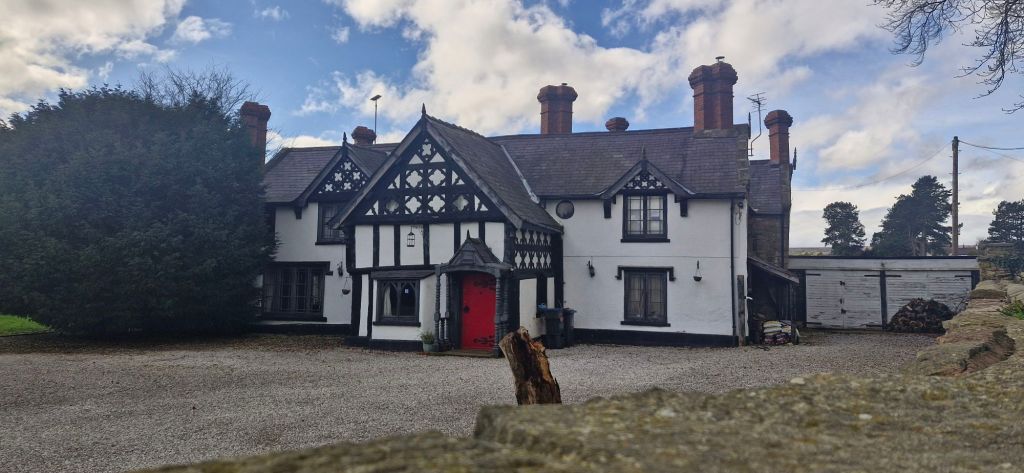
Wynn Hall was built in 1647 for William Wynn. It is a Grade ll Listed Building. On William Wynn’s death, his granddaughter married John Kenrick, and the house was owned by his family for over 200 years. Llewellyn Kenrick, the great-grandson of John Kenrick, was the first captain of the Welsh Internaltional Football team in 1876 against Scotland. He was instrumental in the formation of the Football Association of Wales.

We walked along the pavement with the Clwydian range of hills, forming the skyline ahead. My human enjoys looking at scenery. I prefer to have a good sniff around the long grass. Each to their own, I suppose, but he doesn’t know what he is missing.
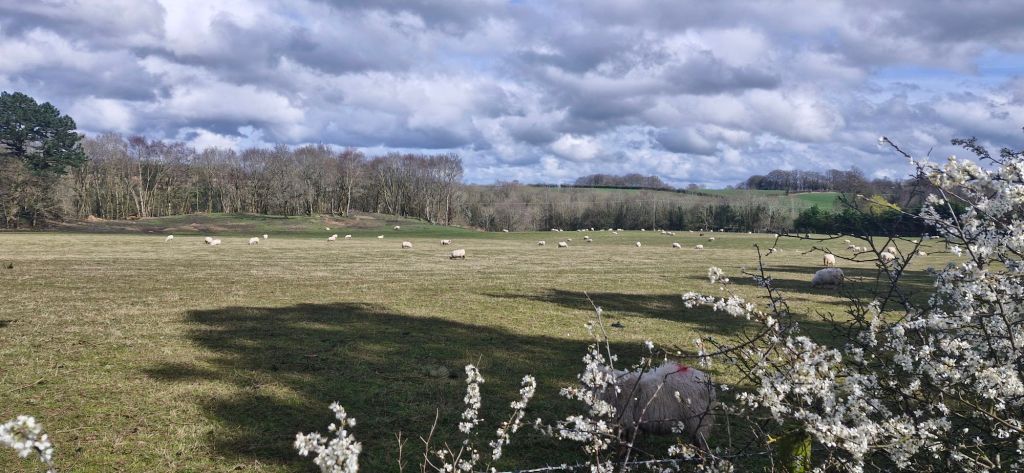
As we headed towards the village, I spotted sheep grazing in the field. I stare at sheep, and they stare back, but I don’t bark at them like I used to when I was a pup. My human says that I could be shot by a farmer if I bother sheep. I have decided to take his word for it!

I stopped for a short sniff in the long grass on the roadside before we headed uphill along Copperas Hill. My human didn’t join me. His loss!
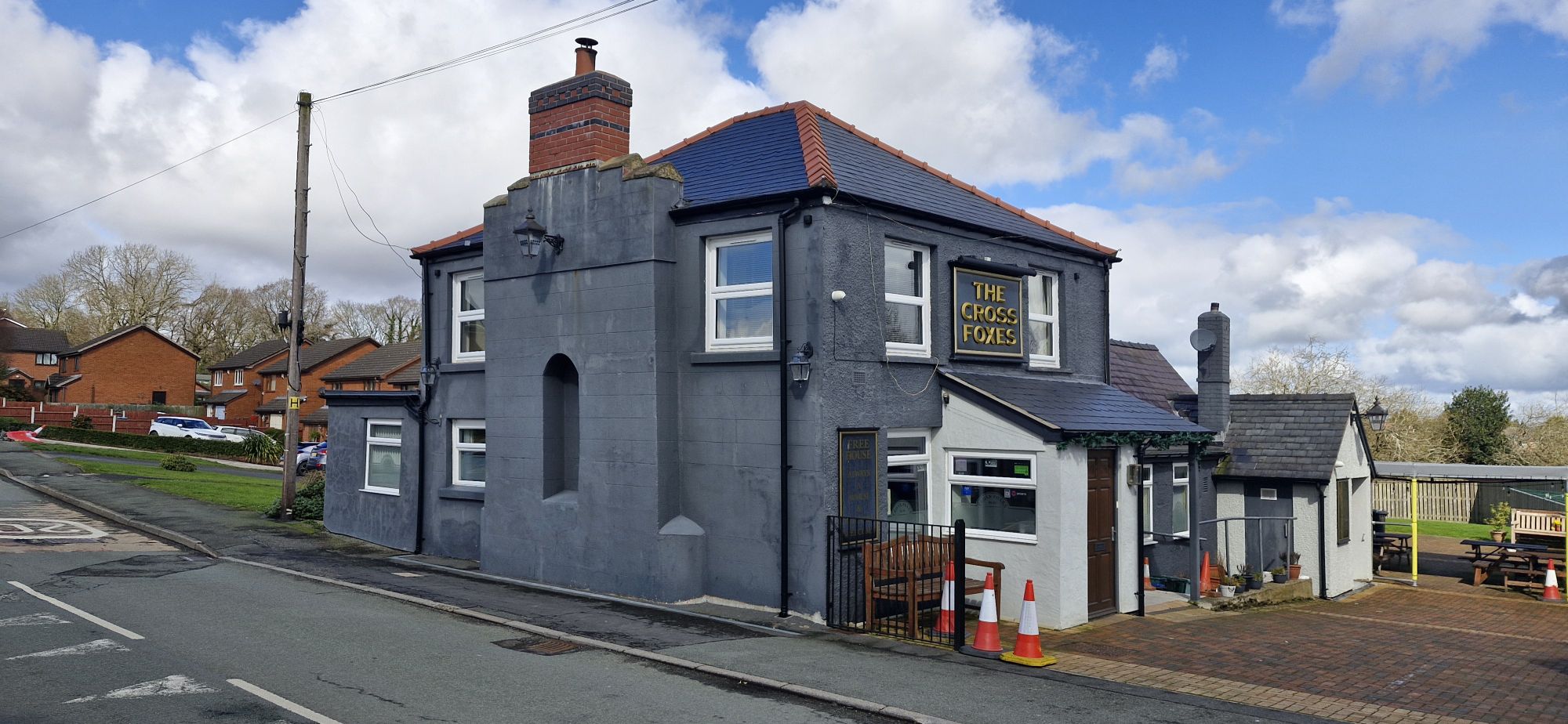
On Copperas Hill, we came to the Cross Foxes Inn, a pub that was established in 1859. The pub has been run by the same person, Bethan Roberts, for over 30 years and is a popular village meeting place.
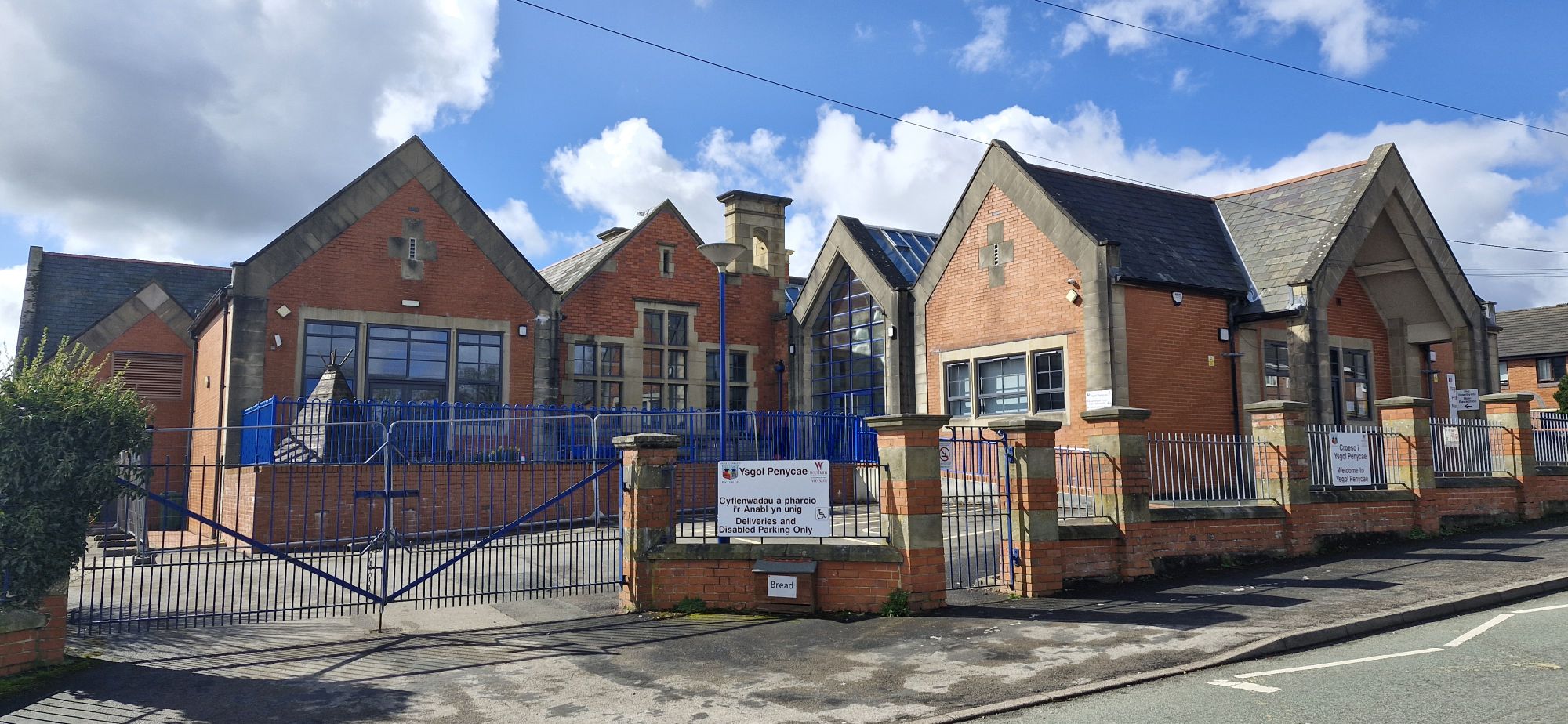
As we continued uphill, we came to Ysgol Penycae, the village community primary school. The school has fairly recently been modernised.
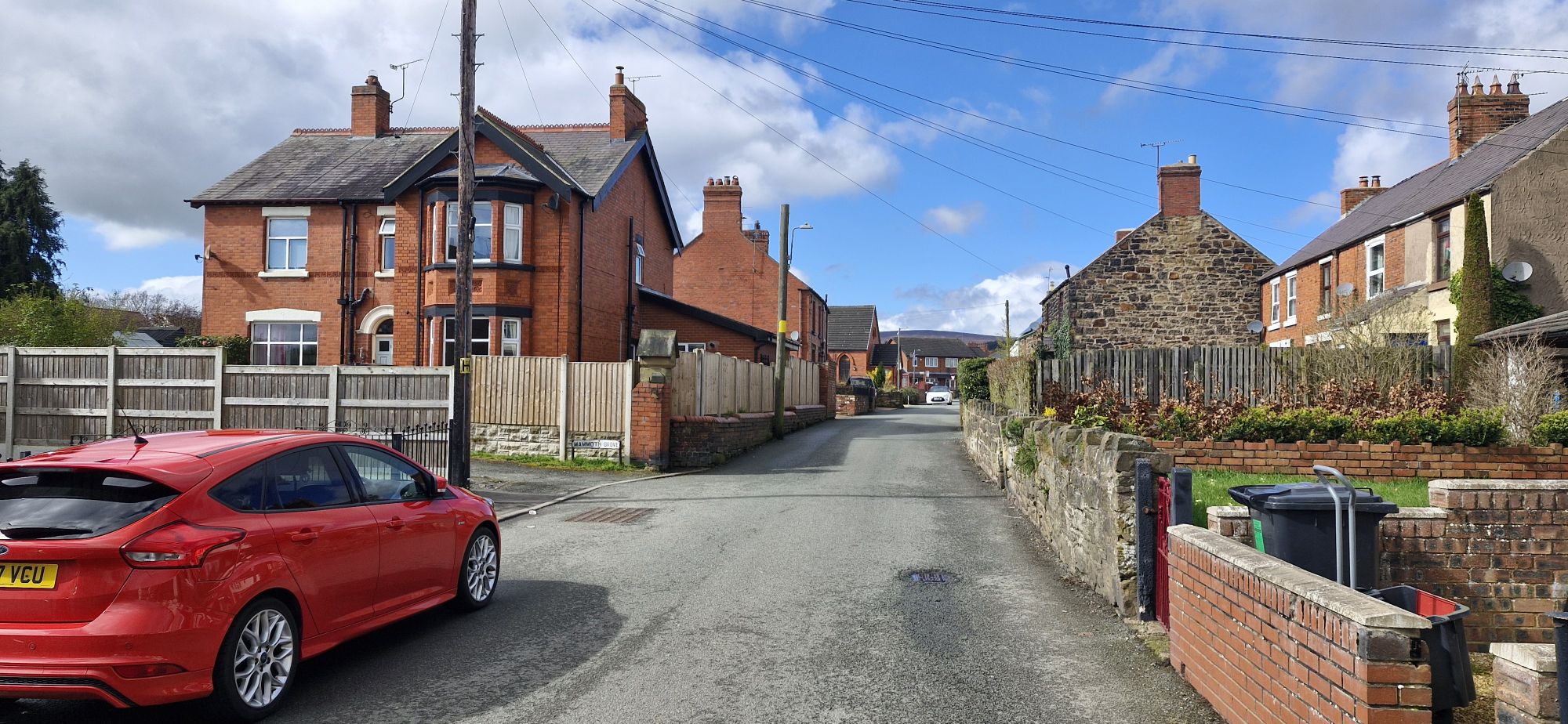
The road narrowed as we plodded on along Bryn y Coed, and it became Hall Street. I was on a short lead next to my human as we dodged some of the traffic. Not everyone agrees with the new 20mph speed limit, but in an area like this, 50mph seems a bit excessive, as one particular numpty who shot past us was obviously travelling at.
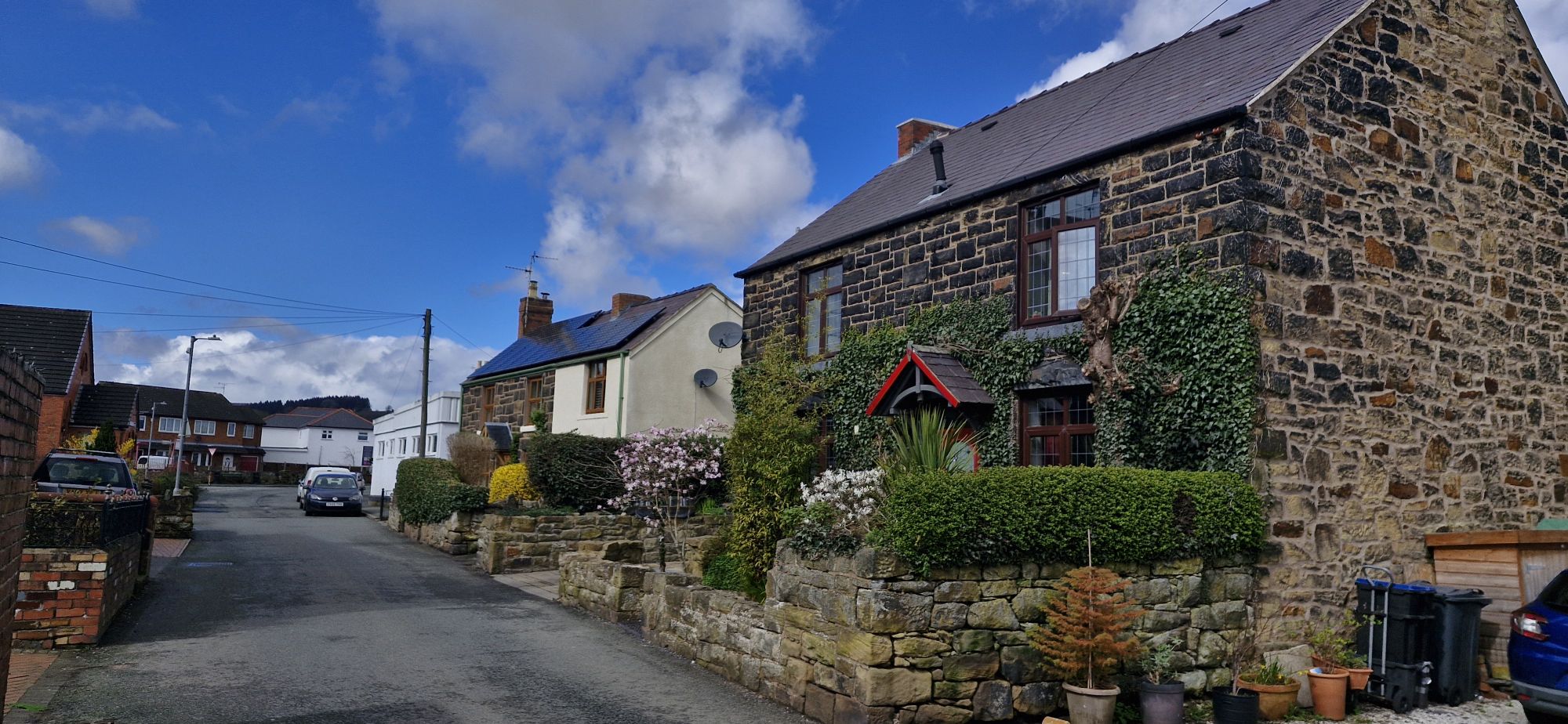
We passed some lovely sandstone cottages as we walked along Hall Street.
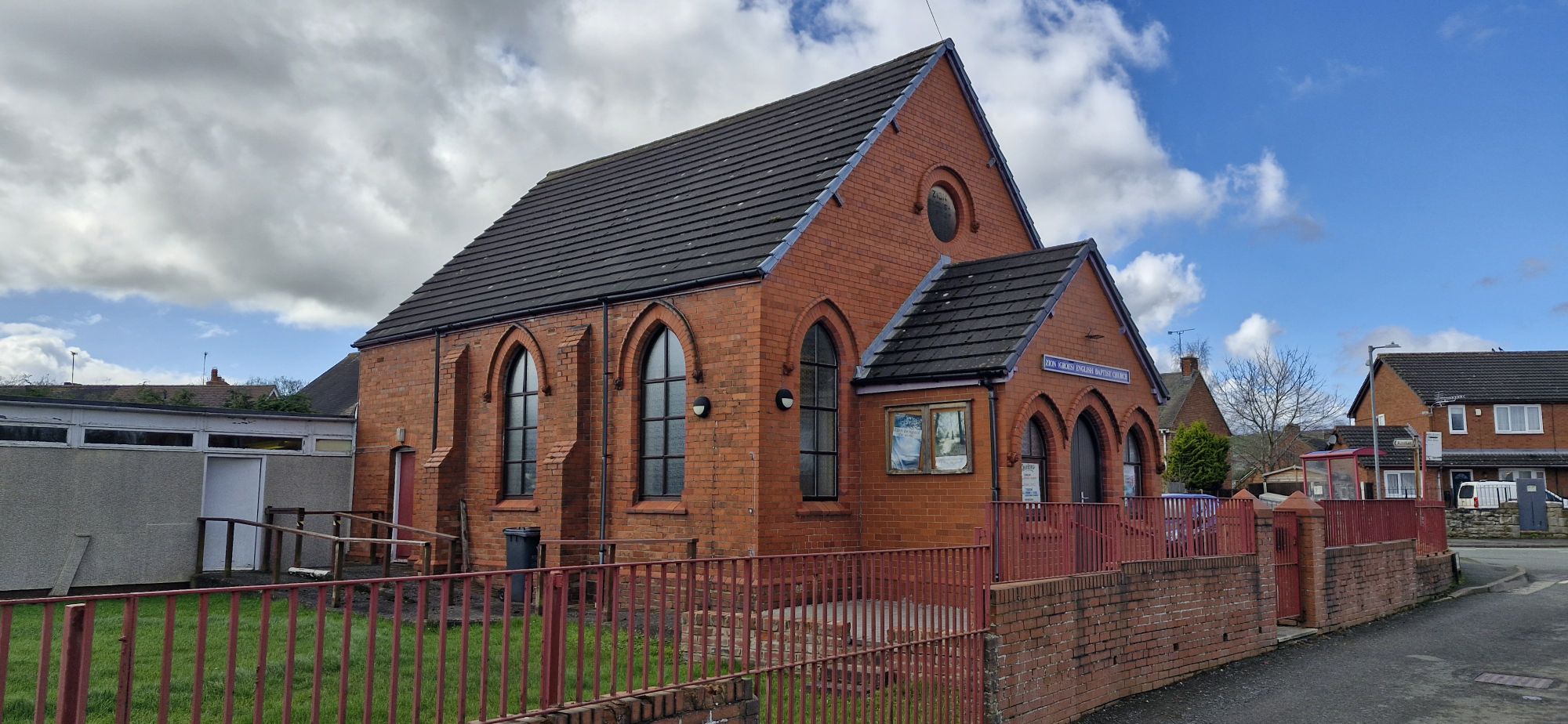
On the left at the junction with Groesfan stands the Zion (Groes) English Baptist Church. Founded in 1874 and the current brick building was built in 1899. The original building was constructed from corrugated metal and gained a nickname of The Iron Chapel.
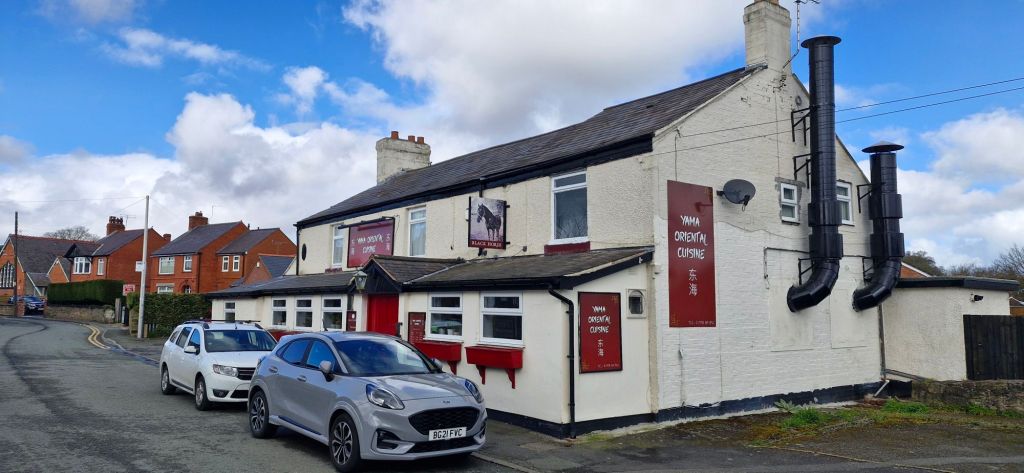
Opposite the church is the former Black Horse pub, which is currently Yama Oriental Cuisine.
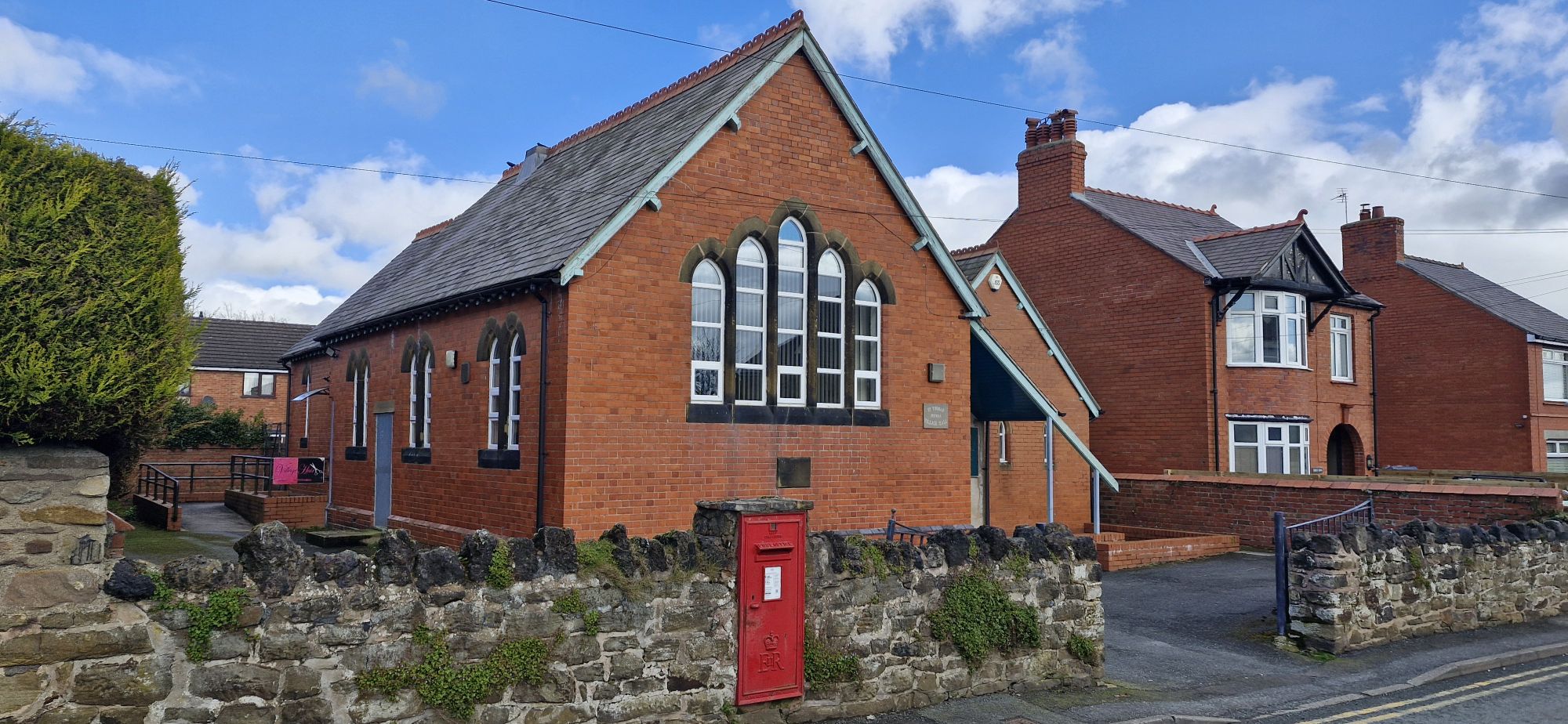
We continued in the same direction into Chapel Street. On the right is the St. Thomas (Penycae) Village Hall. The building was constructed in 1894 and was originally a Welsh Medium Church. It was converted to an infants school in the early 20th century and remained so until the 1970s. It was used as a church hall until 1999 when a charity was formed and the building refurbished and extended for its current use as a village hall.
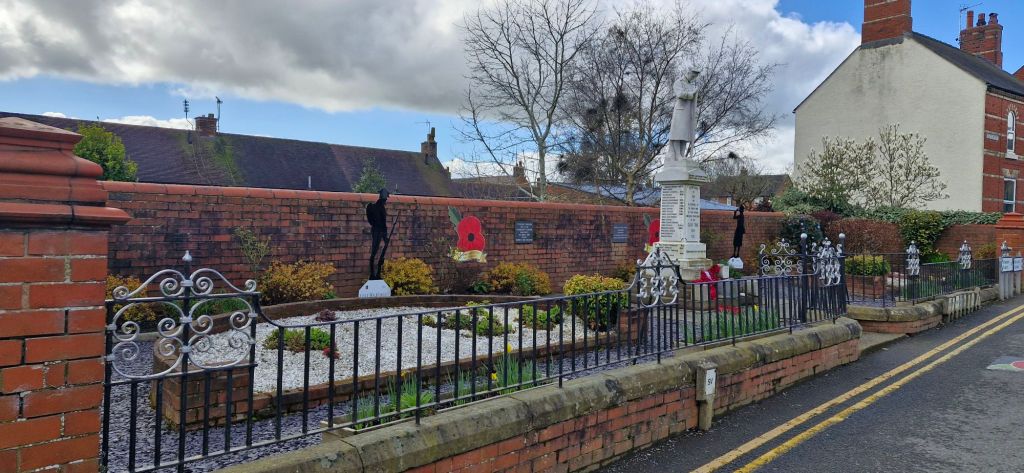
As we continued along Chapel Street, we came to the War Memorial Garden. Taking pride and place in the centre of the display is the Grade ll Listed white marble war memorial.

The statue of a soldier stands on a marble plinth with the names of the areas fallen in the two world wars engraved onto it. It was erected in 1920. Praise is due to those who maintain the area. It is spotless, and the village should be proud.

Further along the road, we came to Salem Welsh Baptist Church. The large church was built in 1904, and there are two Commonwealth graves within the graveyard. My human was walking incredibly slowly as we walked in this area. He said that he loved all the different types of buildings. I was happy to stay close to him because I knew that he had a pocket full of treats!

The graves can be seen on both sides of the road.
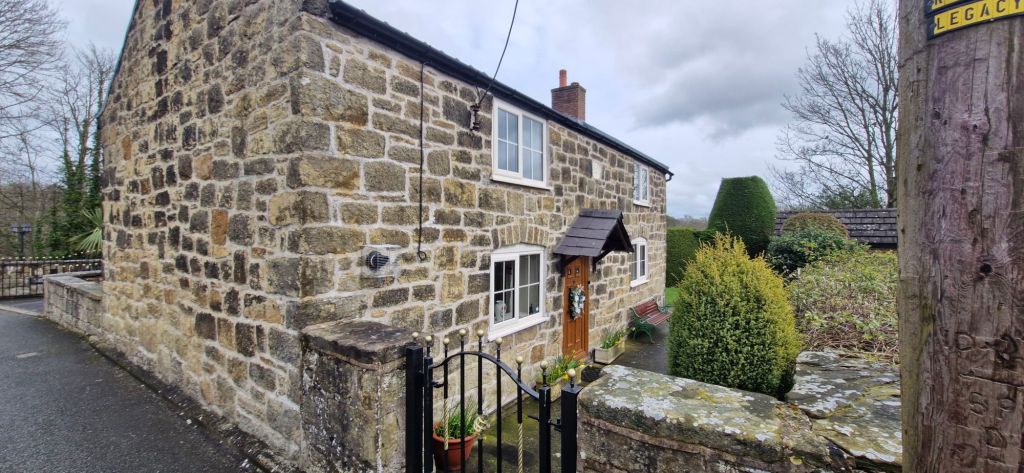
We continued along Chapel Street and passed a couple of lovely sandstone cottages at the junction with Bridge Street.
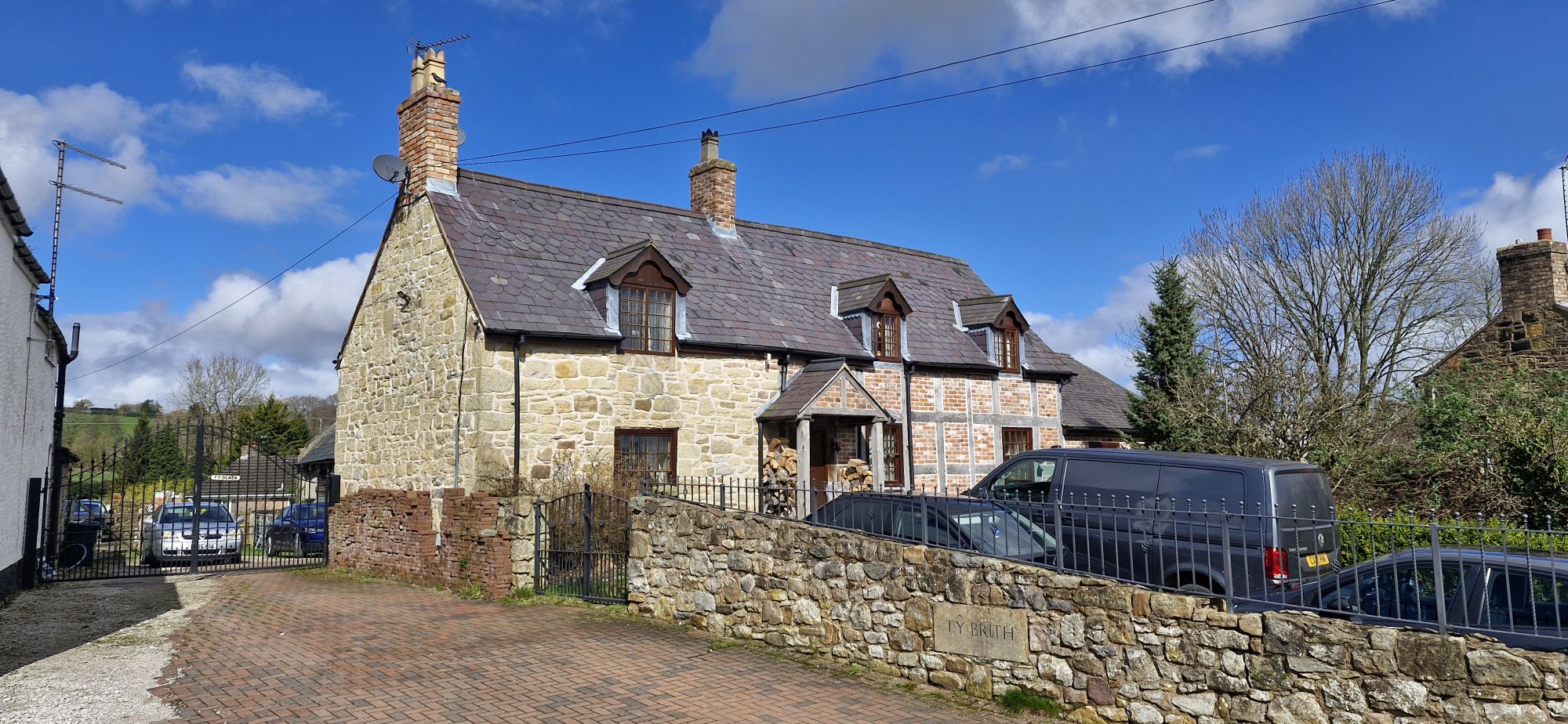
The Grade ll listed Ty Brith was on our right as we entered Church Street.
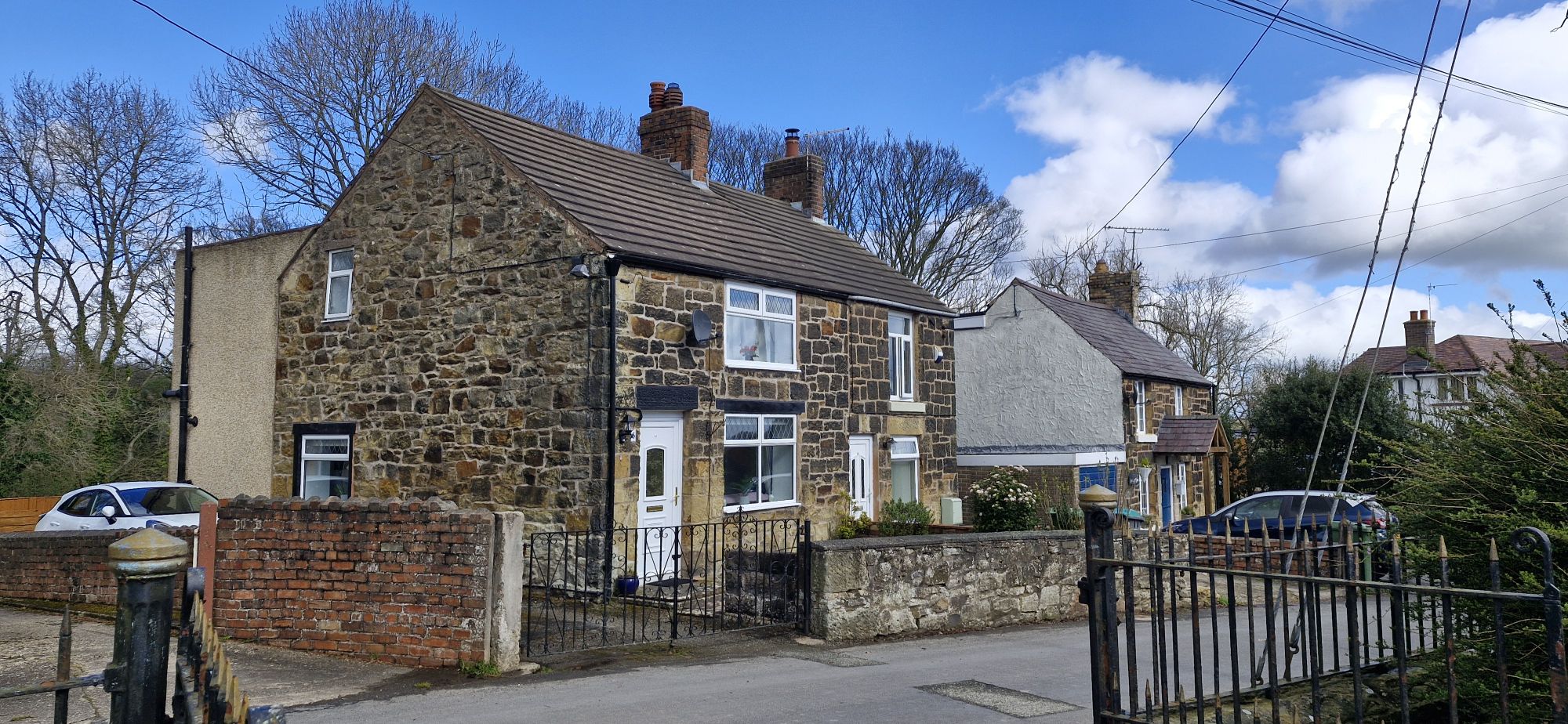
Further up the slight incline, we passed another stone cottage.
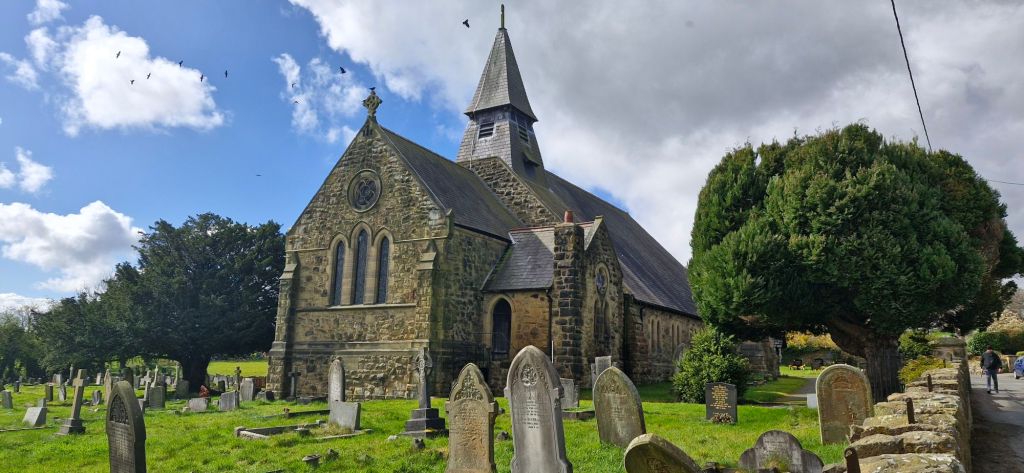
Opposite the cottages stands St. Thomas’ Church. Another of the villages’ Grade ll listed buildings. It was constructed in 1877/8 by Sir Aston Webb. This is one of the Hafod Family of churches, a group of Anglican churches, also known as the Church in Wales. The Wynne family were the benefactors of the church with Lady Williams Wynne laying the foundation stone.
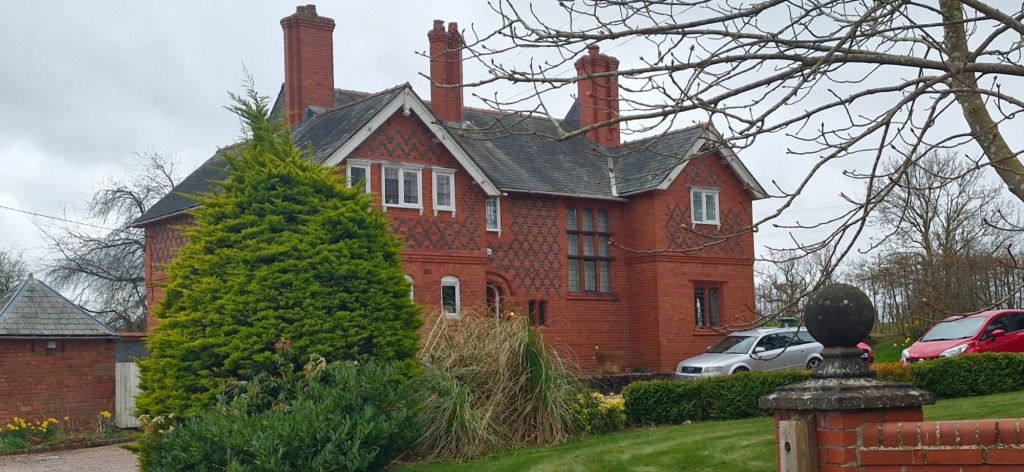
We continued to the southwestern edge of the village where the former vicarage stands on land that was given to the church by Lord Kenyon and Sir Watkin Williams-Wynne. This would be our turning point as we headed back along the roads that we had walked.

We retraced our steps down Church Street and Chapel Street until we reached Maes-y-Nant, where we headed down a footpath between the houses.
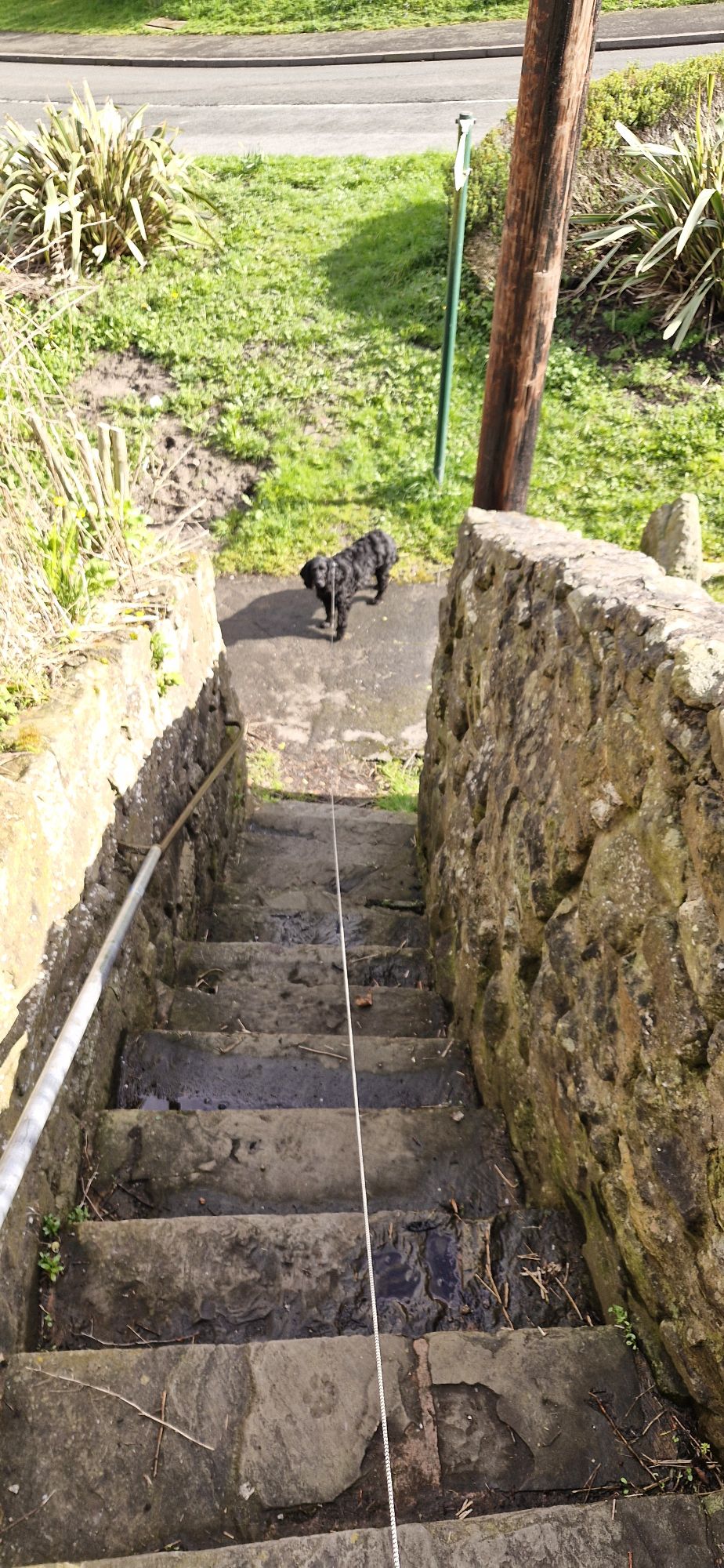
At the bottom of a flight of stone steps, we arrived at Hill Street. I was getting a wee bit impatient at this point because I had been on my lead most of the time.

On our right at the top of Hill Street, we could see the former Groes Welsh Calvinistic Methodist Chapel. The building has been converted into a number of residential properties.
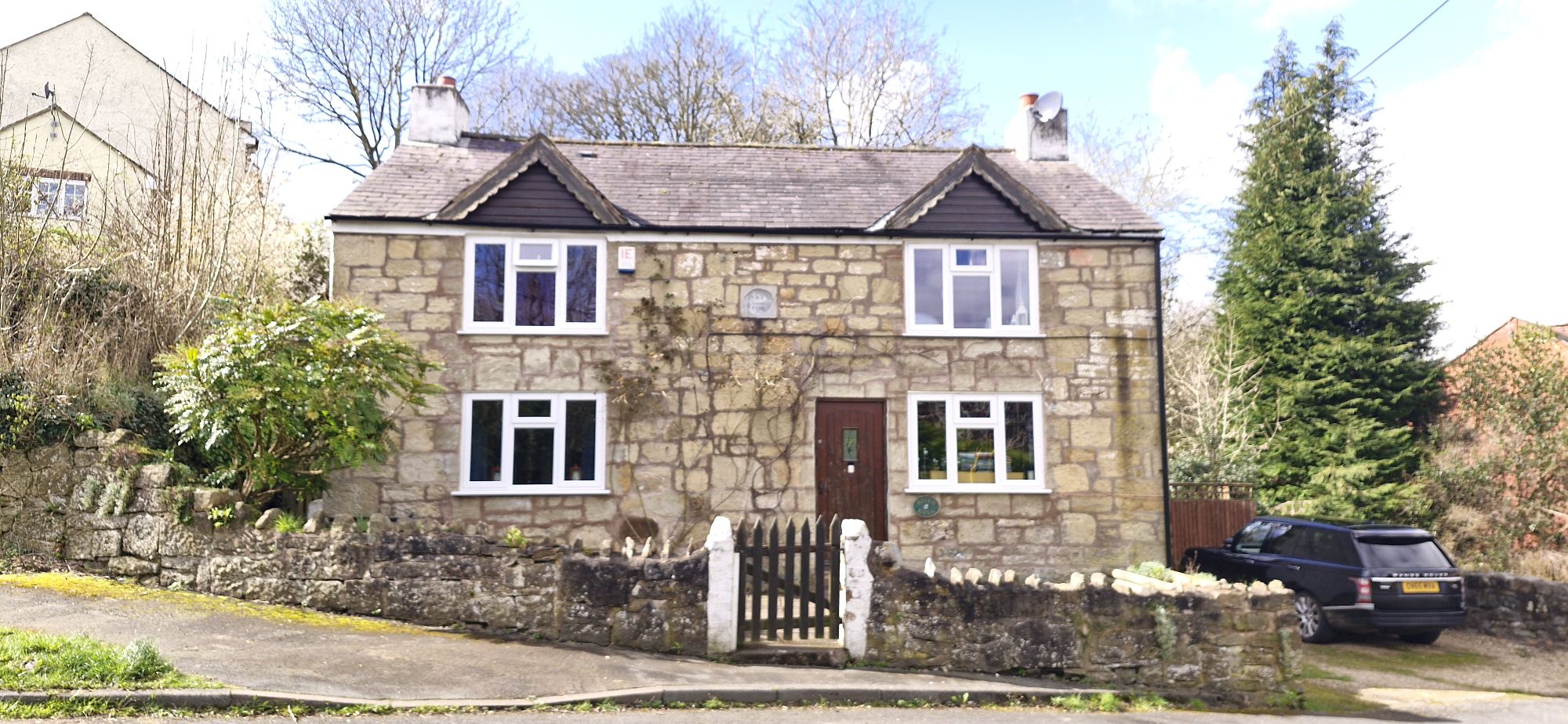
We turned first left along Lambpit Stree and wandered around the Mill Lane area. It’s a pretty little area with some lovely properties and the sound of rushing water around every corner.

An old stone bridge crosses the Nant-y-Crogfryn, where I had to stop for my human to take more photographs. Yawn!
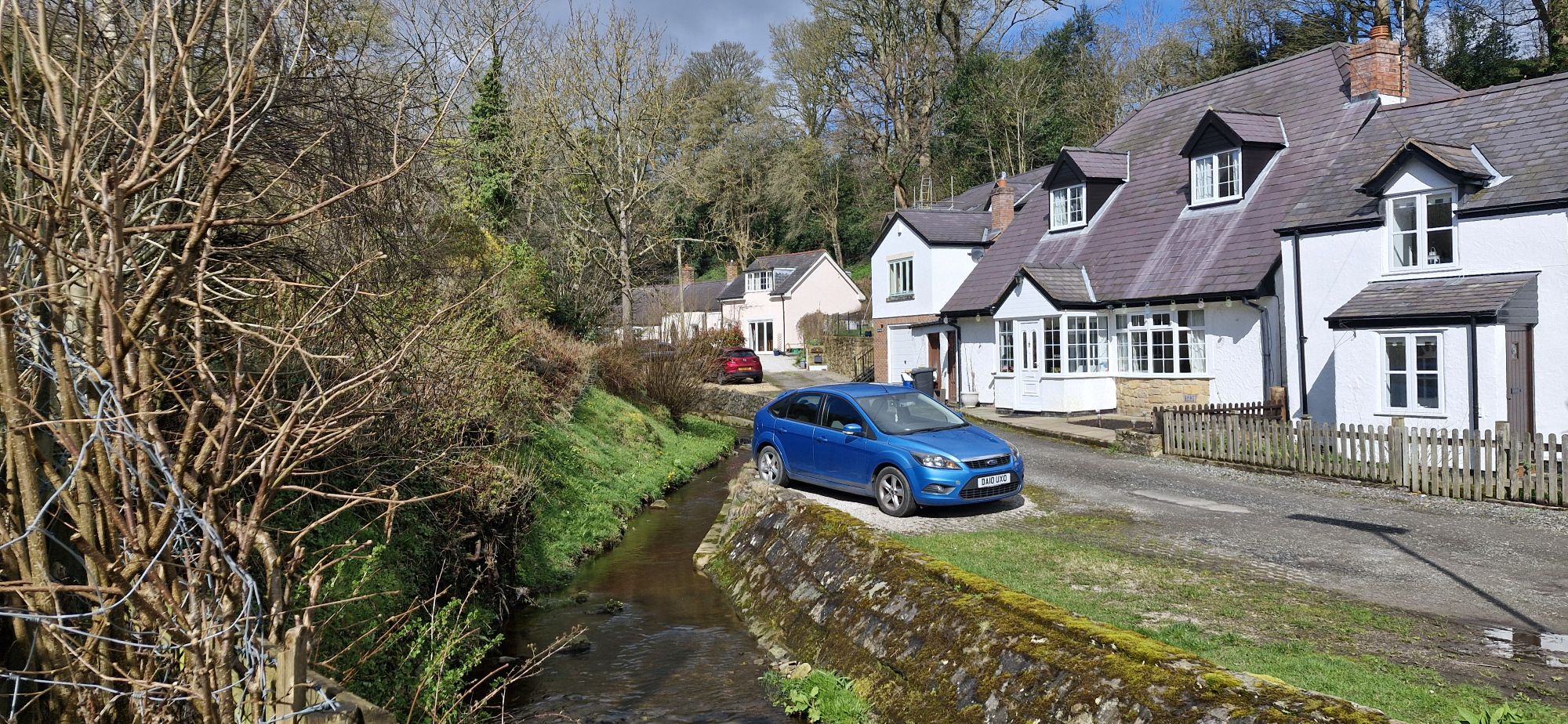
The pretty houses line one side of Mill Lane with the brook running alongside the road.
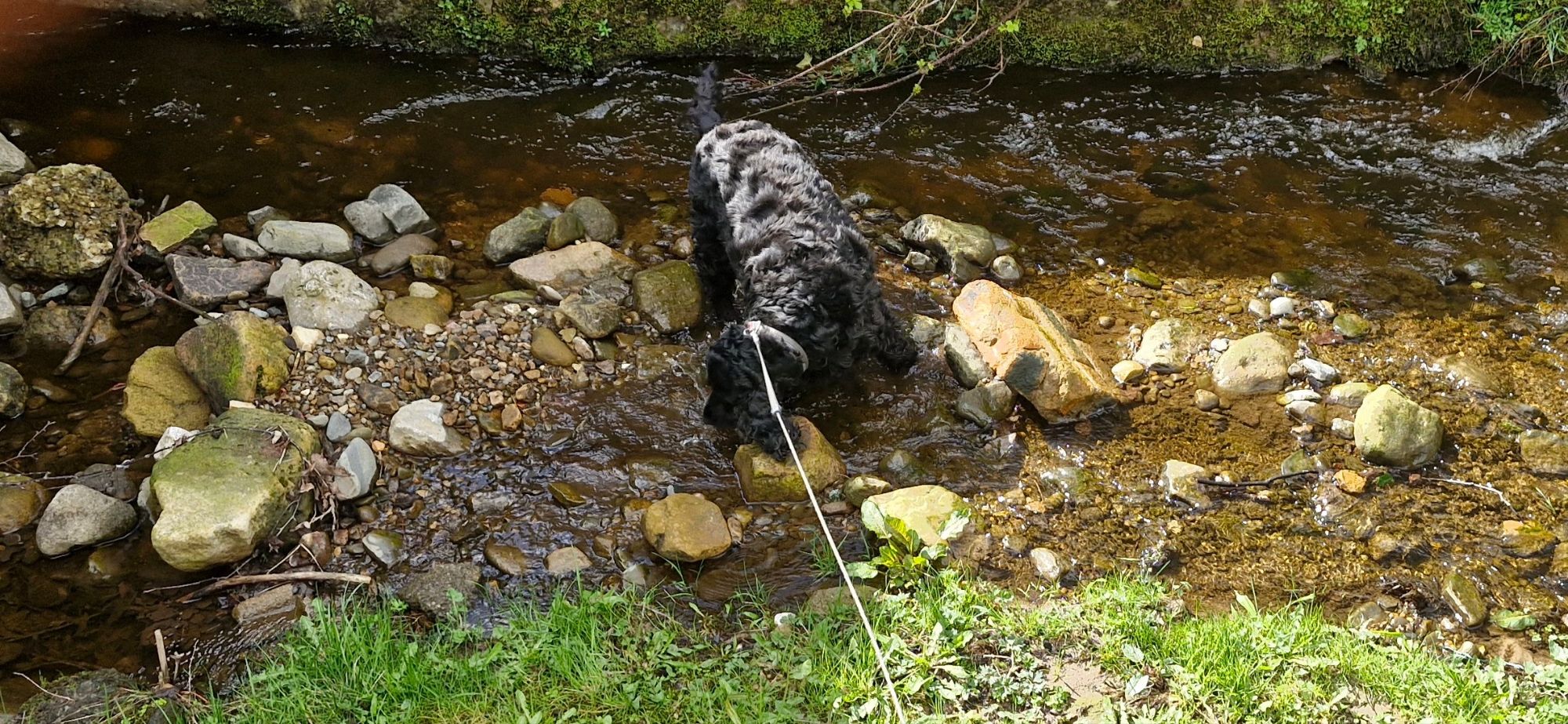
It was time for a dip for me and for a drink of the icy water.
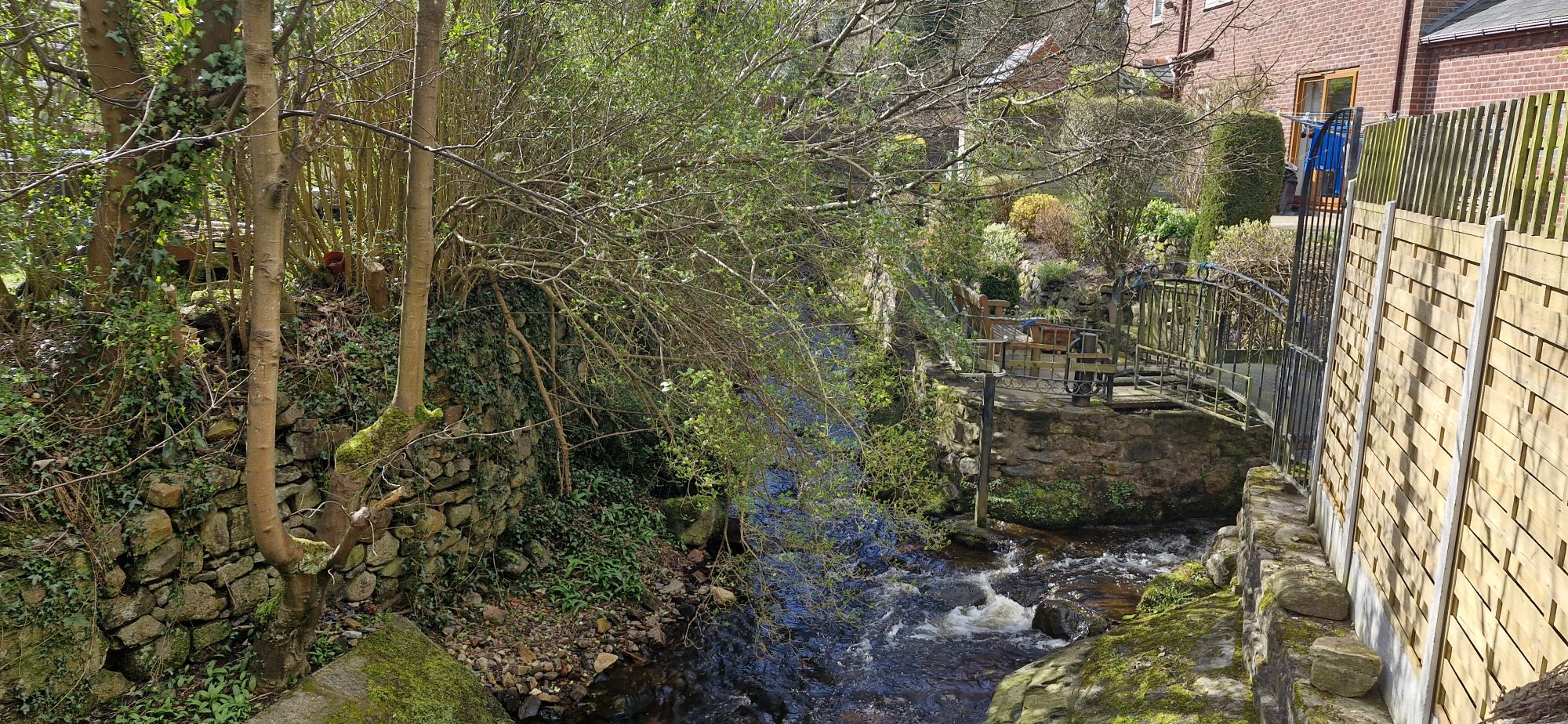
Trefechan Brook merges with Nant-y-Crogfryn between the houses and forms the Afon Eitha.
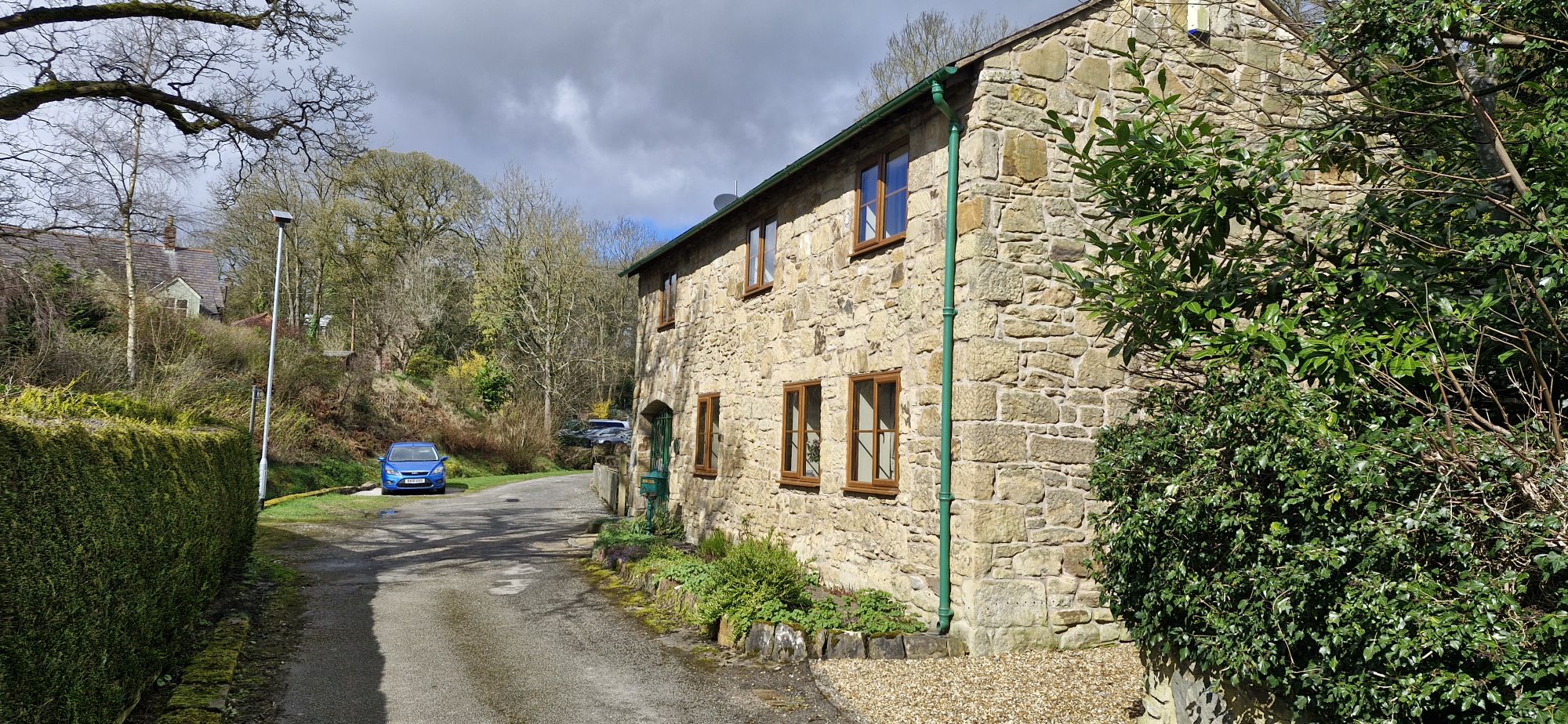
The Granary stands on Mill Lane, once the grain store for Pentre Mill that no longer exists.
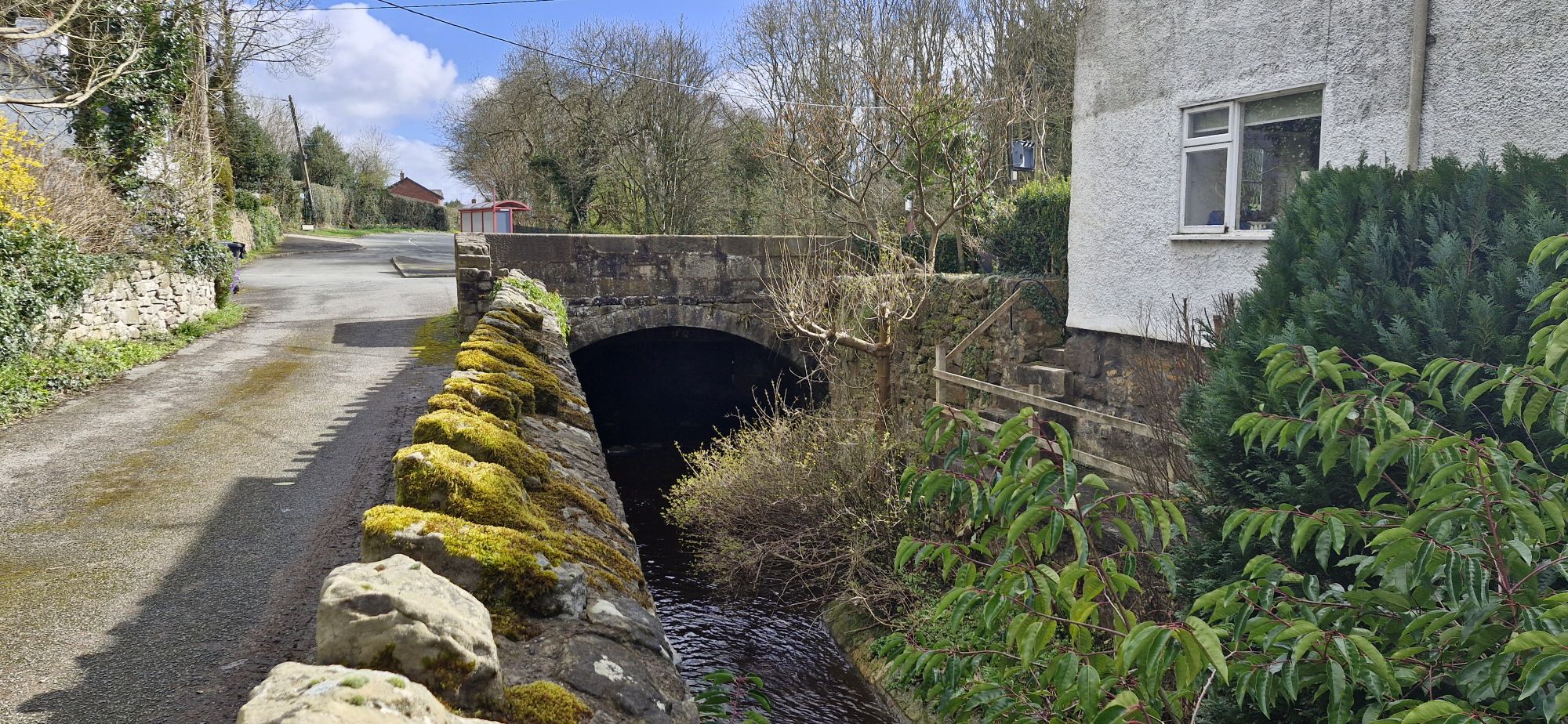
The Packhorse Bridge crosses the river at the junction with Poplar Road.
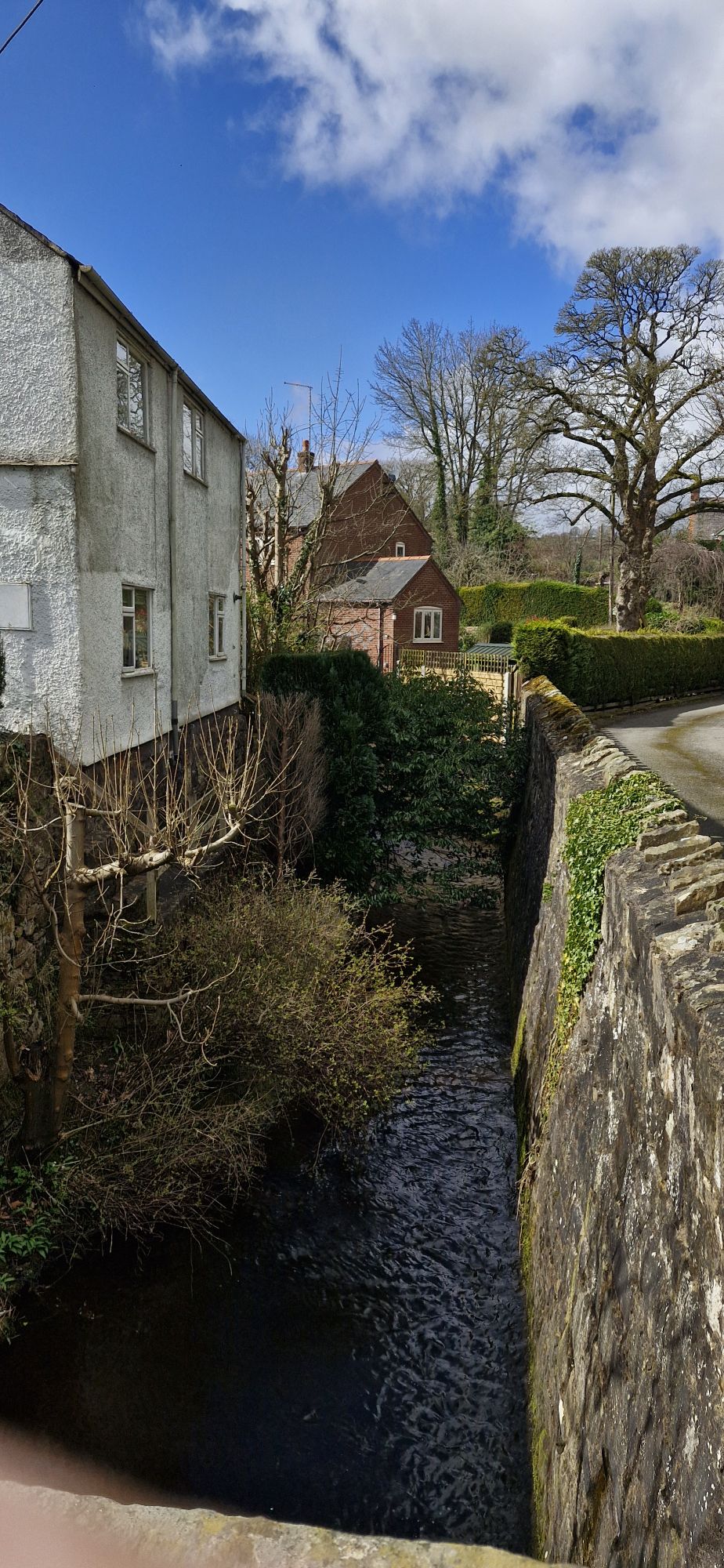
We spent a few minutes on the Packhorse Bridge looking at Afon Eitha before we crossed Poplar Road.
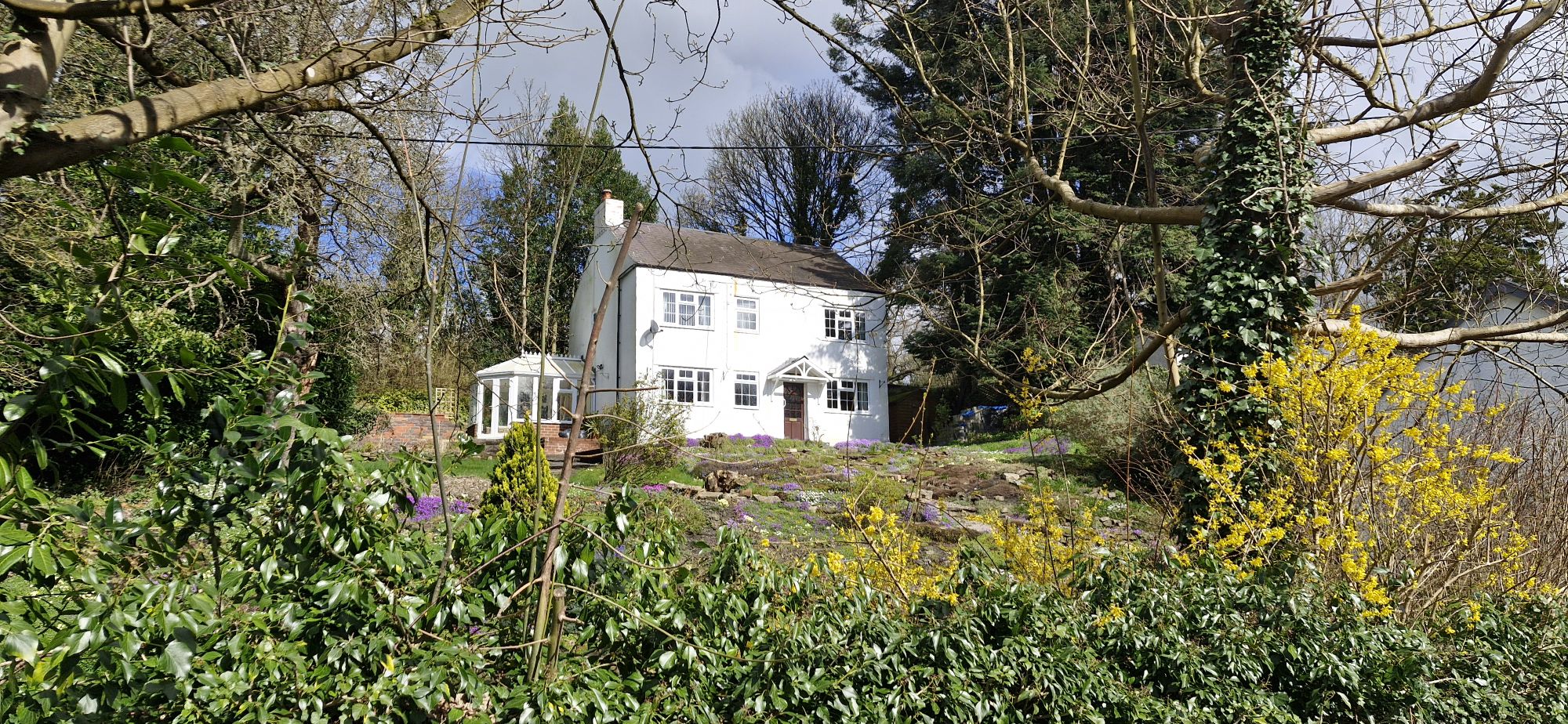
On the left, above the road and partially hidden by trees is a lovely white rendered cottage that was basking in the suns’ rays.

We entered the Poplar Road park area. This peaceful green area has a few footpaths running through it
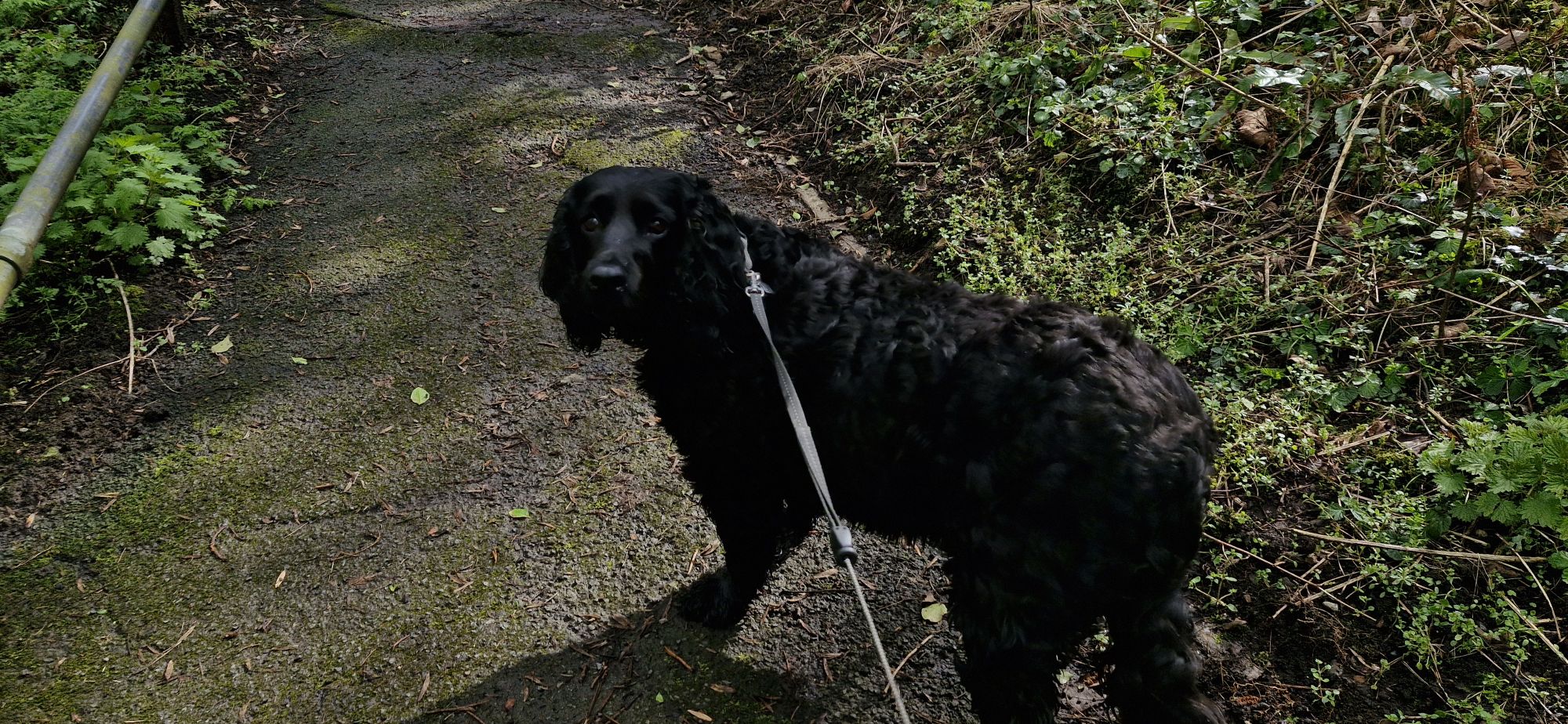
I waited for the big feller to grab a breath as we walked up a slight incline in the park
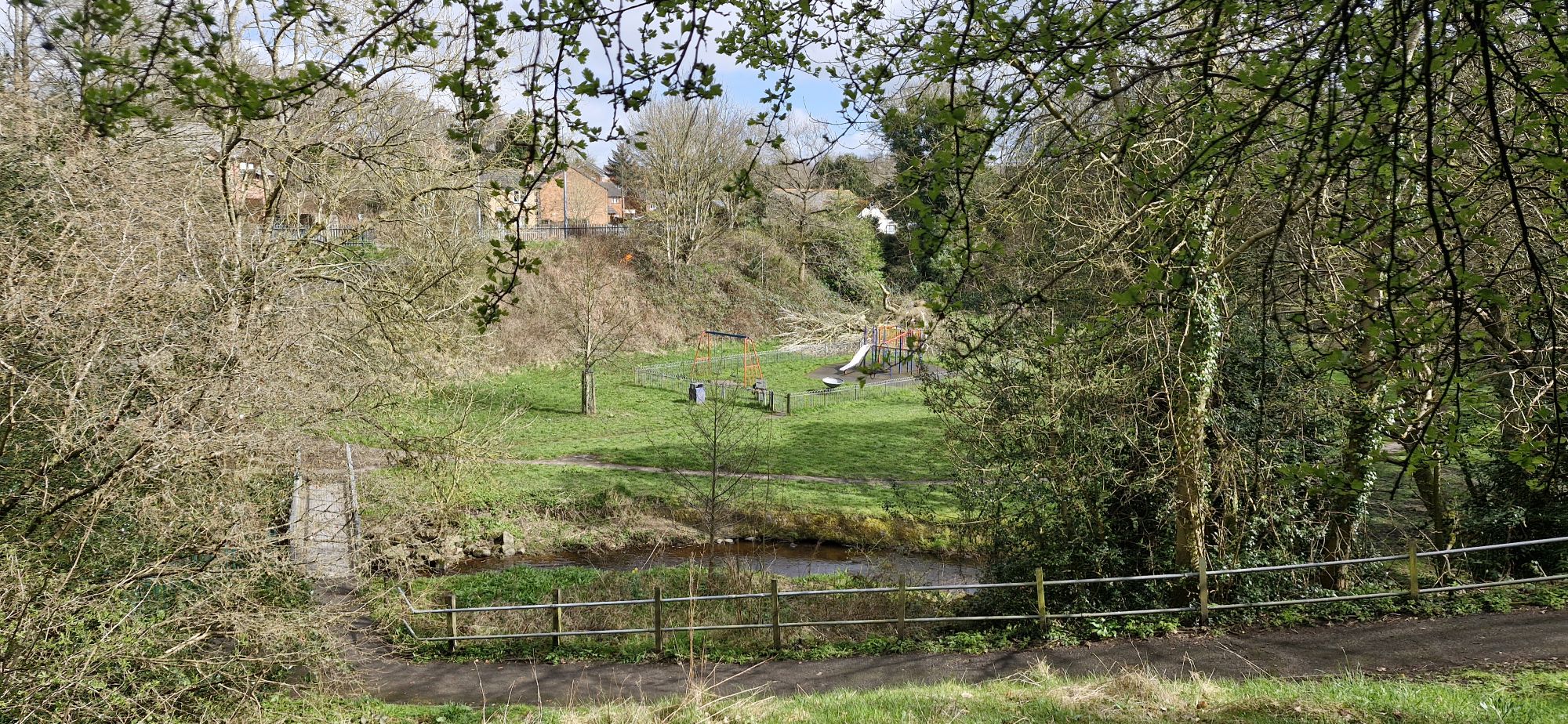
The path led us back to Chapel Street after we had looked into the valley formed by the river. We turned left and headed back to our starting point at Wynn Hall.
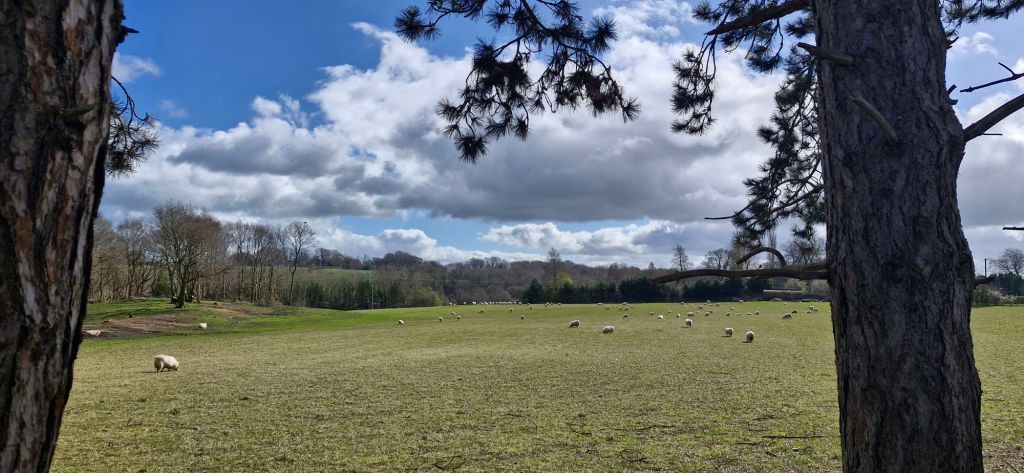
We paid a quick visit to the sheep on our way back. They were too busy eating grass to even notice us walking by. Till next time!
 Joe the Cocker's Hikes
Thanks Joe for another interesting account of your walk, this time in Penycae. The big feller has shared some great photos of your walk with us.
LikeLike
He has his uses. My paws aren’t designed for taking photos 😢
LikeLike
What an interesting walk and your knowledge and comments where excellent great Photos to thank you .
LikeLike
Thank you for taking the time to read and to comment 😊
LikeLike