
Hello again people and pooches. Joe the Cocker here after a visit to Bala on our way home from our tour of Cymru, Wales. It was a warm and sunny day. We had been driving for a couple of hours so we decided to have a break and a walk. We parked outside of the town in a layby at the eastern edge of Llyn Tegid.

I had a run around in the long grass while my human was busy looking across the lake at the Aran mountain range. He said that there is a monster lurking in the deep water called Teggie. He talks some nonsense. Well, just in case, I decided to stay out of the water.
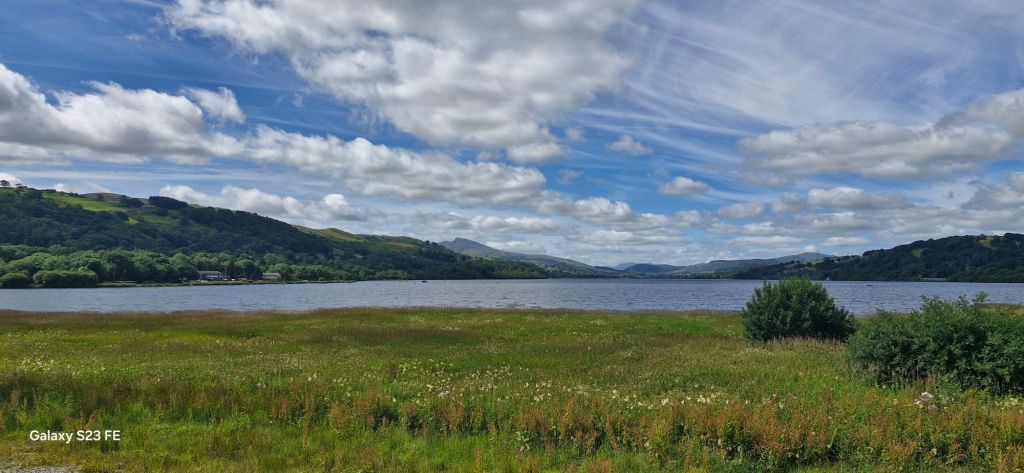
Aran Fawddwy can just be seen towering above the lake at the southern end of the vast expanse of water.
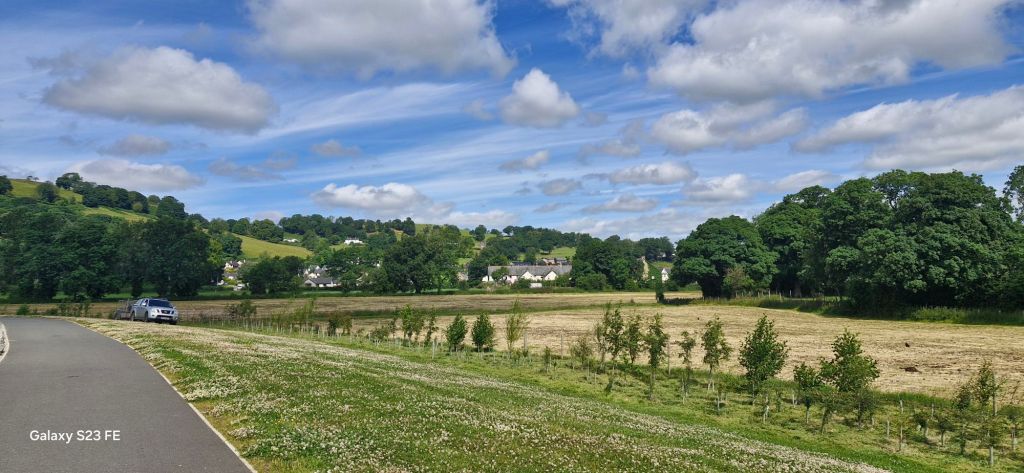
A relatively new path has been laid at the northern section of the lake. This is part of the flood defence system as the lake is prone to flooding.
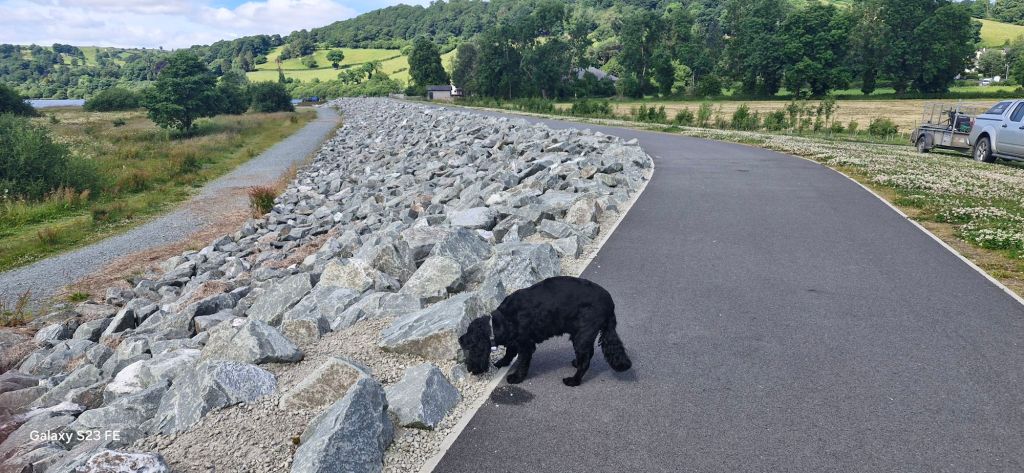
I gave the new stones and boulders a good sniff because the last time we were here, this area looked totally different. There used to be a smaller embankment with trees growing between the flatter stones. Some of the mature trees were saved, but many smaller ones were removed.
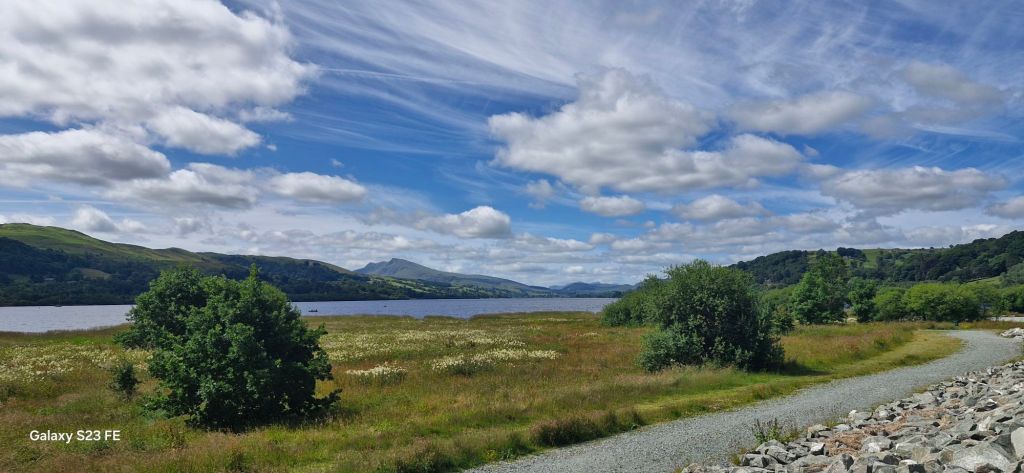
As we headed towards the watersports centre, the view across the lake over to Aran Fawddwy opened up.
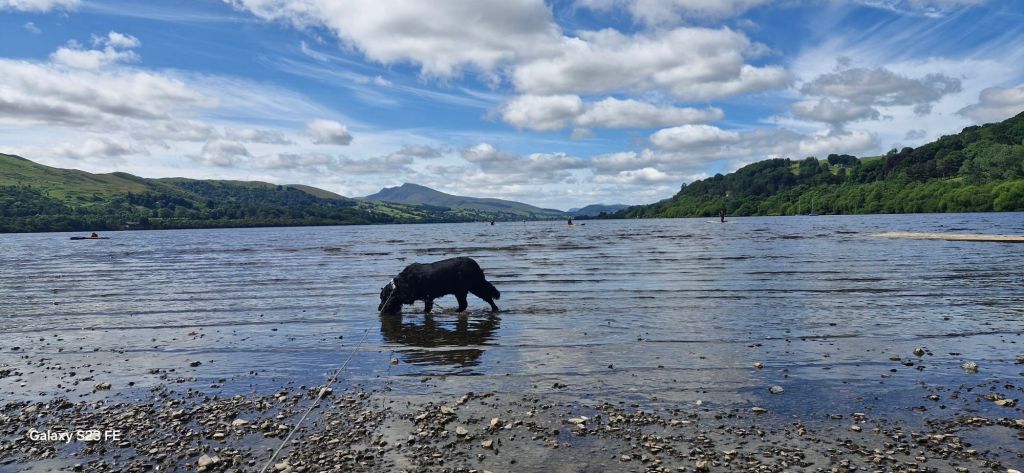
I plucked up the courage to have a knee-deep paddle in the monster infested lake.
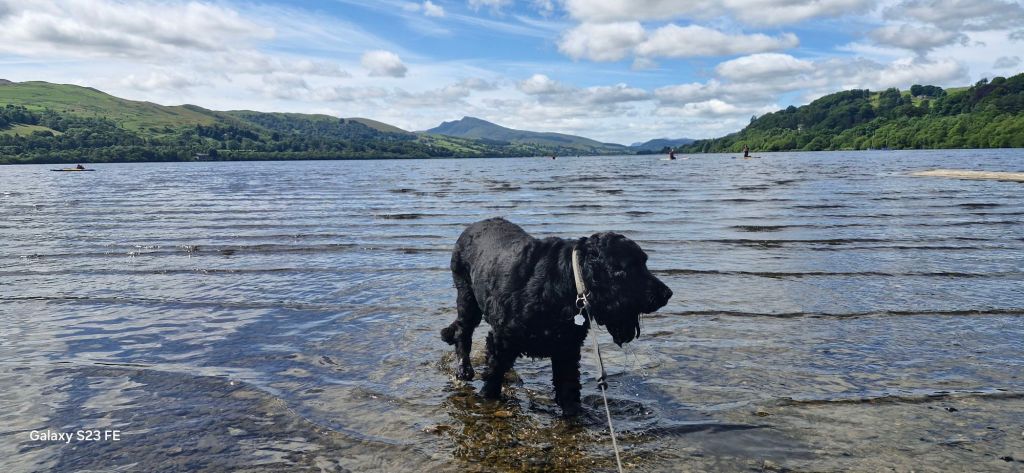
My human kept me on-lead in case of a Teggie alert.
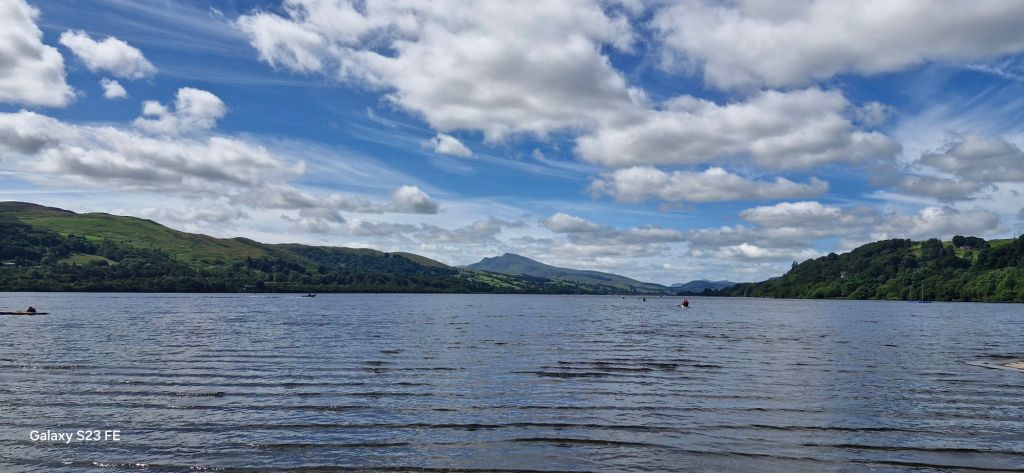
If you zoom in to the photo, you will see paddleboarders and canoeists risking life and limb in the water.

The parking and watersport area has been developed as part of the flood defence project.
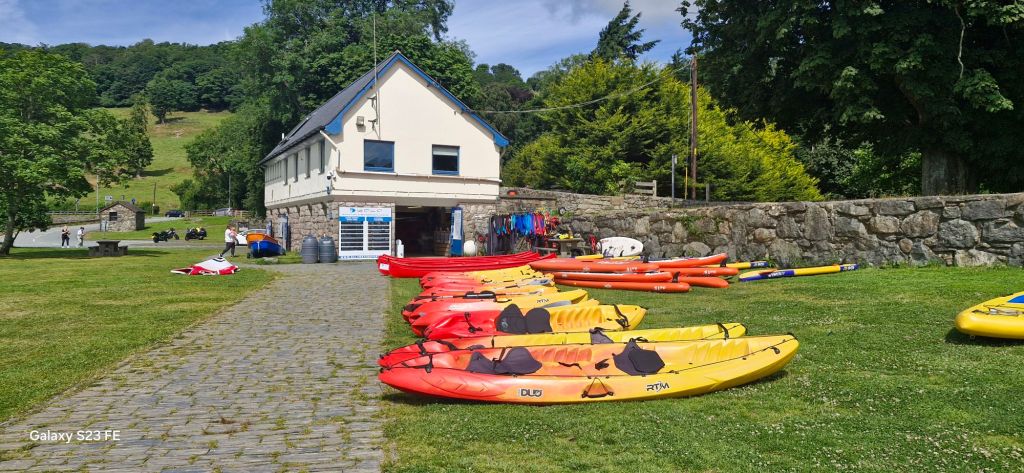
It seems that pooches are allowed on the hire equipment. I wouldn’t trust my human to look after me on a lake. I would be surprised if he could look after himself.
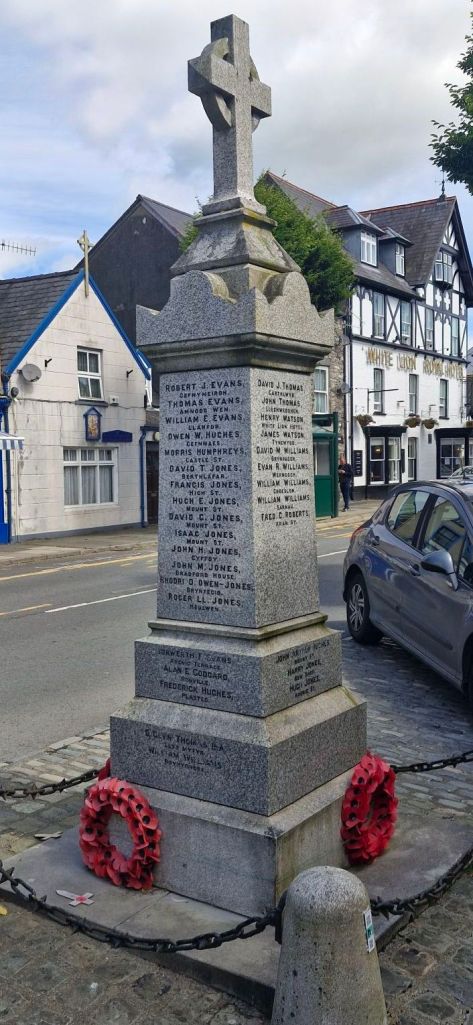
On leaving the lakeside, we headed into the village centre. The war memorial was erected in 1922 to commemorate the local fallen in the First World War with the names of those who died in the Second World War added later.

At the time of our visit, much of the street furniture had been decorated with knitted adornments.
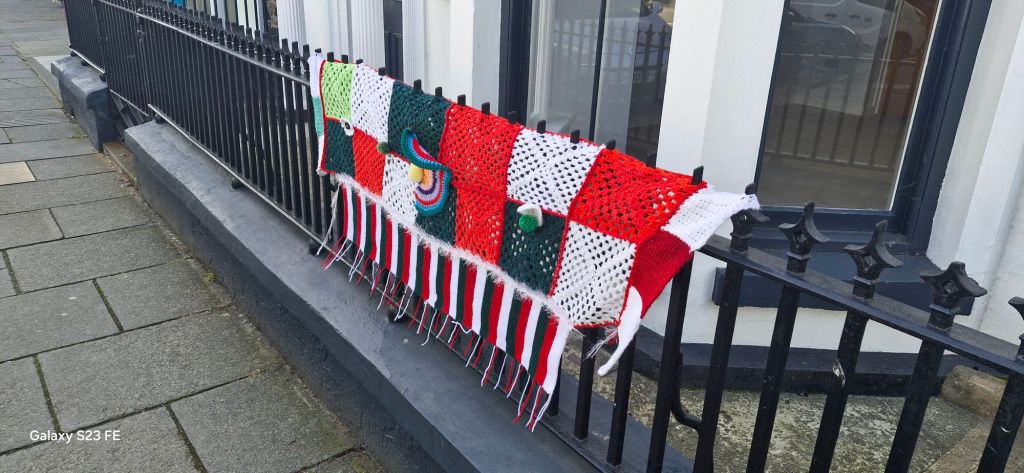
Someone had taken a lot of time to decorate the high street.

A statue of T. E. Ellis dominates the shopping area. Ellis was a son of Bala, famous for his political career. The statue depicts the Liberal MP delivering his famous speech in Bala, calling for a Welsh Assembly.
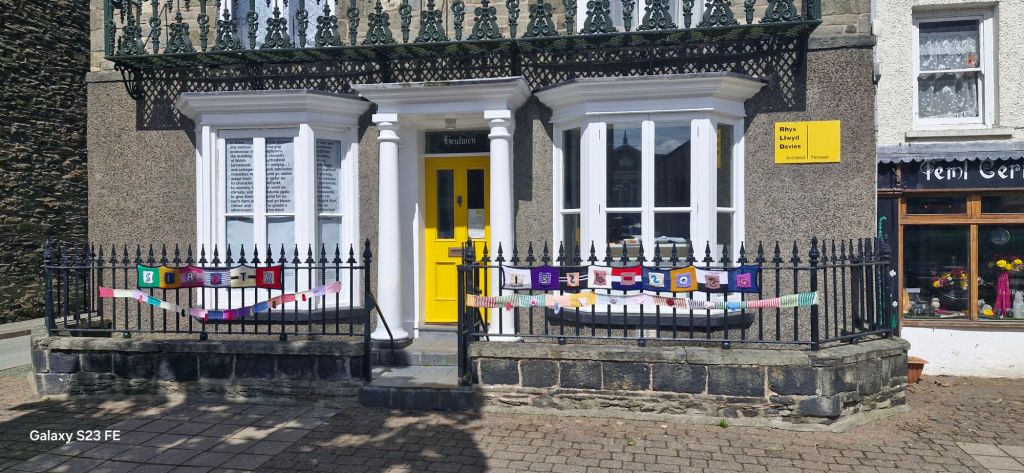
My human dragged me past all the cafes, pubs, and shops as we passed through the village. No snacks for Joe on this occasion!
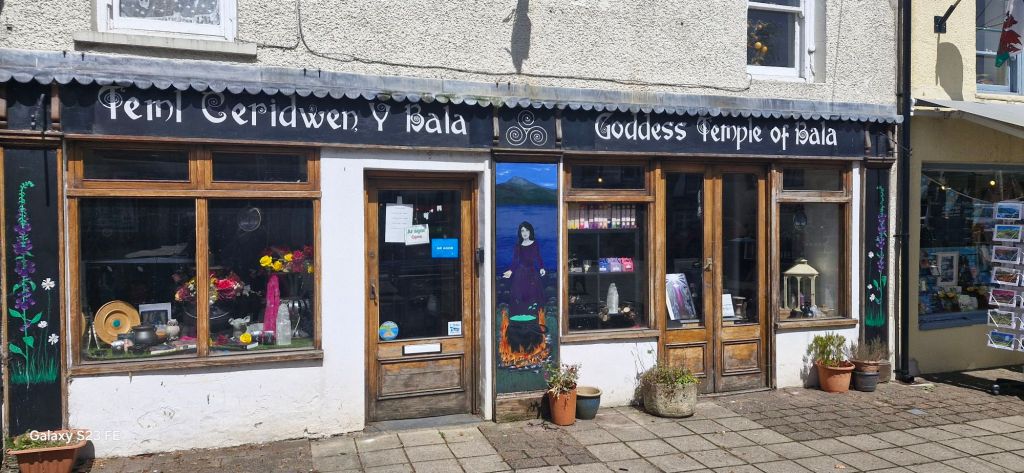
We found a fascinating Welsh shop that sold everything Welsh from books to legendary figurines. It fascinated my human as he is learning Welsh. Or should I say that he is very slowly trying to learn Welsh!
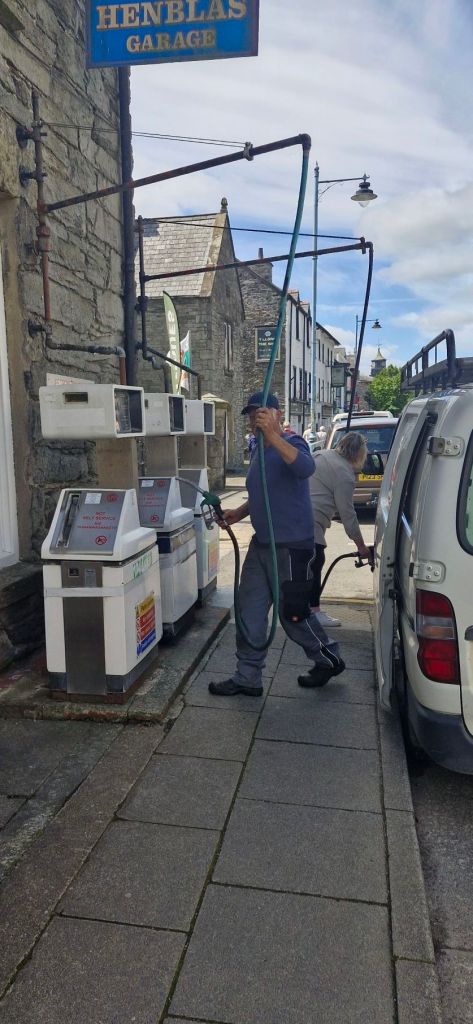
We had to walk around the cars that were being topped up with petrol. The roadside pumps meant that the hoses had to be draped across the pavement. My human said that these types of petrol stations are rare nowadays. I suppose that when he was a sprog, there were fewer cars on the road, and large petrol stations weren’t necessary.

We passed the Old School on the edge of the town before we turned right. The school currently houses a restaurant.
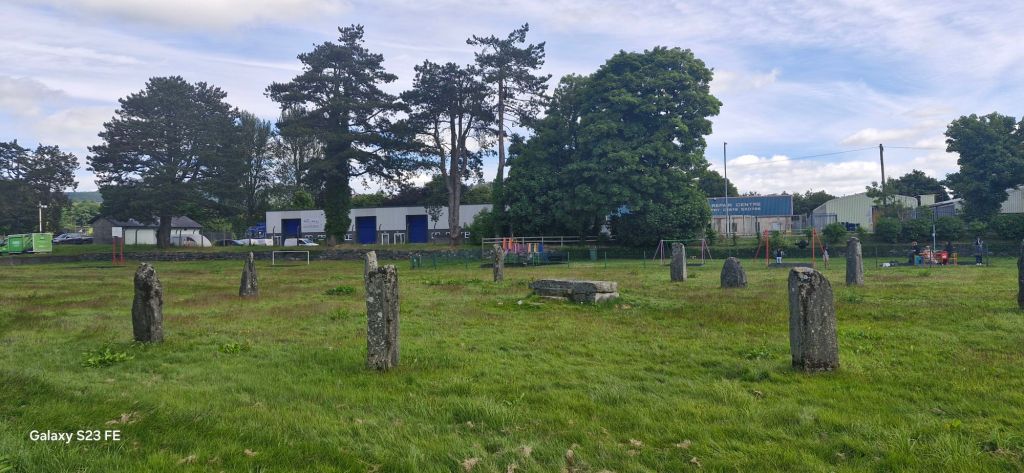
Bala Modern Stone Circle stands on the edge of town. Built in 1967 for the Eisteddfod. From this point, we continued along the B road to the car. Once we were back in the car, my human wanted to visit a place close by. So we drove a few miles to Llyn Celyn.
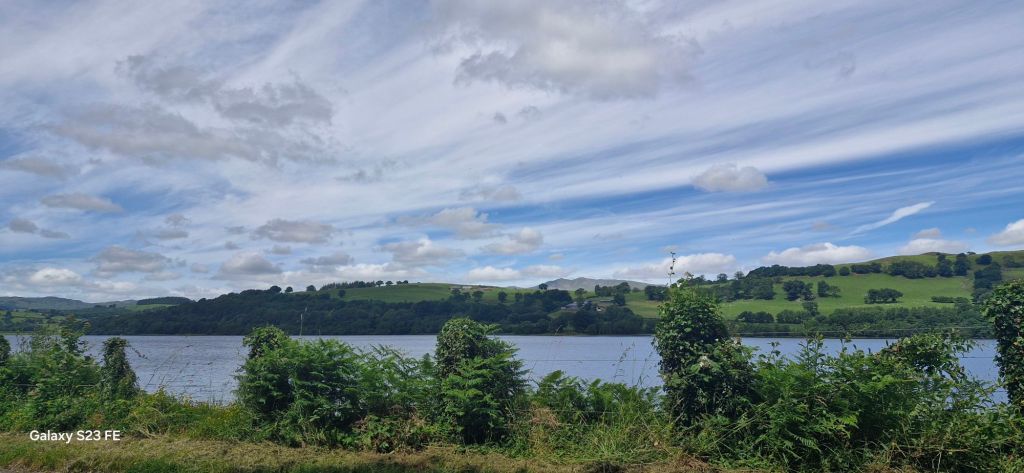
Llyn Celyn is a beautiful spot. The reservoir is nestled amongst the Arenig Mountain range.
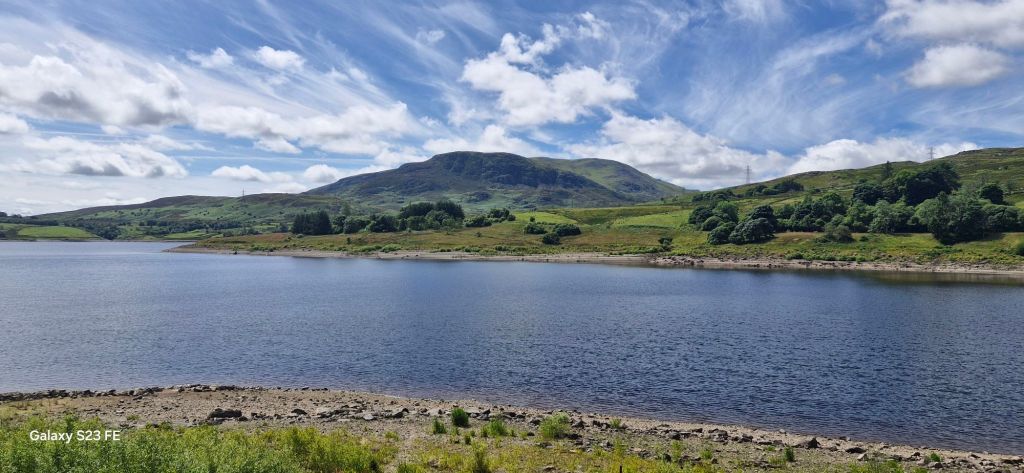
However, it has a dark history. The valley was the home to the village of Capel Celyn. The Tryweryn river was dammed in the 1960s to form a reservoir to provide Liverpool with water that was allegedly needed due to the population growth. The residents of the village and local farms were forced to leave their homes and land. This was done without any agreement with the Welsh Planning Authorities by using a private bill to enable an Act of Parliament. By the time the reservoir came into use, Liverpool no longer needed the water and started to sell it to Manchester.

When water levels are very low, the spire of the village church is visible above the water.
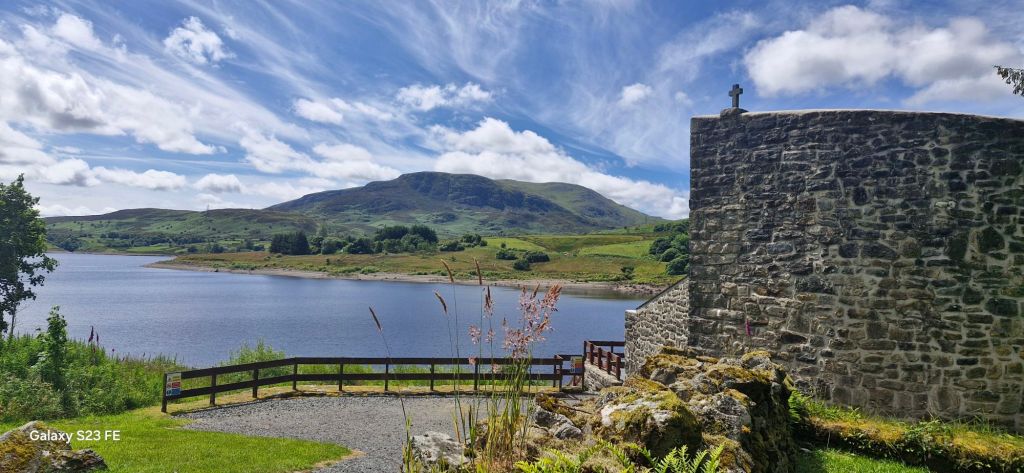
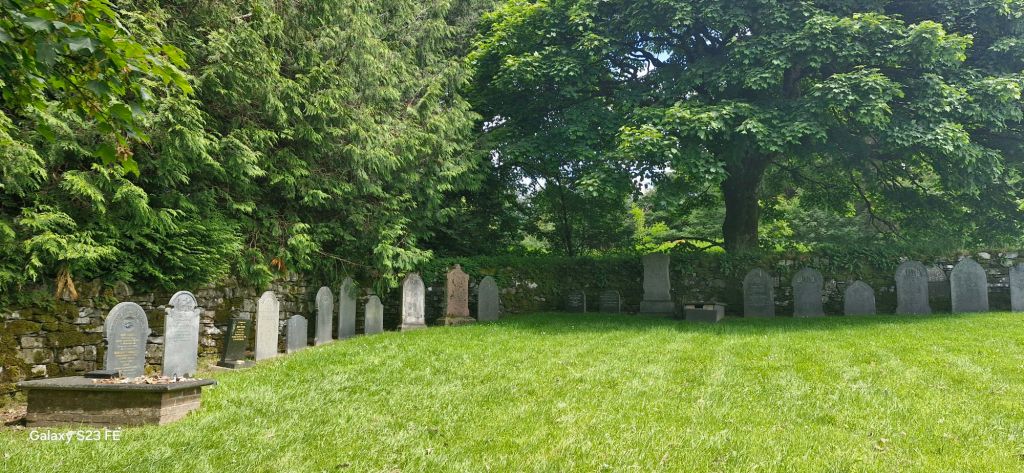
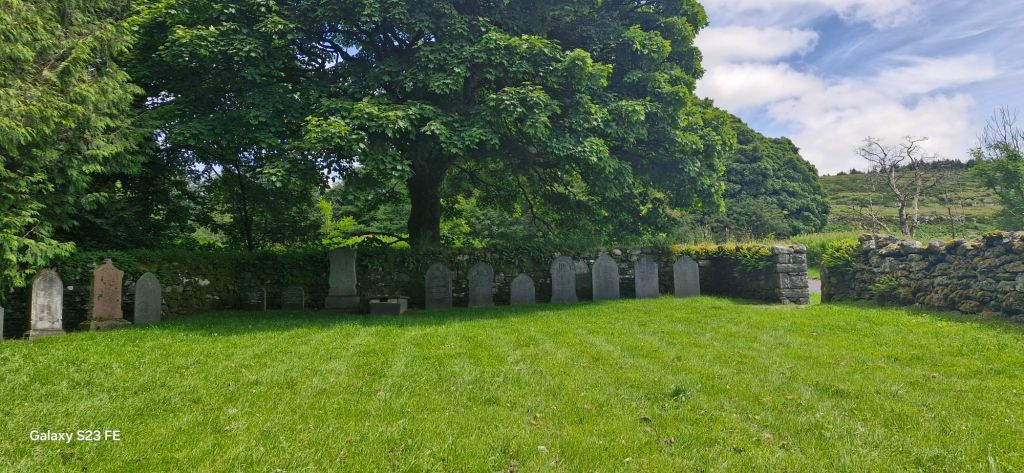
There is a small display and information centre on the banks of the reservoir about the drowning of the village. Against adjoining walls, the gravestones removed from the village graveyard are propped up in line.
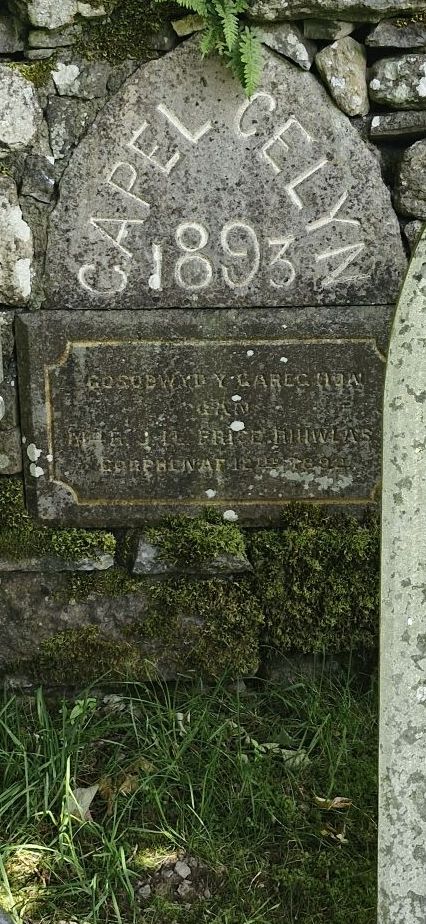
Liverpool Council eventually apologised to the people of the area affected by the village’s drowning in 2005. Too little, too late, was the thoughts of some!
The creation of the reservoir brought about an increase in support for the desire for Welsh Nationalism and support for Plaid Cymru, The Party of Wales. The words Cofiwch Dryweryn, Remember Tryweryn, appear as graffiti in many places throughout the country.
Till next time!
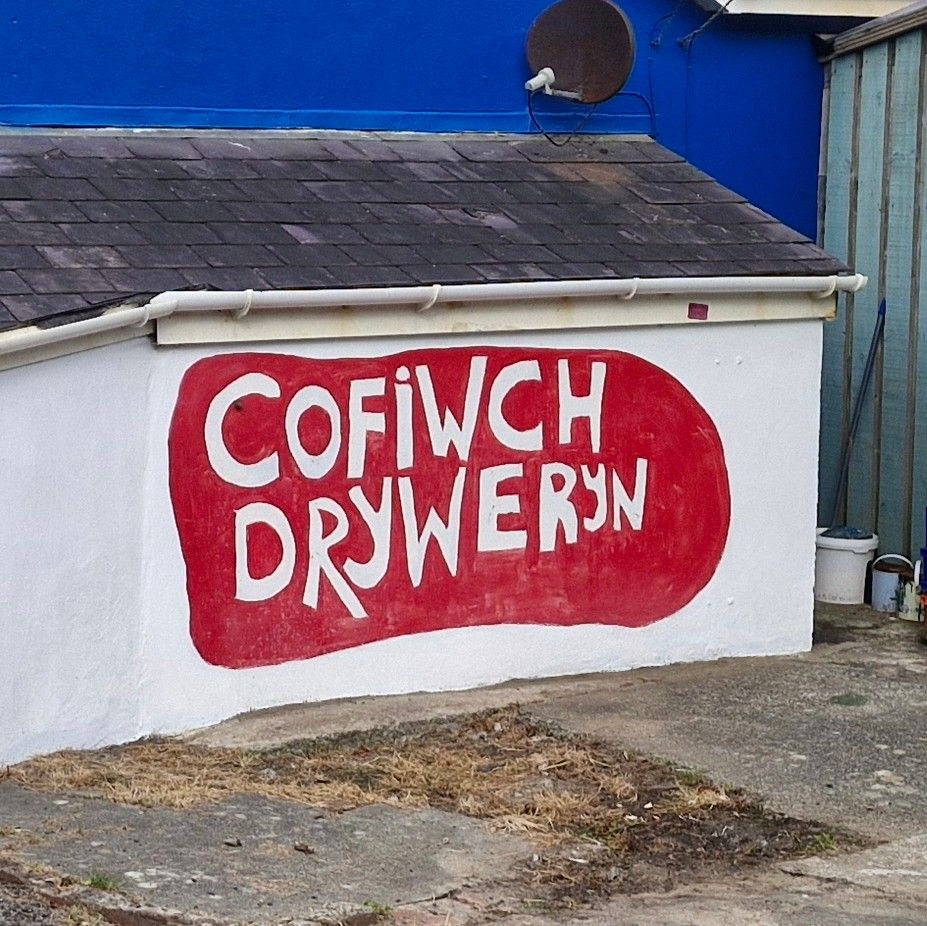
An example that we saw recently in Tresaith.
 Joe the Cocker's Hikes
Another great account Joe of an area very familiar to me. We used to go hill walking in Snowdonia when I was a pupil at Ysgol Rhiwabon. Some of our teachers took a few of us walking at the weekends and we also stayed in a small cottage not far from Llyn Celyn. Arenig Fawr was one of the peaks we walked up, I remember it was extremely windy up there on one occasion and we had to take care not to be blown over. The story of Llyn Celyn is very sad and made worse to hear that once the work was completed Liverpool did not need the water and sold it on to Manchester. I didn’t know about that.
LikeLiked by 1 person
Thank you for reading and commenting. I’ve been up Arenig Fawr many times. Usually up the steep slope from Arenig. I only recall it being sunny once. I recall signing the memorial book to the American WW2 aircrash. Llyn Celyn is a very sad story and very emotive!
LikeLike