
Hello again people and pooches. Joe the Cocker here. Me and my human have been on a little adventure. We have just visited Dinorwig Slate Quarry near Llanberis in North Wales. It’s a place that we have driven past many times, and a visit was well overdue.
We left home later than planned, so instead of parking in Llanberis and walking up to the quarry, my human drove us to Dinorwig. There is a car park at Allt Ddu with easy access to the quarry. We found a walk on the Internet that takes in some of the quarry and especially, as it was my human’s main reason for the visit, the Anglesey Barracks.
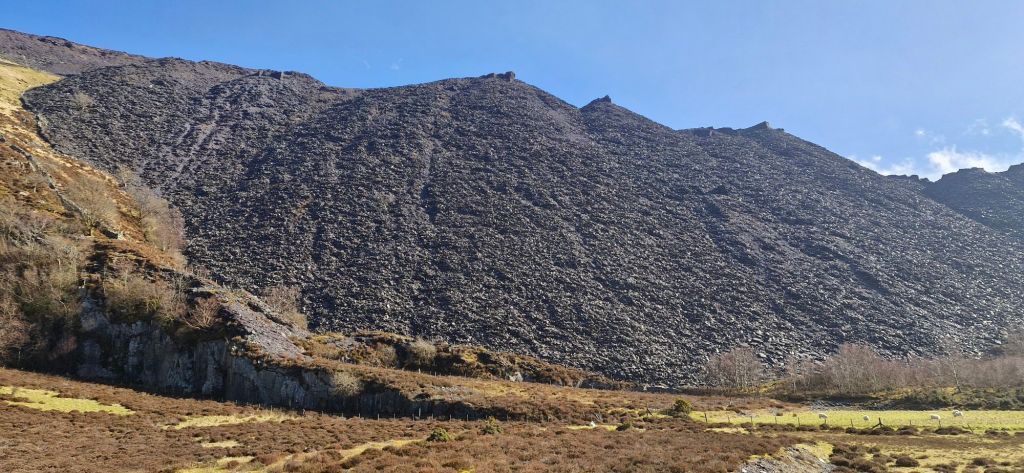
The first impression that we had of the site was how incredibly huge everything is. We parked under a massive, and we are not exaggerating when we use that word, a massive hill of slate.
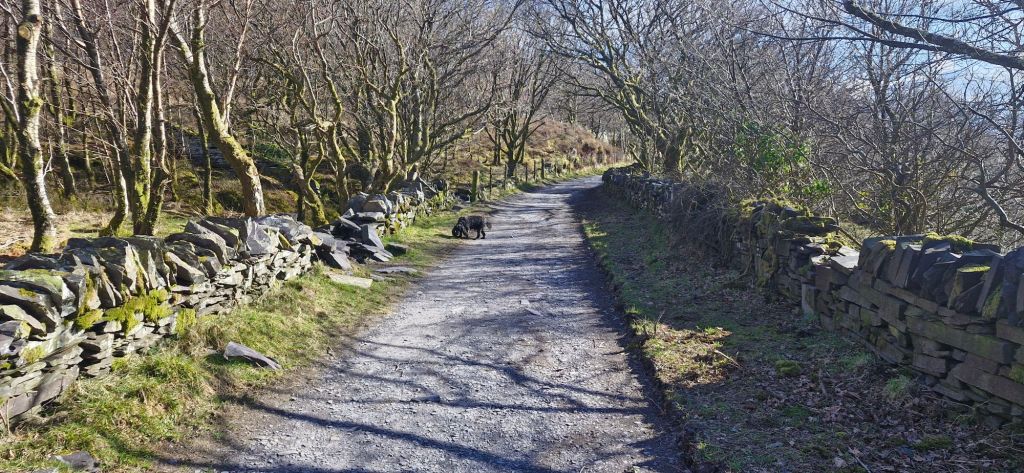
A steady walk along a wide stoney track brought us to the site of the slate quarry. This was originally the Village Tramway where small steam trains would have transported the finished slate towards Y Felinheli, Port Dinorwic, for shipping all over the world.
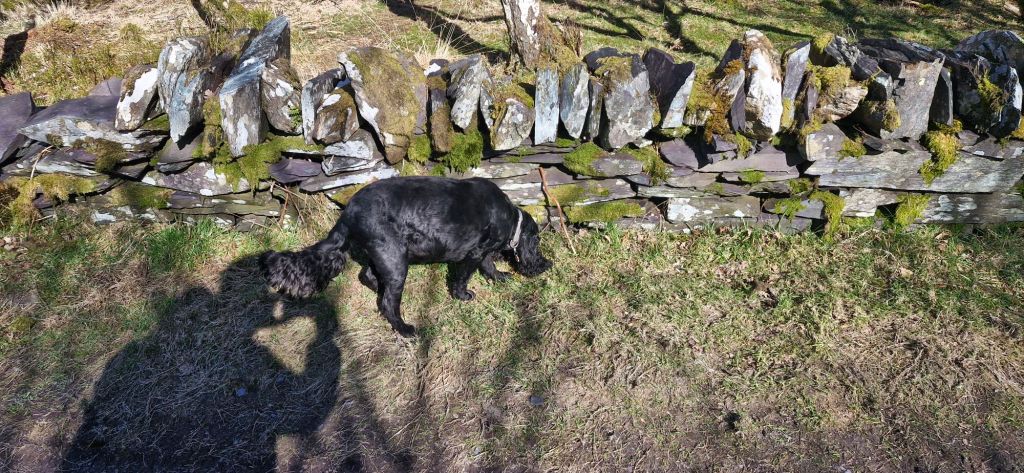
Well, that was after a good mooch and sniff along the way with my human complaining that I was lagging behind. It’s ok for him to moan when we are on a flat surface. I doubt that he we be telling me to ‘keep up’ when we hit the steep sections. I wish that I could talk sometimes!
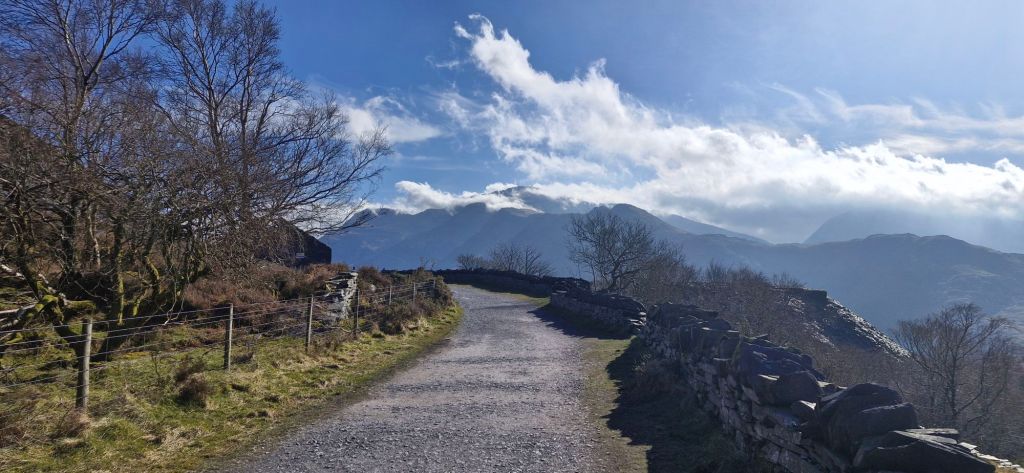
The views opened up of the Eryri mountains as we neared the quarry. Just a wisp of clouds covered the tallest peaks. It was another beautiful day in Eryri, Snowdonia, our playground.
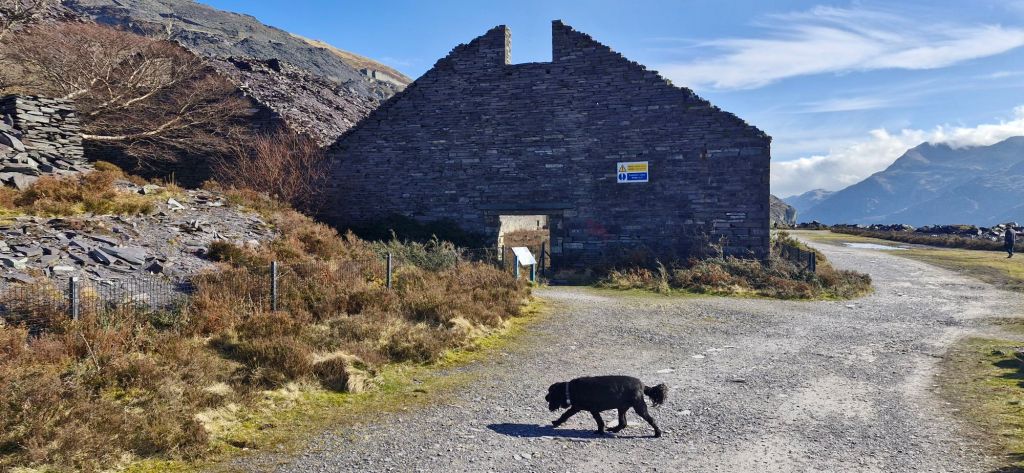
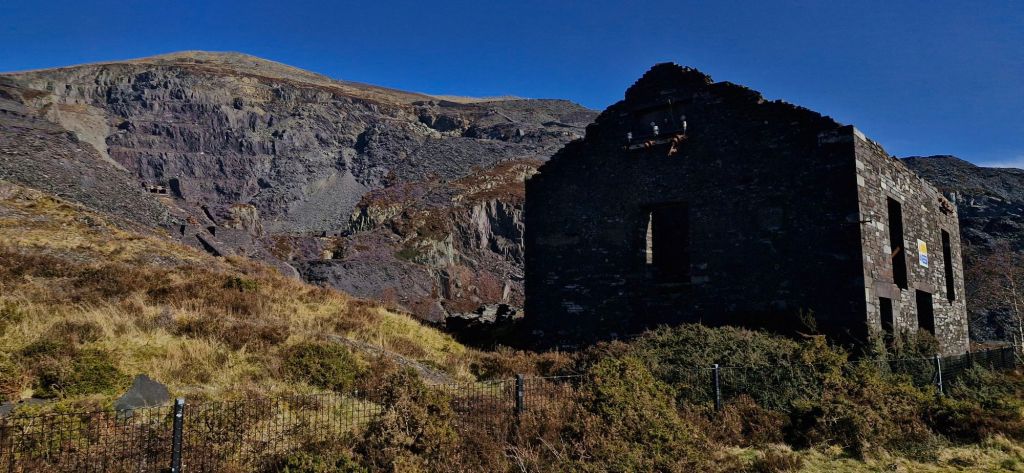
The first relic of the past that we came across was a disused finishing mill. The building is the size of two football pitches and was where the slate was finished or dressed into neatly cut roofing tiles.
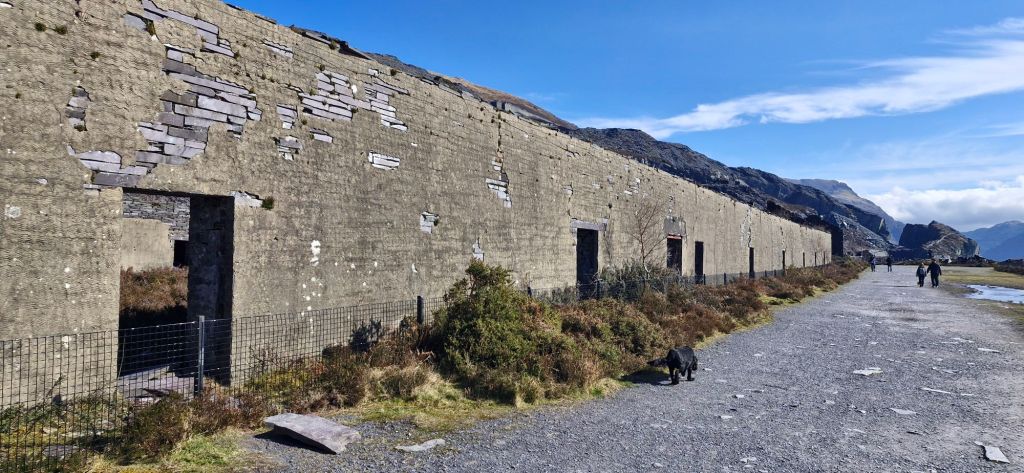
The building is fenced off, but plenty of people still enter this and many other fenced areas, at their peril. The buildings are in a rapidly decaying state.
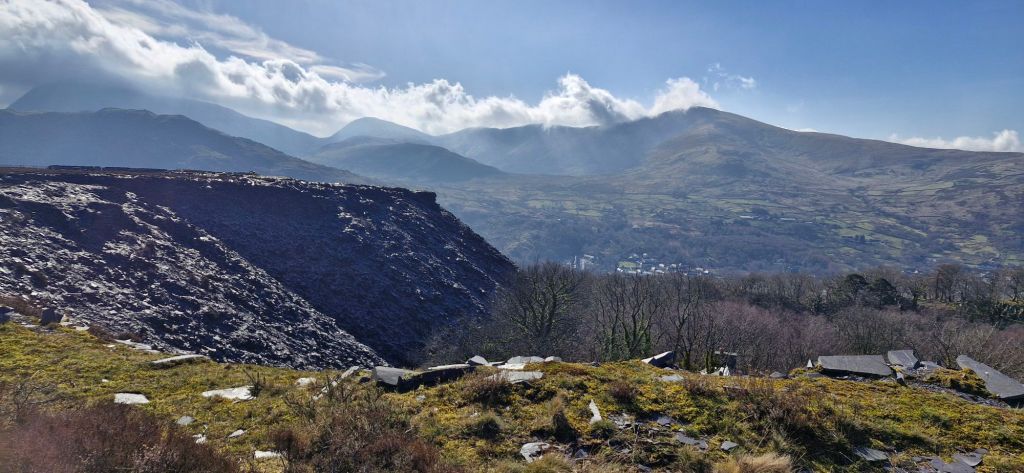
As we passed the large building, there was a massive pile of slate jutting out of the hillside.
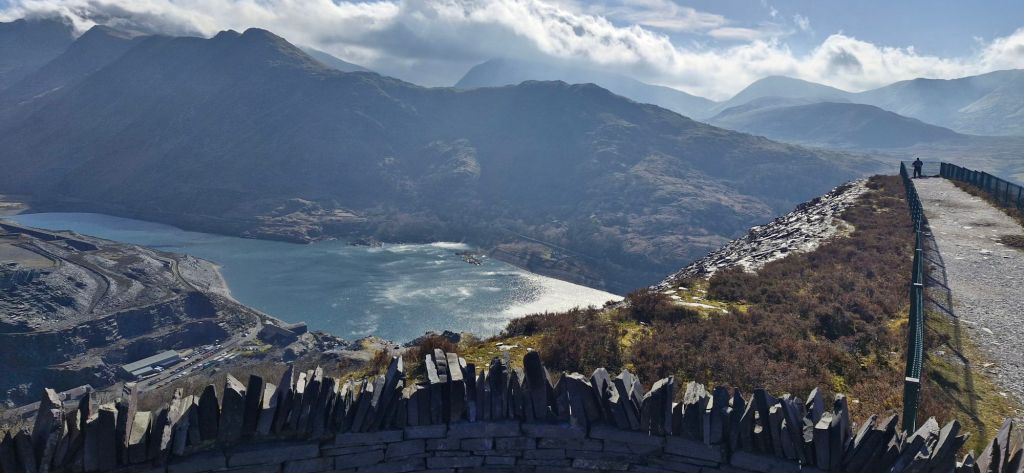
The surface of the pile is a long, flat walkway to a viewpoint. The wind was vicious and blew both of us towards the railings. However, it was worth the battle against the elements.

By the time that we had reached the end of the viewpoint ramp, we were incredibly wind blown, but WOW!!!!! What a sight! The quarry is absolutely huge. My human said that it was one of the most stunning man made sights that he had ever seen. Simultaneously, incredibly beautiful and incredibly ugly. It is a World Heritage Site and lists among sites such as the Taj Mahal, the Great Wall of China, and Pontcysyllte Aqueduct. Ok, it’s not a site of beauty or a natural wonder, but it is awe-inspiring and a nod to an industry of yesteryear.
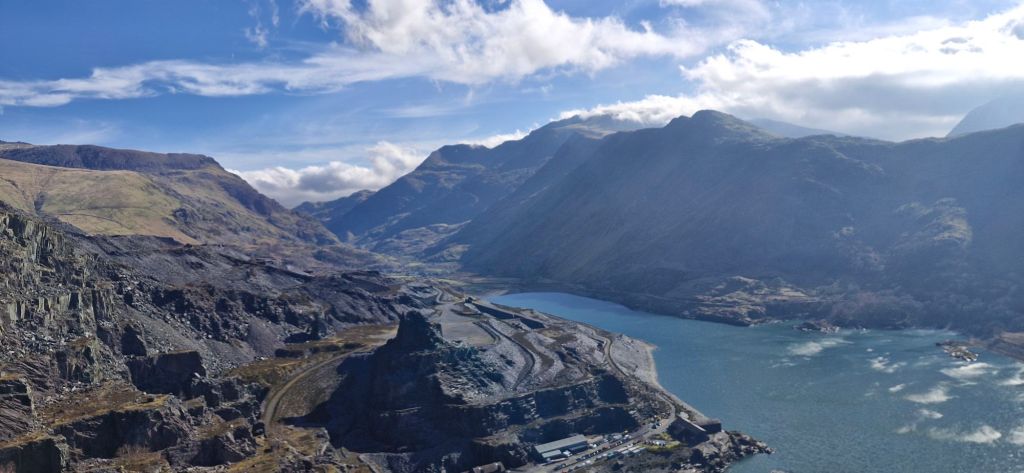
The view over Llyn Peris with its azure water and the magnificent Yr Wyddfa range is amazing from this point. To the left, the view over the quarry leaves you wondering where the mountain has gone. For 170 years, slate has been taken from the mountain to provide building materials for the world. Elidir Fawr has been eaten into over a couple of centuries to convert its heart into building materials.

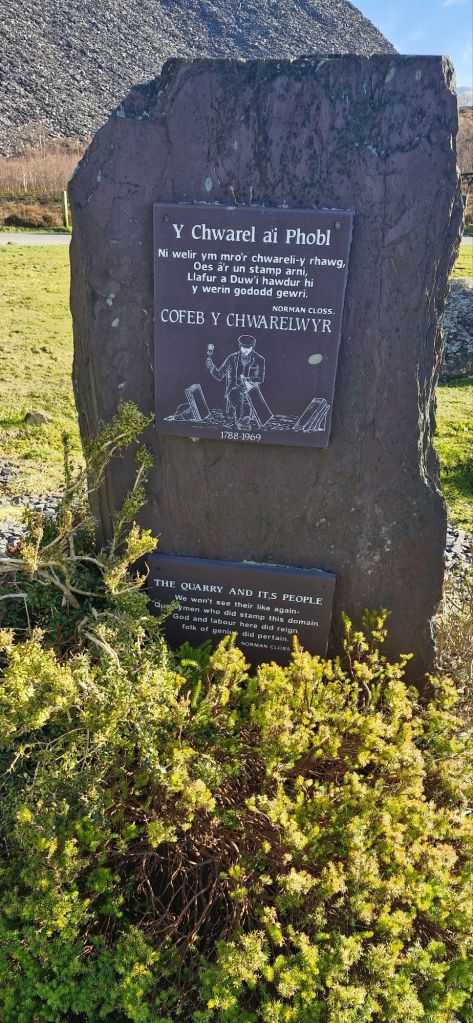
Quarrying started on the site in 1787 and ceased in 1969. At its peak of production, it employed over 3000 men. It closed in 1969 during the unsuspecting 350 employees’ annual break. Tools, clothing, and equipment were left in place awaiting their return. Some of these personal items remain where they were left.
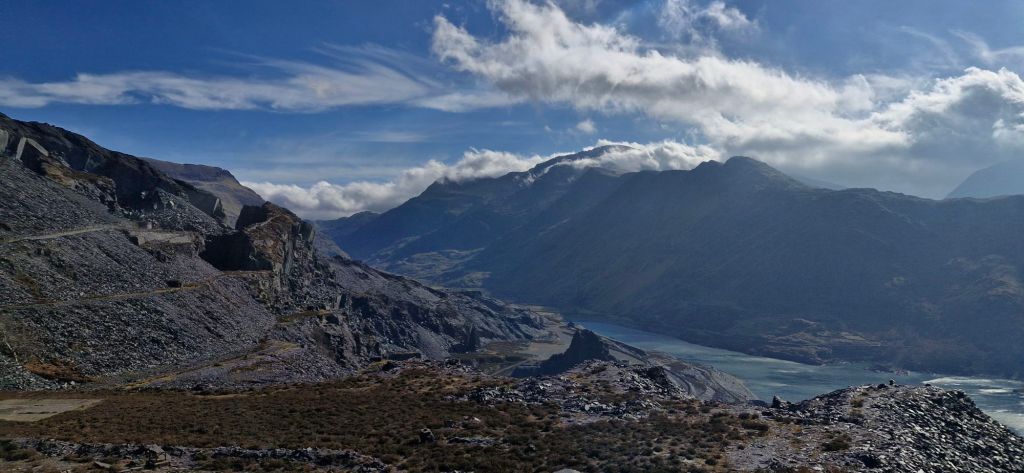
We stayed on the viewpoint for a while as my human tried to take in the scale of the place. I was wandering around and patiently waiting for him. He said that I had ‘quarter to three ears’ due to the high wind. He is such a comedian!
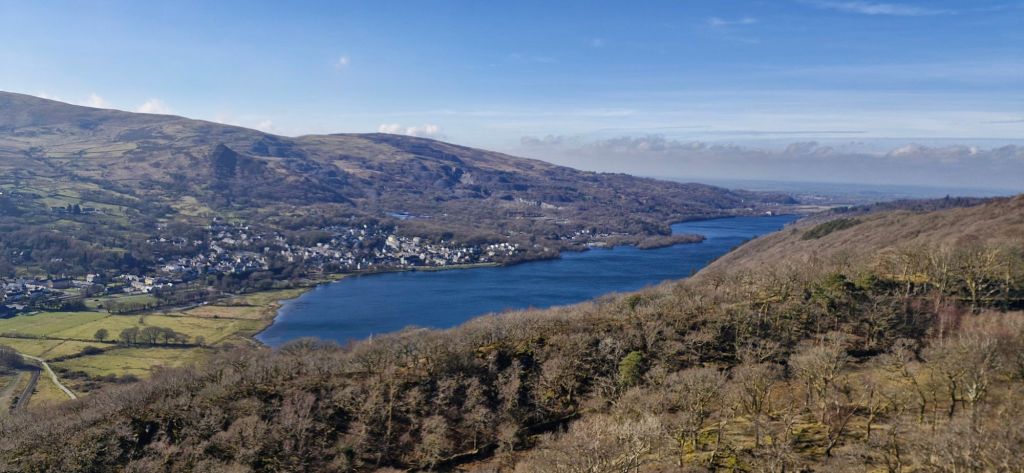
To the right, the view had a more peaceful feel as we could see along the full length of Llyn Padarn and over the village of Llanberis. Llyn Padarn is a natural lake formed after the last ice age. Llyn Peris was originally another natural lake but is now a reservoir providing water to the Dinorwig hydroelectric power station in the old quarry. To produce electricity, water is gravity fed from the Llyn Marchlyn Mawr, higher up the mountain, and then pumped back from Llyn Peris to complete the cycle. Simple but very effective.

The buildings next to the lake appear to be tiny in comparison to the scale of their surroundings. They are the external power station buildings, with the working parts being deep in the belly of the mountain. Electric Mountain, as it was named when the power station, was constructed and consists of 16km of underground tunnels. Over 12 million tonnes of rock were removed to build the power station.
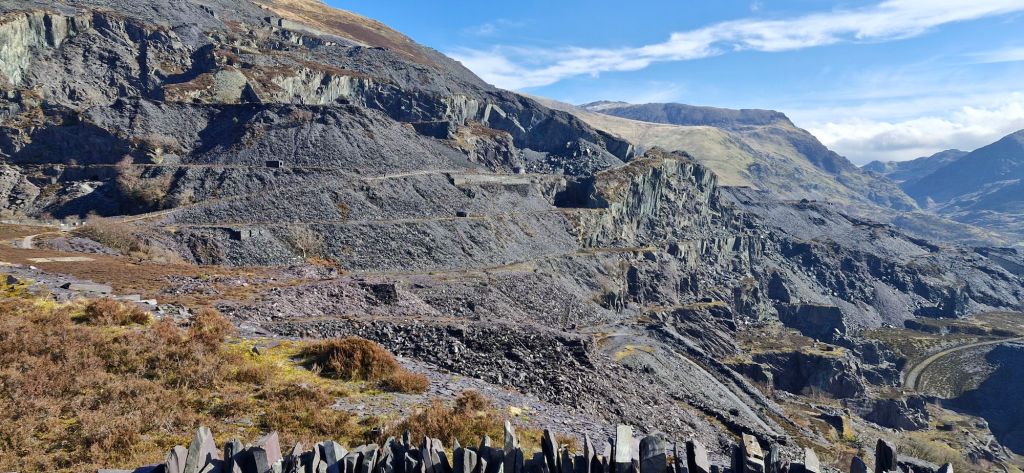
The hillside is a maze of galleries, ramps, and inclines, and it would take more than the couple of hours that we had planned to visit to explore the whole site. So, we chose to stick to our original planned route and to descend the A4 Garrett Incline.
We drove into Llanberis when we left Dinorwig to visit Ceunant Mawr waterfall . We will post our blog about that short walk in a short while. Till next time!
Abandoned buildings, most without their roof are dotted all over the site. Offices, winding rooms, cabans, etc, make up the bulk of the structures. There was one group of buildings that my human particularly wanted to visit. These buildings were way below us, and the way down looked quite steep.
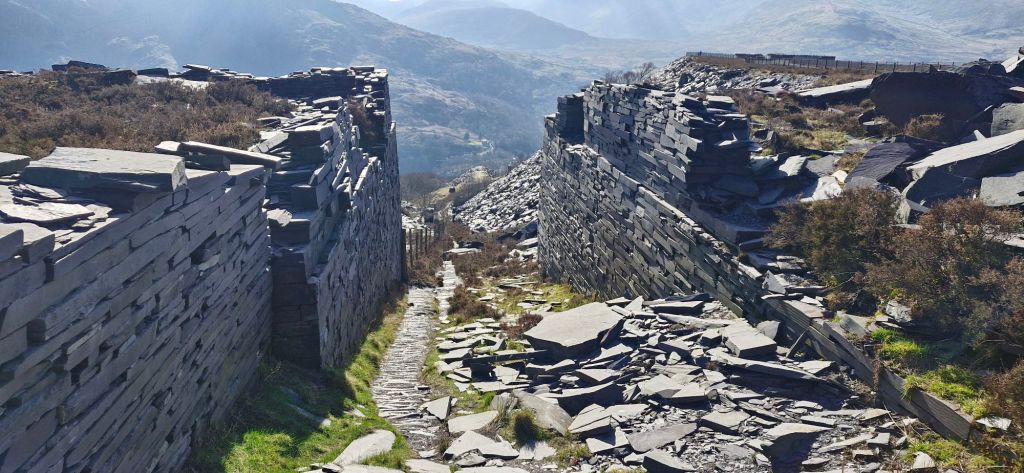
The route downhill looked quite daunting to the big feller, as you can see from the photograph above. So, we walked along the path through a metal gate to look for an easier way. We could see another path that had a gentler gradient, and we headed towards it along A4T Mills Level.
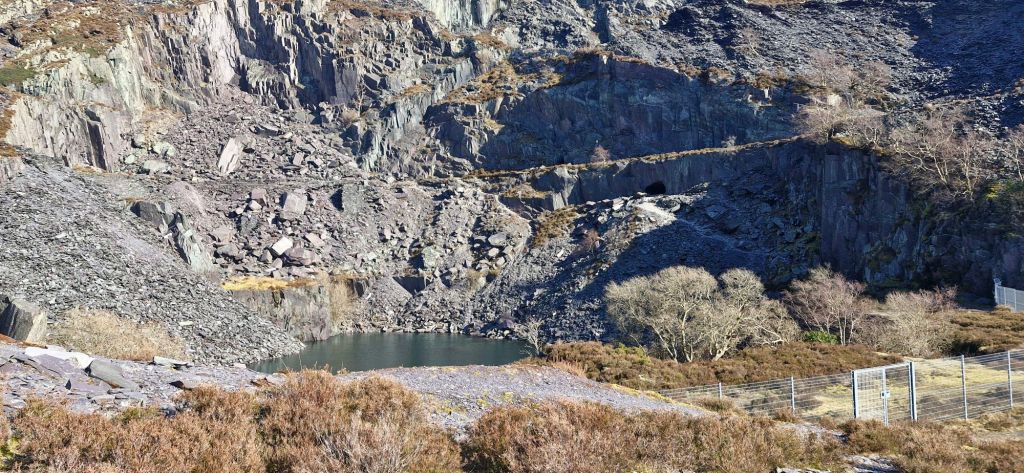
We came across another fenced off area that I have seen explored on YouTube. A small lake, Sinc Harnet, has formed at the bottom of the cliffs that have been hewn from the rocks. A tunnel is reached by a short walk up the cliff face, which takes you to a huge cavernous area that is popular with climbers. There is a route through the quarry called Snakes and Ladders, which consists of many obstacles such as old rusty ladders and iron chains. The areas have been given names by the climbing fraternity such as Mordor, Dali’s Hole, and the Lost World.

I thought that I could hear a baby human crying on the rockface, so we stood still to listen and spy the slate face. As we stared, it became clear that there were goats climbing all over the rocks. A baby goat was crying and was being approached by its mum. We waited until they reunited before we moved on. If you zoom in, you can just about see the goats. So my human says???

We found the gate to the zigzagging track that descends the hill. It was padlocked, so we decided to be good boys and return to the incline (or decline, in this case) and to walk down the path marked on our route map.
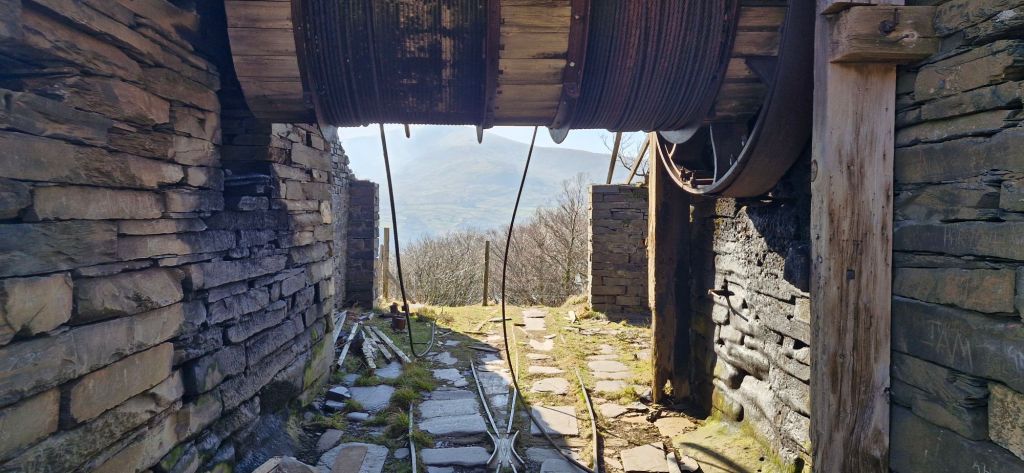
We very slowly walked down the slate steps, which would be treacherous in wet conditions until we came to yet another fenced off area. The fence surrounded a winding shed with the remains of the winding equipment still in place. The fence had been flattened in one section where plenty of people had passed through. My human inspected the area and found that it was safe to walk around and thus avoid walking under the precariously supported winding gear.

The part of the quarry that we were heading for and my human wanted to see was still out of sight but not much further down the hill.
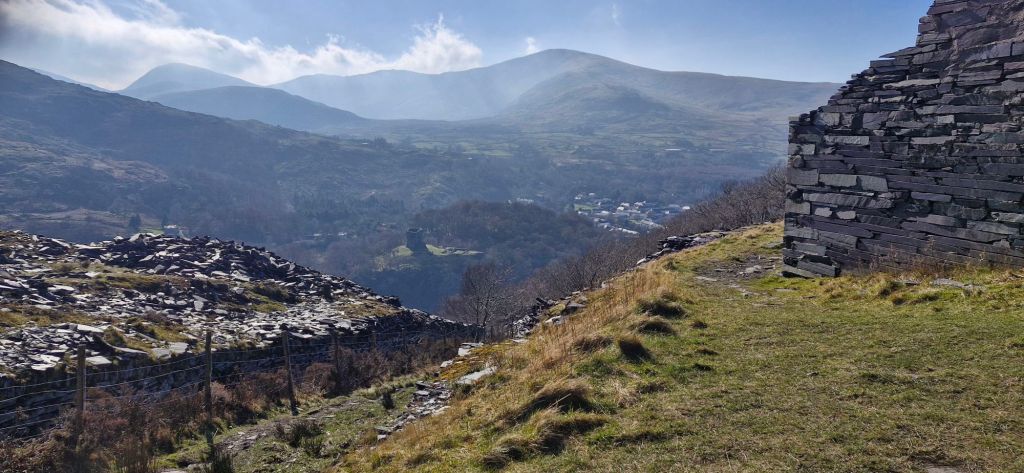
The views ahead were stunning over Llanberis and ahead to Eryri and Yr Wyddfa, Crib Goch, and the Snowdon Horseshoe.
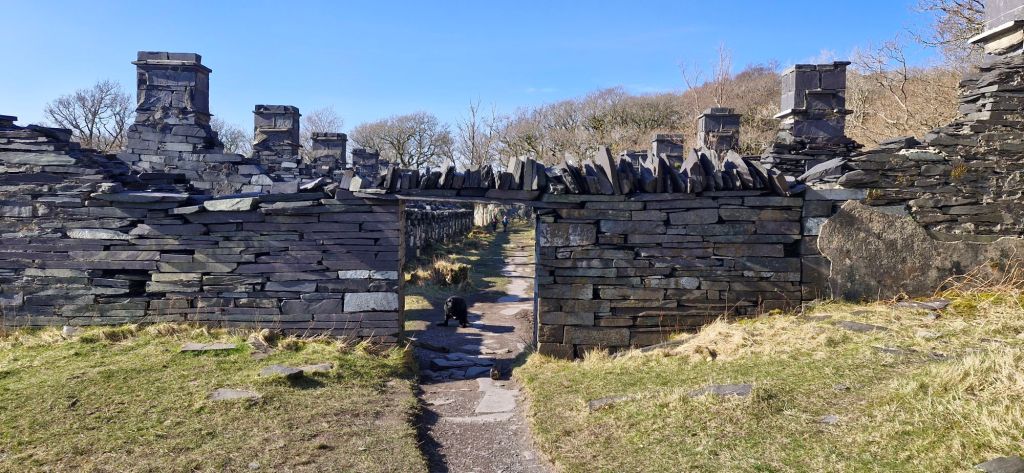
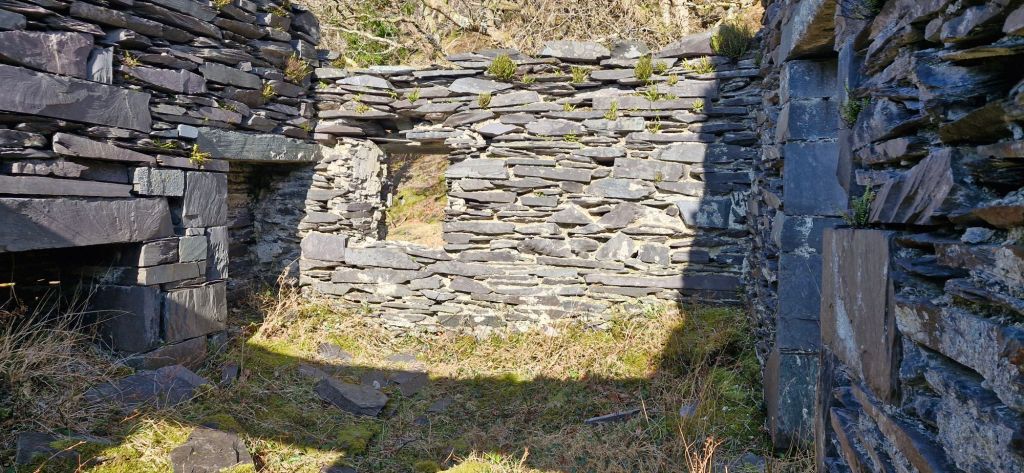
We eventually found what my human was looking for. The Anglesey Barracks or Barics Dre Newydd, New Town Barracks were built in the 1870s for workers who couldn’t commute daily and lived a bit further afield. Hence, the name Anglesey Barracks, as many men were brought in from Anglesey to work in the quarry. The two terraces of eleven units each housing four men were built on a flat section overlooking Llyn Peris. Each cottage comprised of two rooms. A small living and dining area and a very small bedroom.
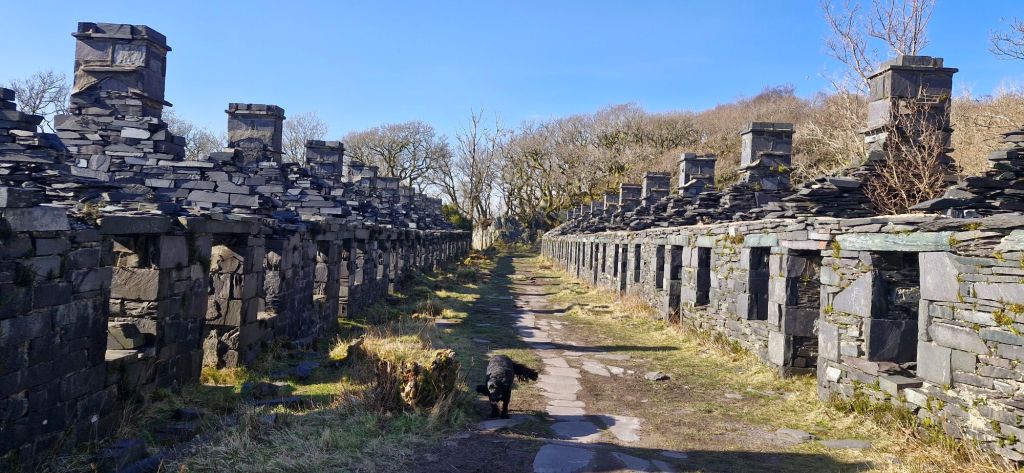
The iconic buildings are currently a mecca for Tiktokers and Instagrammers. We were fortunate to visit them on a quiet day. The units were basic, undecorated, and very small. Each had a fireplace and would have had four basic beds. They must have been cold and draughty, not much of a comfortable haven after a hard days manual work in all weather.
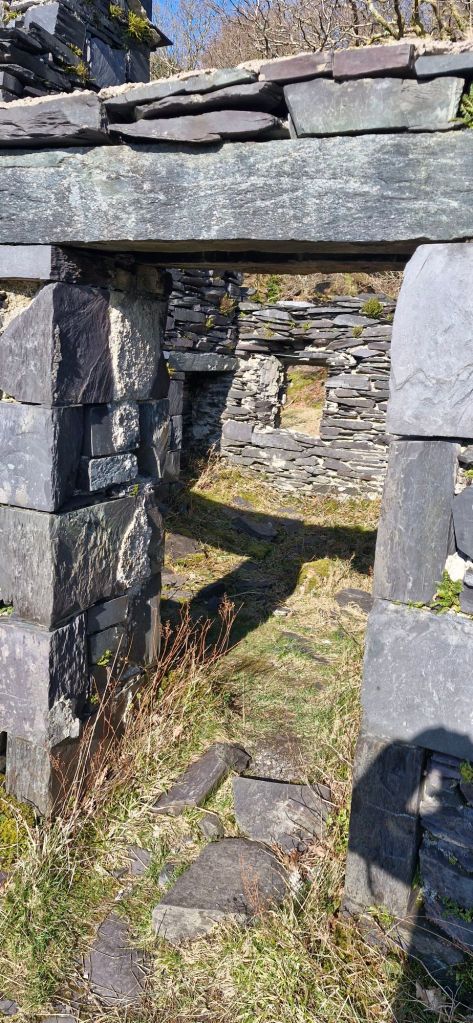
My human spent an age looking around the barracks, imagining how cramped and tough conditions must have been. Water for washing and cooking had to be brought from a nearby stream as there was no plumbing to the buildings. Electricity was installed to the quarry buildings downhill in the early 20th century but not to these dwellings. So, heating was from an open fire with the coal being carried from neighbouring villages. Two earth toilets were built for up to 88 men to share. Unbelievably, the men had to pay rent for the privilege of living in such squalor.
The rat and flea infested buildings were closed in 1937 when they were deemed unfit for human habitation.
Working conditions in the quarry were notoriously dangerous as over 1500 men have died in North Wales slate quarries. On one occasion in 1894, Huw Roberts from Anglesey was thawing a frozen stick of dynamite when it exploded. He was killed instantly, and many more would have died if he had attempted it before his colleagues had returned to work.
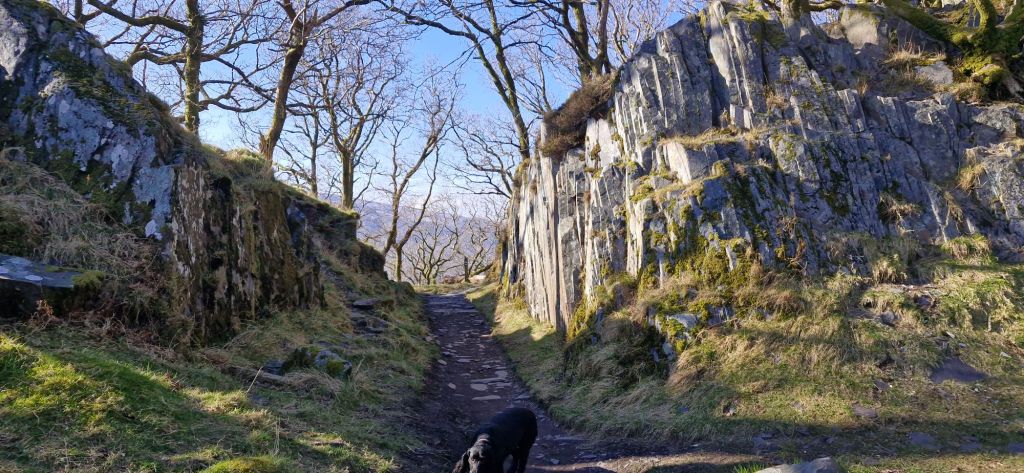
I took advantage of the time to have a mooch around. I wasn’t as enthusiastic about the place as my human was, so I was ready to move on before he was ready. I waited for him at the end of the terraces where the path passed between two rocky outcrops.
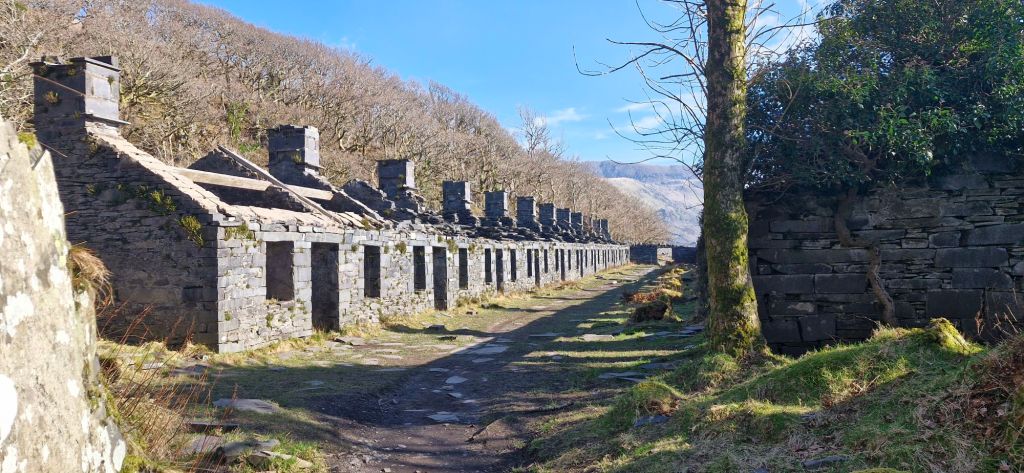
He took more photographs of the barracks as we left the area. It was time for our lunch break, so I looked for a suitable log or rock that would take the big fellers wide beam.
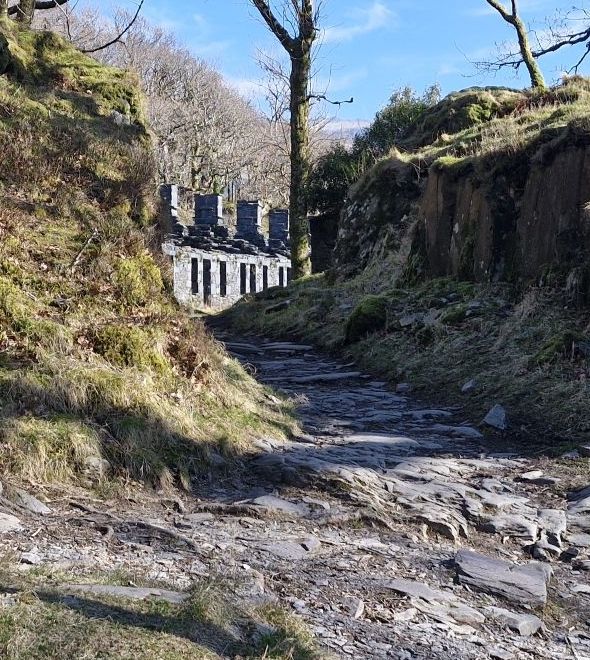
I found a log a few yards away where there is a junction in the path. One path headed downhill while the other headed steeply uphill. My human thought that the spot was perfect, so we sat in the winter sunshine and ate our scran. For his Lordship, the luncheon consisted of a Thai Green Curry with Sticky Jasmine Rice, a small Garlic and Coriander Naan. All washed down with a Hot Lava Java with a custard cream biscuit dunked in. Muggins here had to be happy with a couple of dog chews and a few slurps of water.
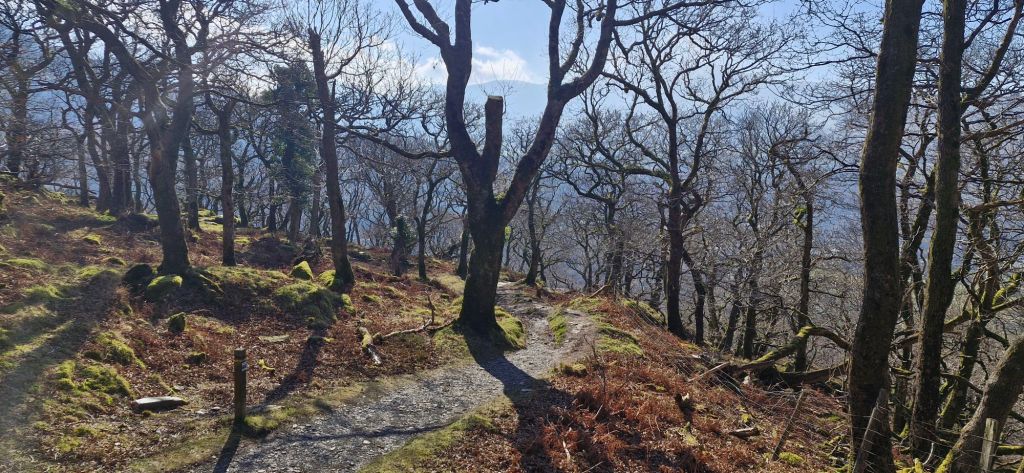
The downhill path looked so inviting as it weaved its way through the trees. Unfortunately, it was uphill for us. But not until we had fuelled up.

I had a rest while he was feeding his face. This hiking lark is thirsty and hard work.
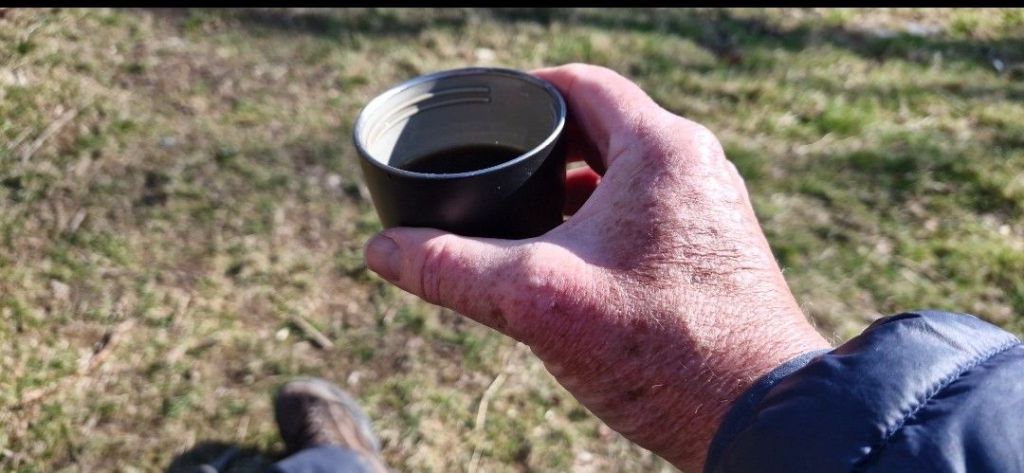
The big feller finished his meal and packed everything back into the rucksack. That brown, muddy water that he drinks is full of caffeine. It’s no surprise that he can’t sleep at night.

After we had refuelled, we headed uphill following the footpath. It was steep, and I had to wait while my human made noises like Thomas the Tank Engine as he huffed and puffed his way up the path. He didn’t take any more photos until we reached a flatter section of the route. So, who was lagging behind now?
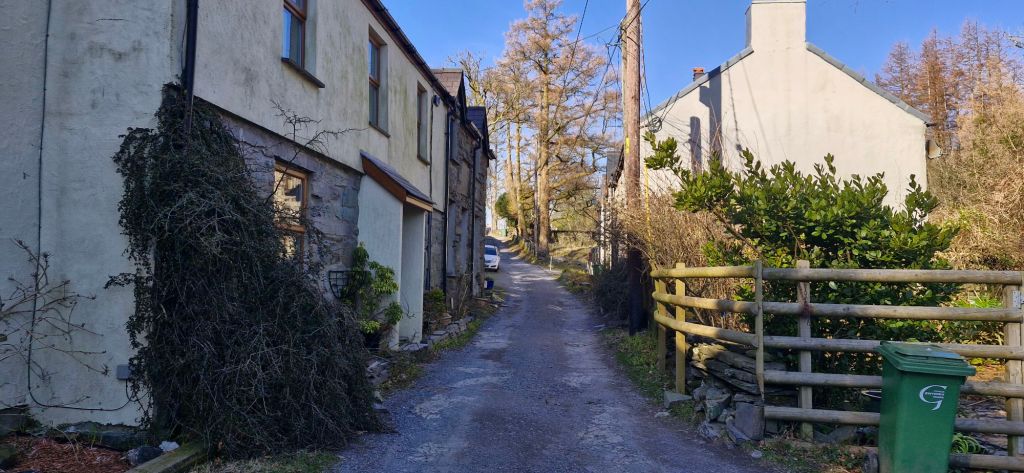
He finally stopped puffing and panting as we passed along a lane between a few houses. He realised that we could have avoided the really steep section by joining this track earlier, but instead of following our planned route, he followed the coloured waymark posts. What a mug!
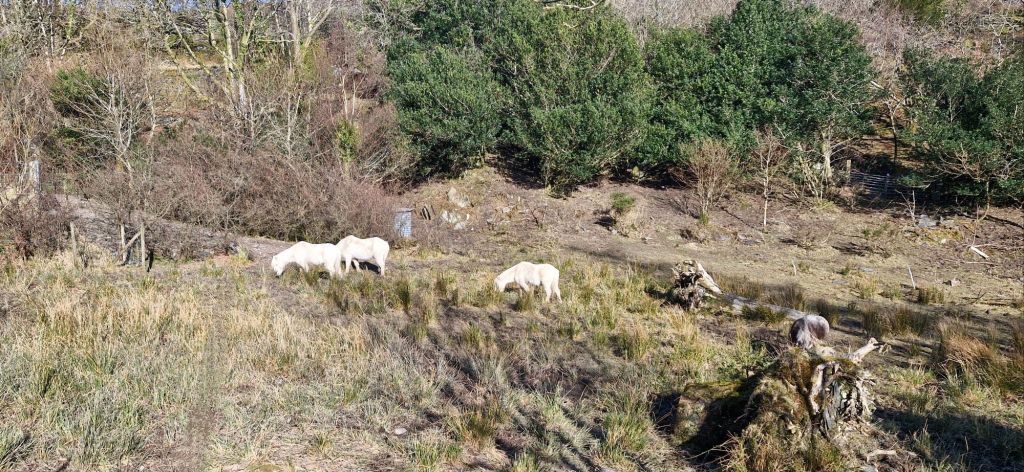
We passed a few white horses grazing in an adjacent field, which seemed to attract my human’s attention. I suspected that he was stopping to take a photograph because he needed to get his breath back. Time for a diet, methinks!
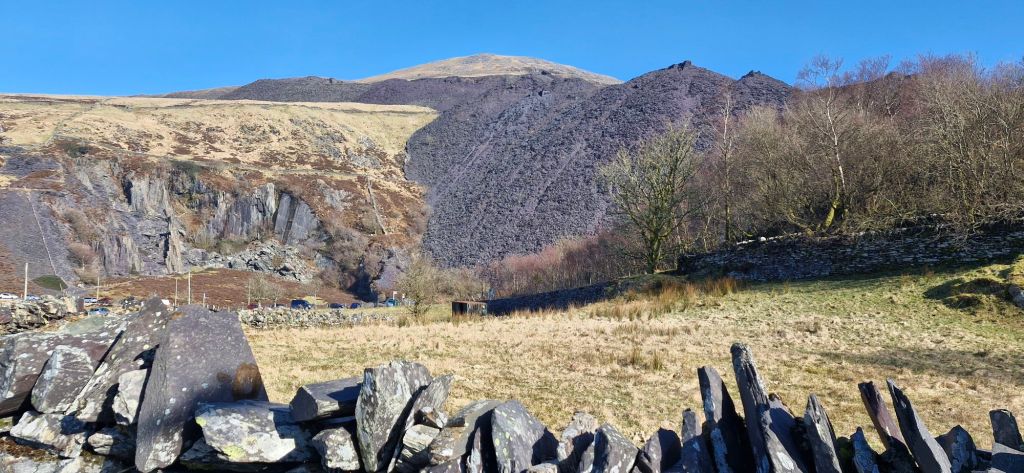
We were almost back at the car as my human took another photograph of the immense heaps of slate. What a place! We will definitely return.
Sadly, we feel the need to have a little moan about what we witnessed. In some areas, there has been significant amounts of litter left behind. There is graffiti on some of the structures. Fences have holes cut in them and gates broken. Unfortunately, we are in an age where a selfie is more important than a visit to a historical site to learn and show respect to the people who worked and lost their lives there. It will probably not be long before access to most of this site will have to be closed off securely.
We loved our visit and left with a deep respect for the thousands of men who worked in the quarry with too many giving their lives to putting a roof over our heads. We headed off to Llanberis, where the second part of our little adventure would continue as we walked to a beautiful waterfall. Till next time!
 Joe the Cocker's Hikes
Another interesting and informative account of Dinorwig Slate Quarry and it’s history. The photos are great and give a good impression of what can be seen there. I wonder how many men were employed there at it’s busiest time. The conditions the poor men live in after such a hard day’s work were dreadful. The work itself must have been hard enough and so dangerous without being away from families and expected to live in such harsh conditions. I hadn’t realised the place was so big. Thanks for an enjoyable and informative read and some wonderful photos. They brought back some memories of my hill walking days in Eryri. Jackie
LikeLiked by 1 person
I think that I mentioned that over 3000 men were employed there in its peak. Thank you for reading and commenting. It is an amazing place to visit. Very atmospheric 👍
LikeLike
Hi Joe – Wonderful views and the descriptions are very well written. Those lessons in creative writing that you gave your human have really enhanced his skills; he’ll be as eloquent as you are one day. There is a certain beauty in dereliction and I found the photos of the ruined cottages fascinating, although I reckon they’d seem a bit creepy at night.
Best Wishes from your Northumbrian friend,
Dave.
LikeLiked by 1 person
Thank you for your comments. My human is still in training, but he is getting there 🐾🐾👍
LikeLike
Anglesey barracks certainly leave an impression on you and well worth the visit. It certainly takes a lot of imagination to understand how they lived and worked in these conditions. What a difference just over 100 years has made.
LikeLiked by 1 person
We live in a different world now in the UK. Some countries still operate like our workers did way back then. Respect is due 🐾🐾👍
LikeLike
enjoyed hearing about you trip to Dinorwig, it’s a special place
LikeLiked by 1 person
Thank you for your kind words 🐾🐾👍
LikeLike
another great walk- I’ve seen a photo of the Anglesey Barracks, but didn’t know the history. Thanks for taking me along!
LikeLiked by 1 person
Thank you for reading and commenting. It encourages us to keep blogging 🐾🐾👍
LikeLike